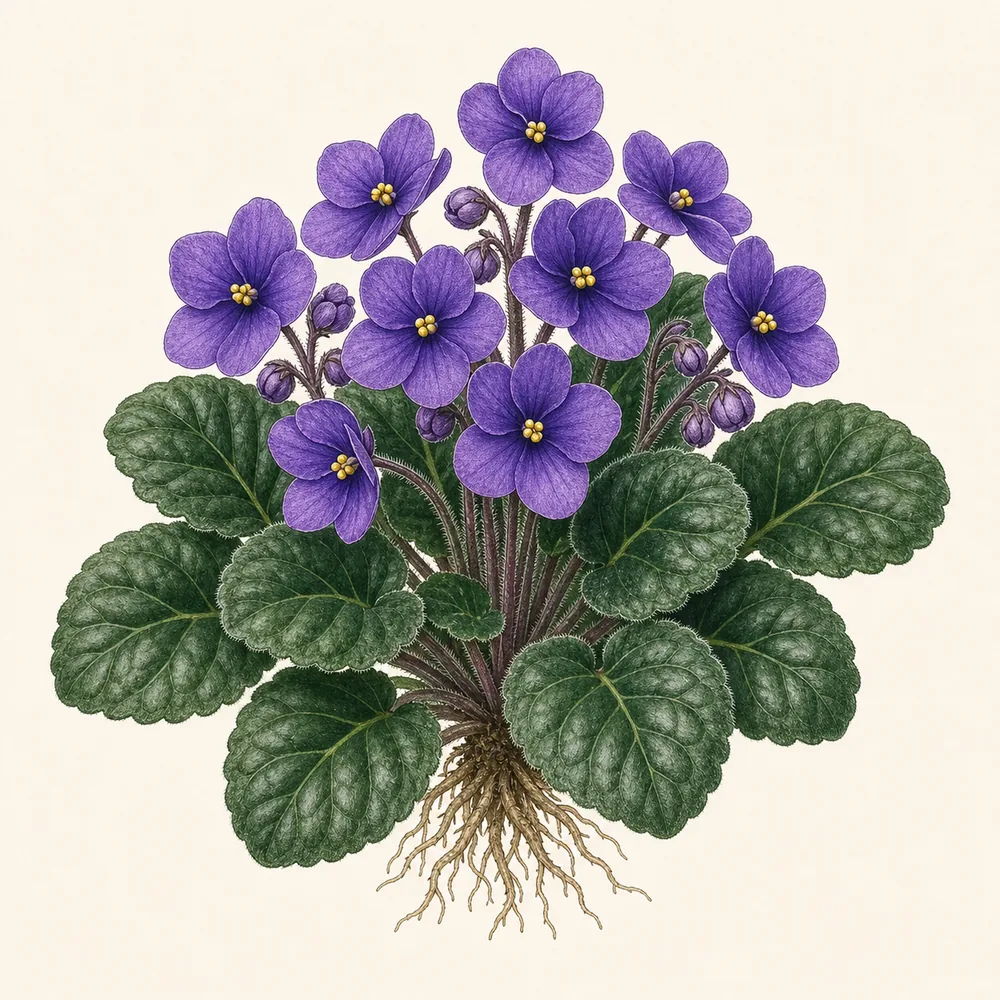
African Violet
A compact, fuzzy-leaved houseplant that can flower almost year-round on a bright windowsill. The classic bloomer that's genuinely pet-safe — just keep water off the leaves.
Safe around cats & dogs
The African violet (Saintpaulia) is listed as non-toxic to cats and dogs on the ASPCA database — a rare pet-safe flowering houseplant, so it's an easy choice for a home with animals.
Care at a glance
Everything that matters, in six lines. The detail is further down.
Light
An east or north windowsill is ideal. Enough light to flower, but harsh direct sun scorches the soft leaves.
Water
Keep lightly moist. Water into the saucer or from the base — water sitting on the fuzzy leaves causes brown blotches.
Temperature
Steady room warmth. It dislikes cold and sudden temperature swings.
Humidity
Likes a little humidity but never mist the leaves — stand the pot on a damp pebble tray instead.
Feeding
A dilute African-violet or high-potash feed every couple of weeks keeps it blooming.
Soil
A specialist African-violet mix or peat-free compost lightened with perlite.
What to do, and when
Growth and flowering pick up. Feed regularly and remove spent blooms and tired leaves.
Keep it out of hot direct sun; water from below and feed fortnightly for continuous flowers.
Flowering continues in good light. Ease back on feeding as growth slows.
Give it your brightest windowsill, keep it warm, and water sparingly — cold, wet roots are the main winter risk.
Water from below, never on the leaves
The single thing that makes or breaks an African violet is how you water it. Cold water sitting on the fuzzy leaves leaves permanent brown rings, so water into the saucer or from the base and tip away any excess after half an hour.
Keep the compost lightly moist, never soggy — the crown rots easily if it sits wet. Let the surface just dry between drinks.
Light for constant flowers
Given steady bright, indirect light, an African violet will bloom for much of the year. Too little light and you get lush leaves but no flowers.
A tired plant can be refreshed: they root very easily from a single leaf pushed into moist compost, giving you free new plants.
Common problems
Brown rings on leaves
Cold water splashed on them. Water from below with tepid water.
Lots of leaves, no flowers
Too little light, or over-feeding with nitrogen. Move it brighter and use a high-potash feed.
Mushy crown
Overwatering and crown rot. Let it dry, and never let the centre sit wet.
Leggy, stretched growth
Reaching for light. Give it a brighter windowsill.
Everything an African violet needs
Bright light, base watering and a high-potash feed.
We take no commission on anything in the "save your money" tier — if we don't think you should buy it, we don't link it. How our recommendations work
If you like this, try
Other plants with a similar temperament.
How we checked this
Care cross-checked against the RHS. Toxicity confirmed against the ASPCA database, which lists the African violet (Saintpaulia) as non-toxic to cats and dogs. If our page and these sources ever disagree, believe them — and tell us.
Sources: RHS · ASPCA — toxic & non-toxic plants
Last reviewed · July 2026