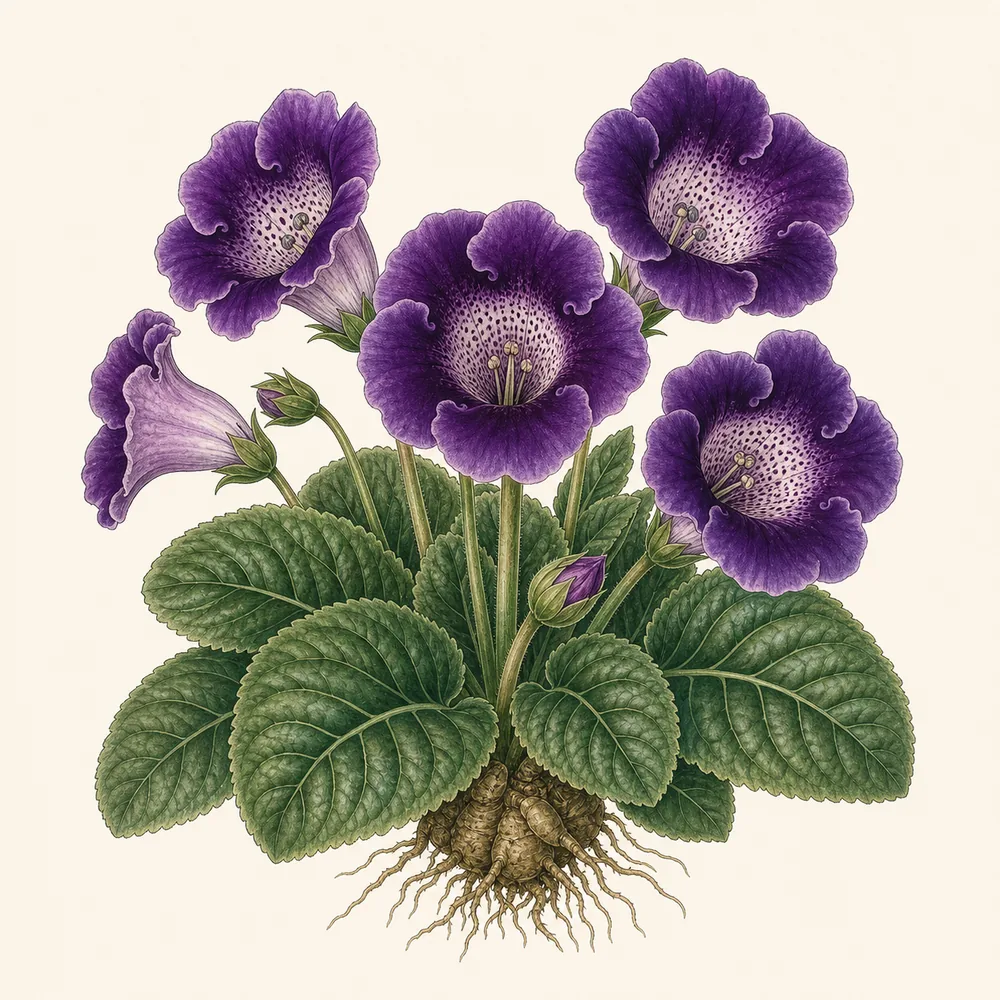
Gloxinia
A relative of the African violet with the same velvety leaves but far bigger, trumpet-shaped, jewel-coloured flowers. Spectacular in bloom, dormant in winter — and pet-safe.
Safe around cats & dogs
Gloxinia (Sinningia speciosa) is listed as non-toxic to cats and dogs on the ASPCA database, so its dramatic flowers are safe to enjoy in a home with pets.
Care at a glance
Everything that matters, in six lines. The detail is further down.
Light
Plenty of bright, filtered light to flower well, but out of direct sun which scorches the velvety leaves.
Water
Keep evenly moist in growth, watering from the base to keep the leaves and crown dry.
Temperature
Warm and steady while growing; it can be kept cooler and dry when dormant.
Humidity
Likes humid air — a pebble tray helps — but never mist the leaves directly.
Feeding
A high-potash feed every couple of weeks while it's in leaf and flower.
Soil
A light, open mix such as African-violet compost with added perlite.
What to do, and when
Start dormant tubers into growth in warmth; pot up and begin watering as shoots appear.
Peak flowering. Keep it warm, bright and humid, water from below and feed fortnightly.
As flowering ends the plant yellows and dies back — ease off water and let it go dormant.
Dormant. Store the tuber cool and nearly dry, and restart it in spring.
It has a dormant season — that's normal
Unlike an African violet, gloxinia grows from a tuber and dies back each year. After a long summer of flowering it yellows and collapses — this is the plant resting, not dying.
Let it dry off, keep the tuber cool and barely moist over winter, and start it back into growth in spring. Many people bin a perfectly healthy dormant tuber thinking it's dead.
Watering and leaves
Like its African-violet cousin, gloxinia hates water on its velvety leaves and crown — water from below and keep the centre dry to avoid rot.
Deadhead spent flowers to keep new buds coming through the summer.
Common problems
Collapse in autumn
Natural dormancy. Dry the tuber off and store it cool for winter.
Spots on leaves
Cold water on the foliage. Water from below with tepid water.
No flowers
Too little light, or a tired tuber. Give it bright, filtered light and feed with high-potash.
Rotting crown
Overwatering. Keep the centre dry and let the surface dry between drinks.
Everything a gloxinia needs
Warmth and bright light in summer, a dry rest in winter.
We take no commission on anything in the "save your money" tier — if we don't think you should buy it, we don't link it. How our recommendations work
If you like this, try
Other plants with a similar temperament.
How we checked this
Care cross-checked against the RHS. Toxicity confirmed against the ASPCA database, which lists gloxinia (Sinningia speciosa) as non-toxic to cats and dogs. If our page and these sources ever disagree, believe them — and tell us.
Sources: RHS · ASPCA — toxic & non-toxic plants
Last reviewed · July 2026