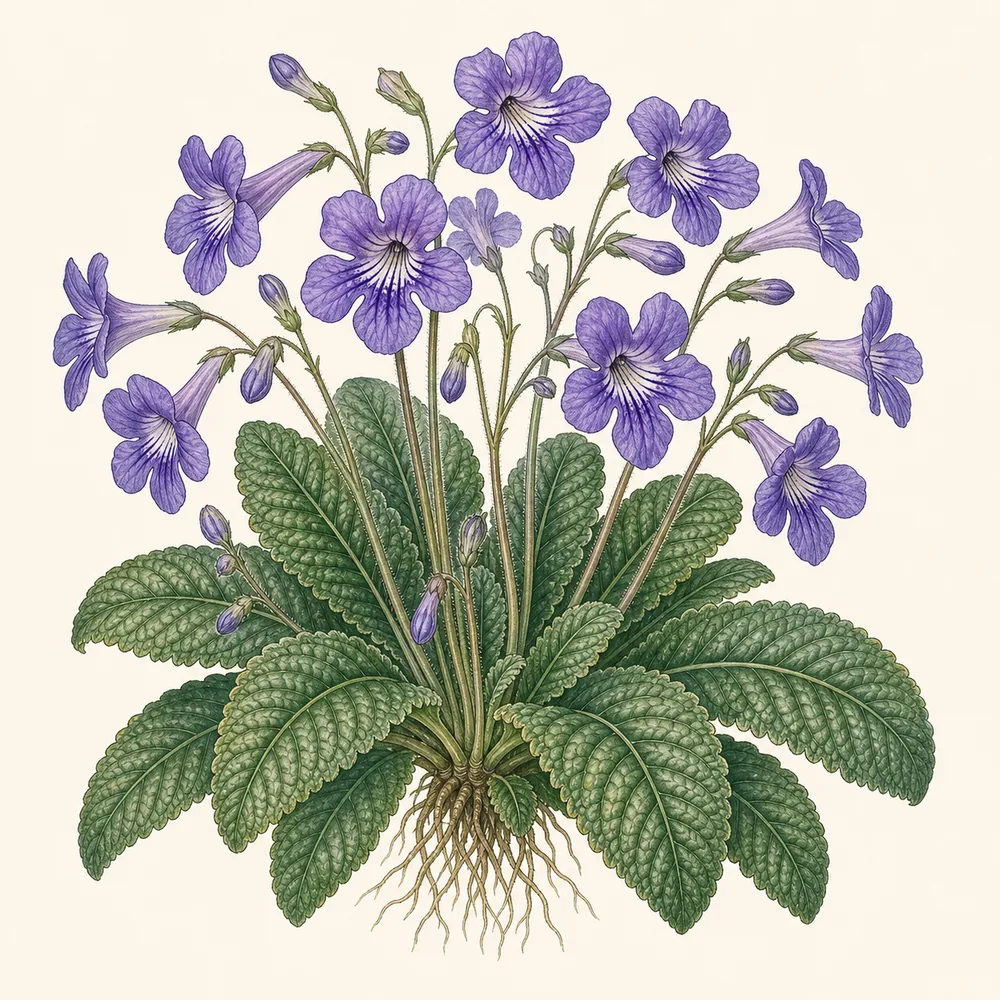
Cape Primrose
Long-flowering, elegant and undemanding — Streptocarpus throws out sprays of delicate trumpet flowers for months on a bright windowsill, and it's completely pet-safe.
Safe around cats & dogs
Cape primrose (Streptocarpus) is listed as non-toxic to cats and dogs on the ASPCA database — one of the easiest and safest flowering houseplants for a home with pets.
Care at a glance
Everything that matters, in six lines. The detail is further down.
Light
A bright windowsill out of harsh direct sun. Good light keeps the flowers coming.
Water
Water when the top centimetre is dry, from below if you can. It would rather be a touch dry than wet.
Temperature
Ordinary room warmth; tolerates cooler rooms better than most flowering houseplants.
Humidity
Fine in normal humidity — no misting needed; keep water off the crown.
Feeding
A high-potash feed every couple of weeks through spring and summer for months of flowers.
Soil
An open, free-draining houseplant or violet mix.
What to do, and when
Growth and flowering resume. Feed regularly, remove tired leaves and pot on if crowded.
Peak flowering — deadhead spent stems and keep feeding for a long display.
Flowering slows. Ease back on water and feed as light fades.
Rest in good light; water sparingly and keep it out of cold draughts.
Deadhead for months of flowers
Cape primrose is one of the longest-flowering houseplants there is, and the trick to keeping it going is simple: remove each flower stem once it's finished, pulling it away cleanly at the base.
Keep it fed with a high-potash feed and in good light, and it will produce fresh flower sprays from spring right through autumn.
Easy, and easy to multiply
It's forgiving about watering — err slightly dry rather than wet, and water from below to keep the crown dry.
It propagates readily from a leaf cutting, so one plant quickly becomes several.
Common problems
Few flowers
More light and a high-potash feed usually fixes it.
Yellowing lower leaves
Often overwatering. Let the top dry more between drinks.
Soft, rotting crown
Water sitting in the centre. Water from below and keep the crown dry.
Faded, bleached leaves
Too much direct sun. Move it to bright, filtered light.
Everything a cape primrose needs
Bright light, base watering and a high-potash feed.
We take no commission on anything in the "save your money" tier — if we don't think you should buy it, we don't link it. How our recommendations work
If you like this, try
Other plants with a similar temperament.


How we checked this
Care cross-checked against the RHS. Toxicity confirmed against the ASPCA database, which lists Cape primrose (Streptocarpus) as non-toxic to cats and dogs. If our page and these sources ever disagree, believe them — and tell us.
Sources: RHS · ASPCA — toxic & non-toxic plants
Last reviewed · July 2026