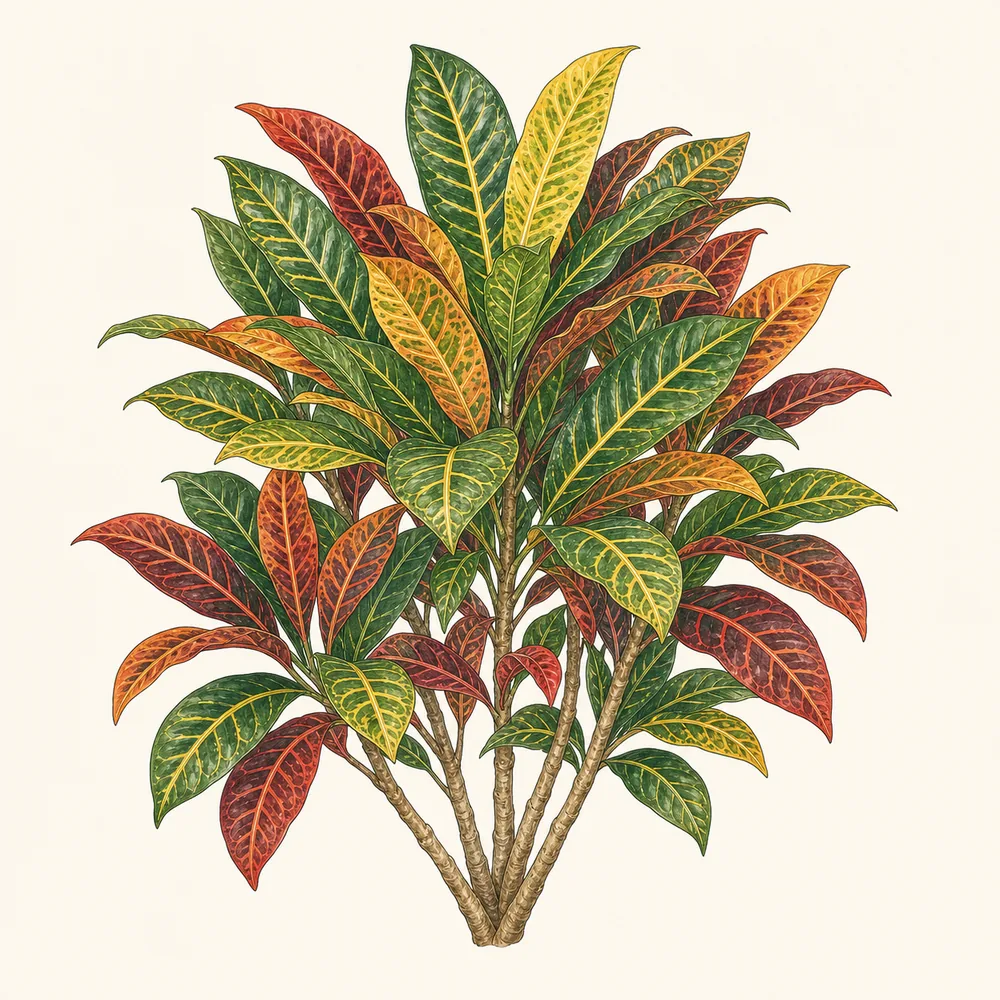
Croton
The most colourful foliage plant you can grow indoors — leathery leaves splashed in green, gold, orange and fiery red. Spectacular, but it wants bright light, warmth and steady conditions, and shows its displeasure by dropping leaves.
Toxic to cats & dogs — irritant sap
Croton sap contains irritant compounds; chewing the leaves causes mouth and stomach upset (drooling, vomiting), and the milky sap can irritate skin on contact. Not usually serious, but keep it away from pets that chew and wash your hands after pruning. Source: Pet Poison Helpline.
Care at a glance
Everything that matters, in six lines. The detail is further down.
Light
The brighter the light, the bolder the colour. In shade the leaves fade to plain green.
Water
Consistent moisture in growth, never soggy. Sudden drying out triggers leaf drop.
Temperature
Warm and steady. Cold draughts are the number-one cause of dropped leaves.
Humidity
Loves humidity; dry air browns the edges and sheds leaves. Mist or use a tray.
Feeding
A balanced feed spring to summer supports the colour.
Soil
Peat-free compost that holds some moisture but still drains.
What to do, and when
Growth resumes. Repot if congested and step up humidity as the heating goes off.
Best colour and growth. Keep it bright, evenly moist and fed; mist in warm spells.
Ease off feed. Watch for leaf drop as heating dries the air and nights cool.
Trickiest season. Keep it warm, humid and away from draughts and radiators.
Light makes the colour
A croton’s riot of orange and red is powered by light. Give it a bright spot with a little direct sun and the leaves blaze; put it in a dim corner and the new growth comes through plain green. If yours is looking drab, more light is the answer.
Pair that with steady warmth and moisture and it’s a showstopper — the fussiness is really just a dislike of extremes.
Humidity and steadiness
Coming from humid tropics, a croton resents dry, centrally-heated air, which shows up as crispy edges and falling leaves. A humid spot — or a pebble tray and the odd mist — keeps it full.
Keep the compost lightly moist rather than swinging between soggy and bone dry, keep it out of draughts, and don’t shuffle it around. Consistency is the whole secret.
Common problems
Dropping leaves
Cold draught, a move, or drying out. Keep it warm, steady and evenly moist.
Dull green new leaves
Too little light. Move it brighter for the colour to return.
Crispy brown edges
Air too dry. Raise humidity with a tray or misting.
Fine webbing / stippling
Spider mites, common in dry air. Rinse the foliage; raise humidity.
Everything a croton needs
Light and steadiness buy you the colour.
We take no commission on anything in the "save your money" tier — if we don't think you should buy it, we don't link it. How our recommendations work
If you like this, try
Other plants with a similar temperament.
How we checked this
Care cross-checked against the RHS. Toxicity confirmed against Pet Poison Helpline — croton (Codiaeum variegatum) is toxic to cats and dogs; irritant sap causing oral and gastrointestinal upset and skin irritation. If our page and these sources ever disagree, believe them — and tell us.
Sources: RHS · Pet Poison Helpline — Croton
Last reviewed · July 2026