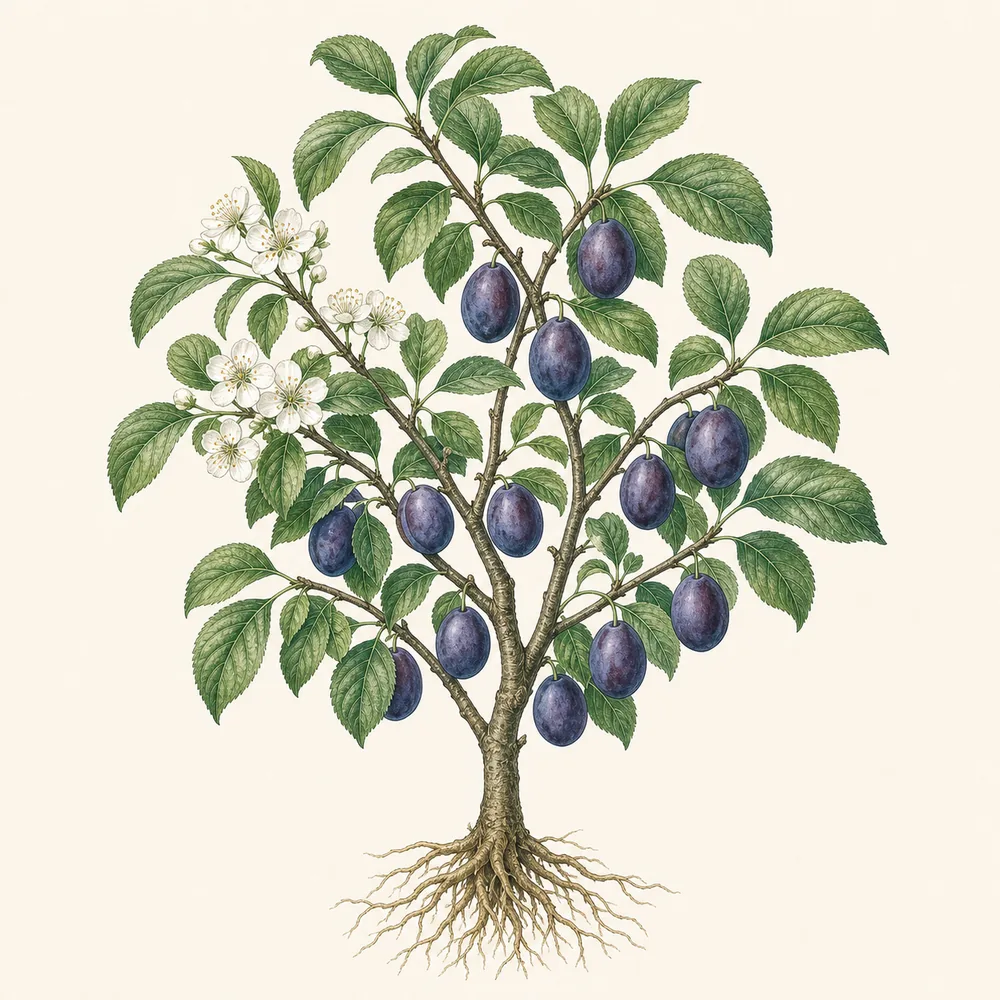
Plum
One of the most rewarding fruit trees for a British garden — many modern varieties are self-fertile, so a single tree can crop heavily. The main jobs are protecting the early blossom from frost and pruning only in summer to keep disease at bay.
Toxic to cats, dogs & horses (stones & leaves)
Plum (Prunus) is listed as toxic to cats, dogs and horses on the ASPCA database. The stems, leaves and stone-fruit pits contain cyanide-releasing compounds; the ripe flesh is fine, but wilting leaves and the stones are the hazard. Keep pets from prunings and stones.
Care at a glance
Everything that matters, in six lines. The detail is further down.
Light
A warm, sunny, sheltered spot ripens the fruit and suits the early blossom. Avoid exposed sites and frost pockets, which cost you the crop.
Water
Water young trees regularly for the first few years, and any tree deeply during a dry summer as the fruit swells. Erratic watering can cause the fruit to split.
Temperature
The tree is fully hardy, but plums flower early and the blossom is easily damaged by spring frost. Fleece small trees on frosty nights while in flower.
Humidity
Good airflow keeps the foliage dry and helps limit fungal problems such as brown rot and silver leaf. Don't plant it hemmed in.
Feeding
A general fertiliser in early spring and a mulch of well-rotted manure or compost over the roots — kept off the trunk — supports a heavy crop.
Soil
Plums like a deep, fertile, moisture-retentive soil that never waterlogs. Improve light or poor ground with plenty of organic matter before planting.
What to do, and when
Early blossom — protect it from late frosts and feed and mulch the tree. Do not prune now; wait for summer. Plant container-grown trees.
The season for both harvest and pruning. Thin heavily-set fruit in early summer to prevent branches breaking, prune once in leaf, and pick when the plums are soft and richly coloured.
Clear fallen fruit and leaves promptly to reduce brown rot carrying over. Firm in newly planted trees and check stakes and ties.
Plant bare-root trees while dormant, but keep the secateurs away — plums are pruned in summer, not winter, to avoid silver leaf infection.
Only prune in summer — never in winter
This is the golden rule with plums and all stone fruit. Pruning in the dormant season opens the tree to silver leaf, a fungal disease whose spores are most active in autumn and winter and which can kill whole branches.
Prune instead between late spring and midsummer, when the wounds heal fastest and the spores are least active. Keep cuts to a minimum on established trees — just remove dead, damaged, crossing or crowded growth — and always use clean, sharp tools.
Pollination — often simpler than pears
Many popular plums, including 'Victoria', are self-fertile, so a single tree will crop without a partner — one reason they're such a good choice for a smaller garden.
Some varieties still need a compatible pollinator flowering at the same time, so it's worth checking the label before you buy. Even self-fertile trees tend to crop more heavily when there's another plum nearby and the weather is warm enough for bees to be active during the early blossom.
Thin the fruit and support the branches
Plums often set far more fruit than the tree can carry. Left alone, a heavy year leads to small fruit, snapped branches, and 'biennial bearing' — a big crop one year and almost nothing the next.
In early summer, thin the fruitlets so they sit roughly a plum's width apart. On a well-laden tree, support heavy branches with a prop or by tying them up ('plum thinning and staking'), so they don't tear away under the weight.
Common problems
Silvery leaves and dying branches
Silver leaf disease, usually from winter pruning wounds. Cut affected branches back to healthy wood (with clean tools) and only ever prune in summer.
Fruit turns brown and rots on the tree
Brown rot, a fungus that spreads from damaged or touching fruit. Remove and bin infected fruit promptly and don't leave mummified plums on the tree over winter.
Heavy crop one year, almost none the next
Biennial bearing, made worse by an unthinned glut. Thin the fruitlets in early summer to even things out year to year.
Puckered, distorted, aphid-covered leaf tips
Leaf-curling plum aphid in spring. It rarely harms the crop; tolerate light attacks, or wash off and encourage ladybirds and other predators.
Everything a new plum tree needs
A sunny sheltered site, firm support, and summer-only pruning tools.
We take no commission on anything in the "save your money" tier — if we don't think you should buy it, we don't link it. How our recommendations work
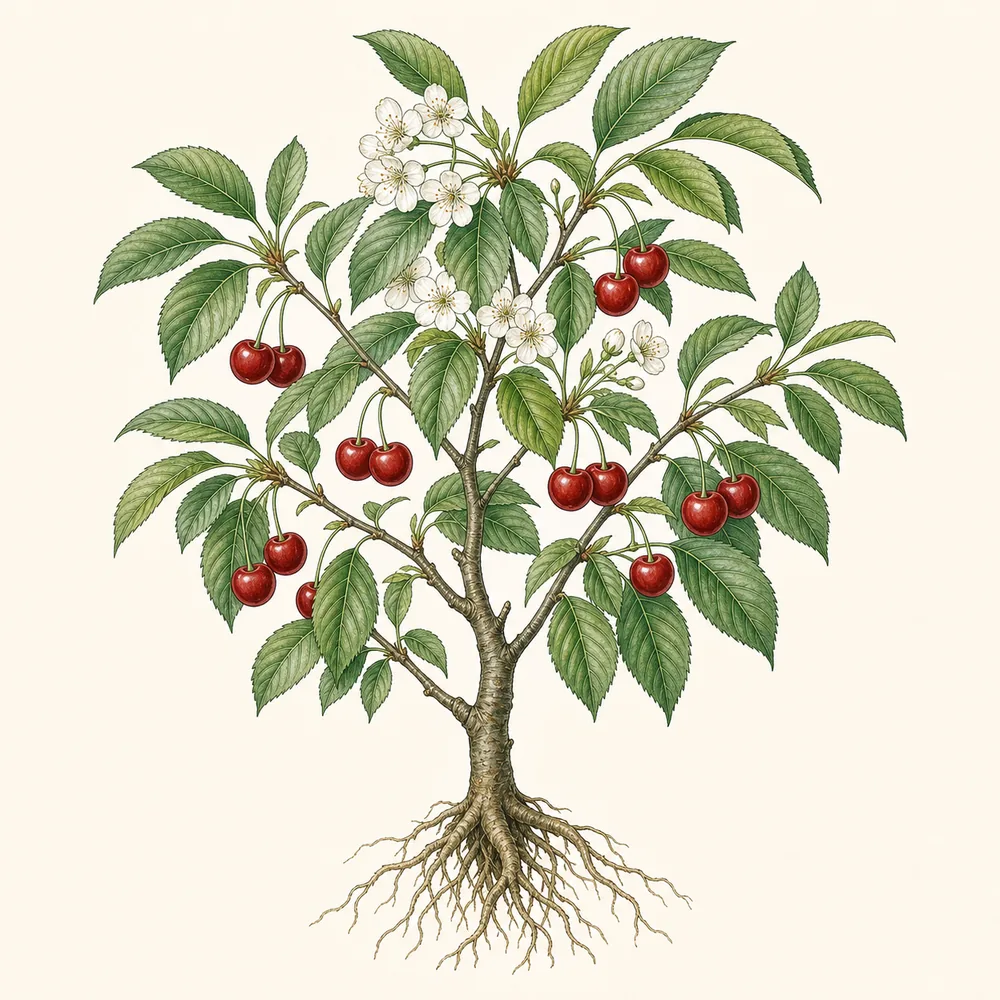
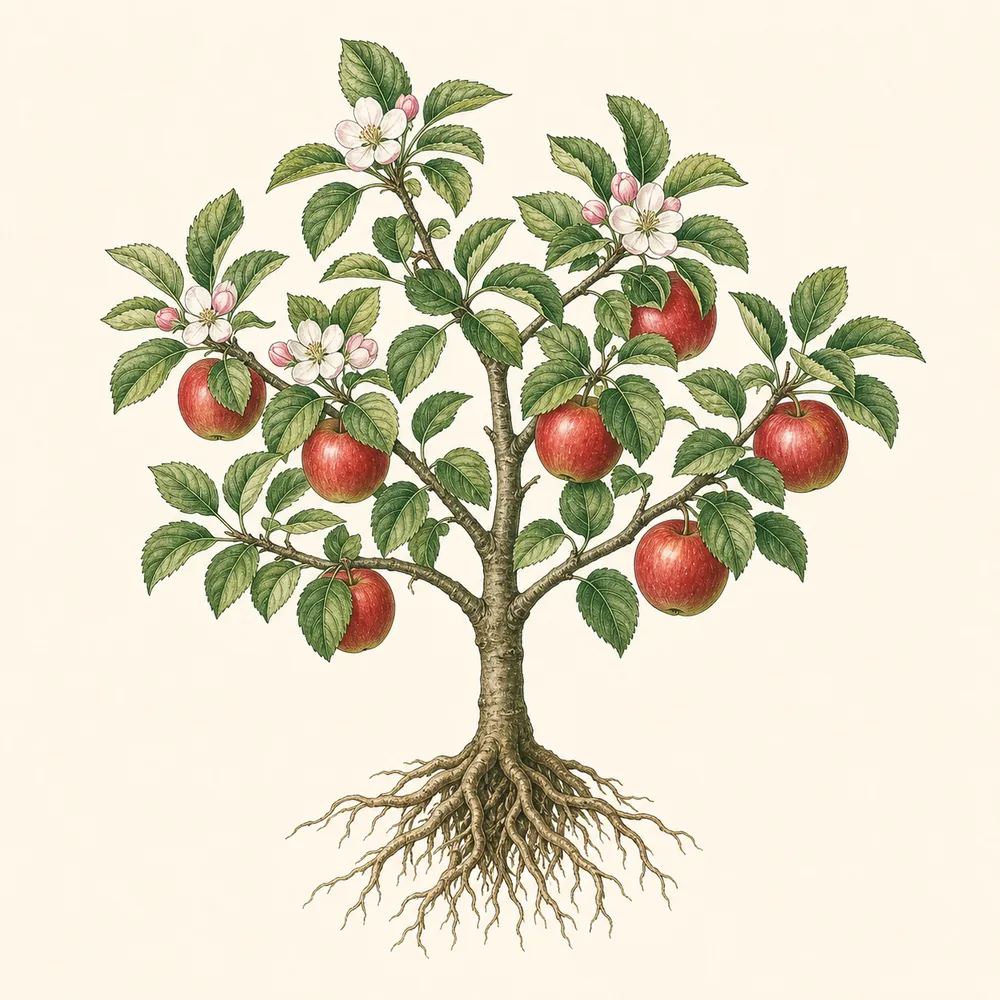
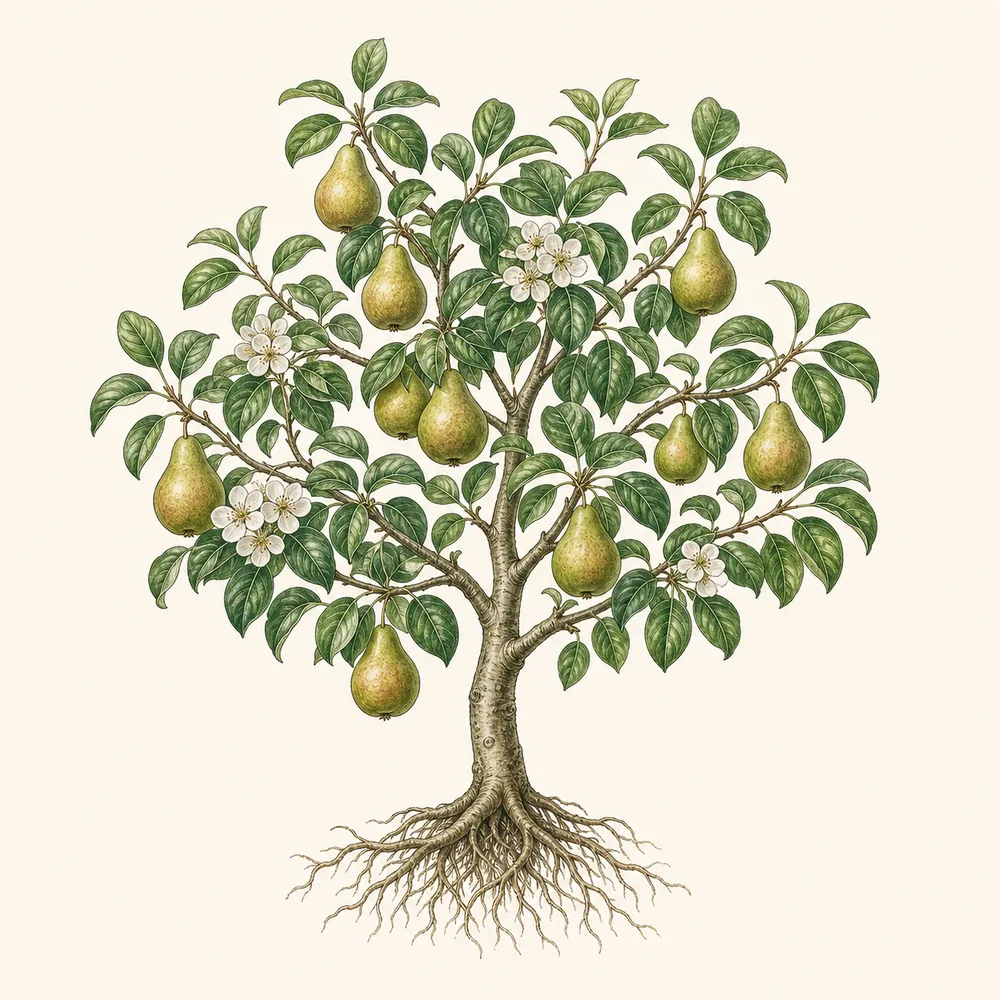
If you like this, try
Other plants with a similar temperament.
How we checked this
Care cross-checked against the RHS. Toxicity taken from the ASPCA database, which lists Prunus (plum) as toxic — cyanogenic stems, leaves and pits; ripe flesh is fine. If our page and these sources ever disagree, believe them — and tell us.
Sources: RHS · ASPCA — toxic & non-toxic plants
Last reviewed · July 2026