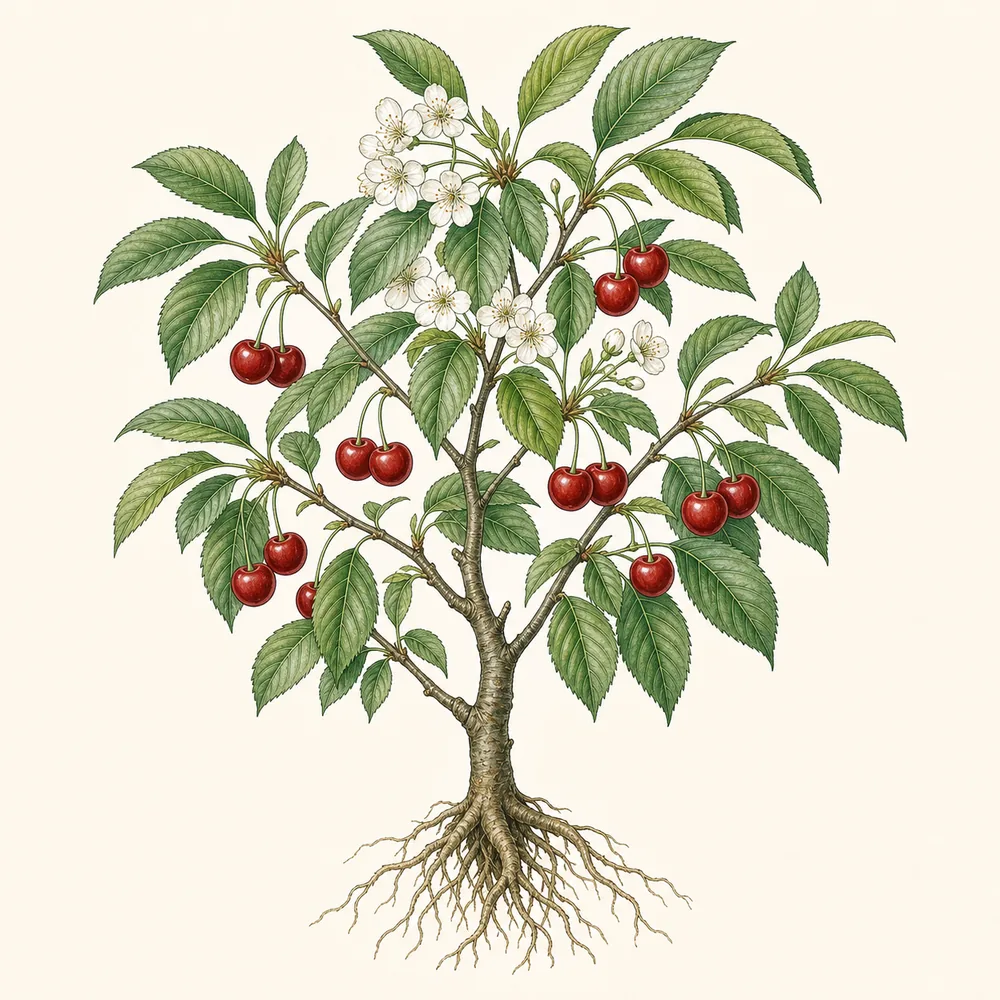
Cherry
A beautiful spring-blossoming tree that rewards you with sweet or acid cherries in midsummer. The growing is straightforward on a modern dwarf rootstock — the real battle is getting to the fruit before the birds do.
Toxic to cats, dogs & horses (stones & leaves)
Cherry (Prunus) is listed as toxic to cats, dogs and horses on the ASPCA database. The leaves, stems and stone pits contain cyanide-releasing compounds — the ripe flesh is fine, but the pits and wilting foliage are the hazard. Keep pets from the stones and prunings.
Care at a glance
Everything that matters, in six lines. The detail is further down.
Light
Give it the sunniest, most sheltered spot you have — sun ripens the fruit and helps the wood harden for next year.
Water
Water well for the first two or three summers while it establishes. Erratic watering as the fruit swells can cause splitting.
Temperature
Hardy across the UK, but the early blossom is vulnerable to frost — a warm wall or fleece on cold nights protects the crop.
Humidity
Good airflow keeps fungal problems down. Avoid damp, still corners where the leaves stay wet.
Feeding
A general fertiliser in early spring and a mulch of compost. Don't overfeed with nitrogen — you'll get leaf at the expense of fruit.
Soil
Deep, fertile soil that never waterlogs. Cherries hate sitting wet, so improve heavy clay before planting.
What to do, and when
Blossom appears — watch the forecast and throw fleece over the tree on frosty nights. Feed and mulch as growth starts.
Fruit ripens from June into July. Net against birds before the cherries colour up, then pick as they sweeten.
Leaves fall and the tree goes dormant. Clear fallen fruit and leaves to reduce next year's disease. Plant bare-root trees from now.
Fully dormant — but do NOT prune now. Bare-root planting continues in mild spells; firm in any trees loosened by frost.
Choose the rootstock, not just the variety
An old cherry on a vigorous rootstock becomes a 10-metre tree you can never net or pick. Modern dwarfing rootstocks like Gisela 5 keep a tree to a manageable 2.5–3m, so it fits a normal garden and you can actually reach the fruit.
Many modern varieties are self-fertile — 'Stella', 'Sunburst' and 'Cherokee' among them — so a single tree will crop. Older varieties often need a compatible partner nearby to set fruit, so check the label before you buy.
Prune in summer, never in winter
This is the golden rule for all Prunus. Pruning in winter opens the tree to silver leaf and bacterial canker, two serious diseases that enter through cuts when spores are active. Prune in late spring or summer instead, when the wounds heal fast.
Keep it light. Remove dead, damaged or crossing branches and open the centre so light and air get in. A fan trained against a warm wall is the classic way to grow cherries in a smaller space — and it makes netting far easier.
Beating the birds
Blackbirds and starlings will strip a tree in a day, often just before the fruit is perfectly ripe. Netting is the only reliable answer — drape it before the cherries start to colour, and make sure it's held clear of the fruit so birds can't peck through.
A dwarf tree or a wall-trained fan is far easier to net than a full standard. If you can walk around it with a net, you can protect the crop.
Common problems
Split fruit
Heavy rain after a dry spell, as the cherries swell fast and the skins can't keep up. Steady watering in dry weather reduces it; there's little to do once heavy rain hits at ripening.
Silver leaf or dieback
A fungal disease entering through wounds — leaves turn silvery and branches die back. Prune only in summer, cut out affected wood well below the damage, and clean tools between cuts.
Blossom killed by frost
A late frost blackens the flowers and you lose the crop. Plant in a sheltered spot away from frost pockets and fleece the tree on cold spring nights.
Aphids curling the leaves
Cherry blackfly cluster on the shoot tips and curl new leaves. Squash early colonies, encourage ladybirds, and avoid heavy nitrogen feeding that pushes soft growth.
Everything a cherry tree needs
A sunny sheltered spot, the right rootstock, and netting before the birds notice.
We take no commission on anything in the "save your money" tier — if we don't think you should buy it, we don't link it. How our recommendations work
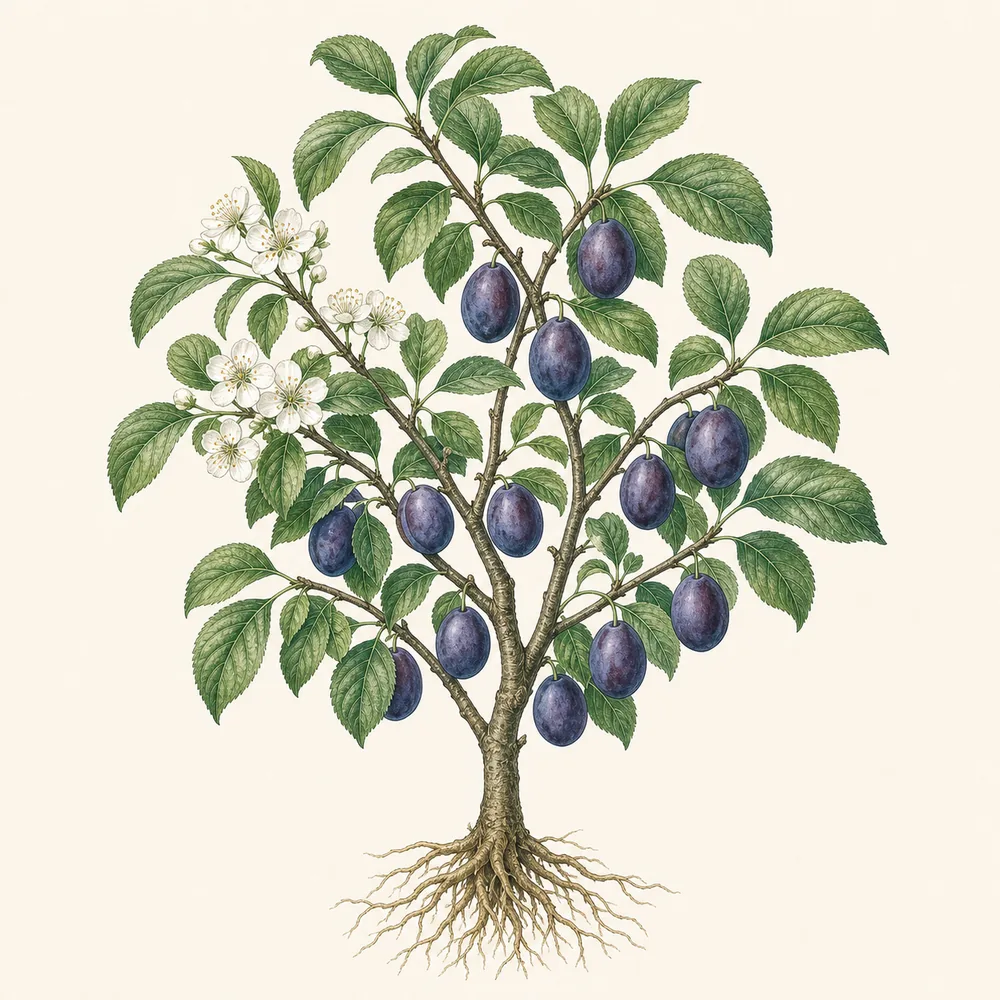
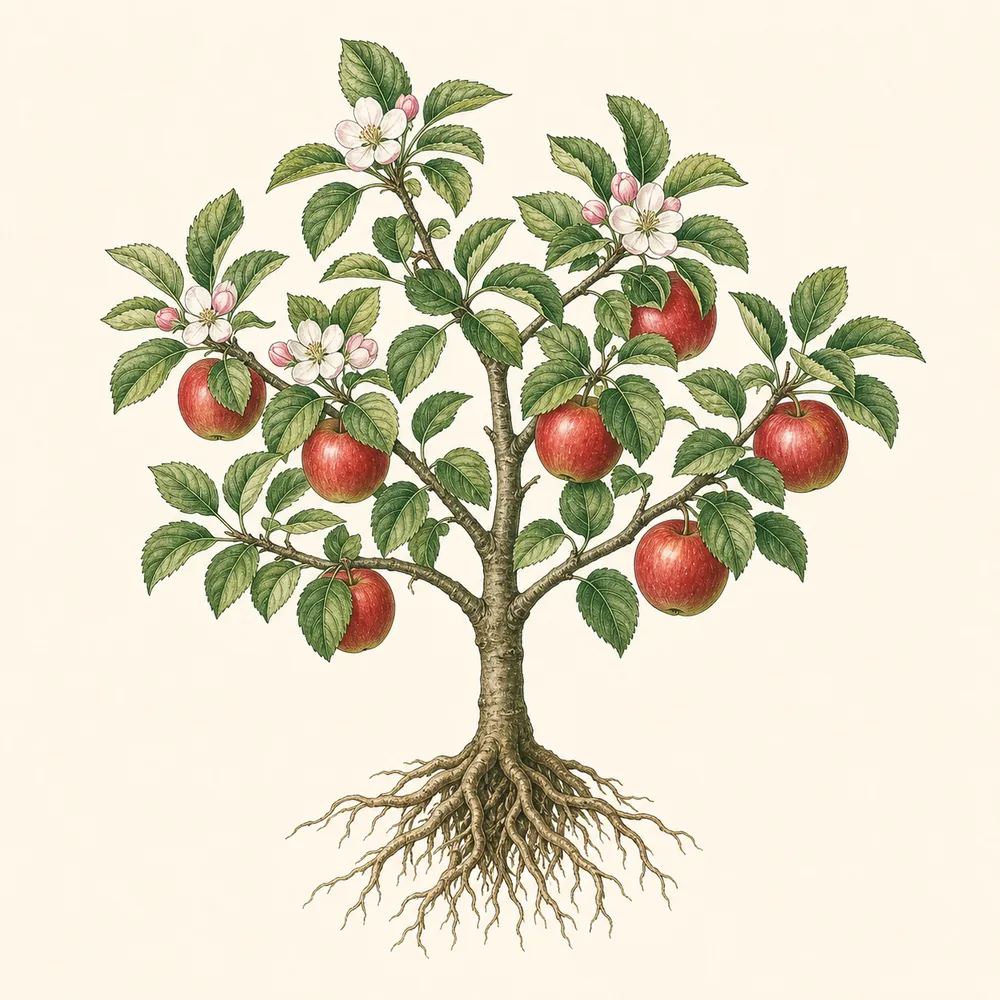
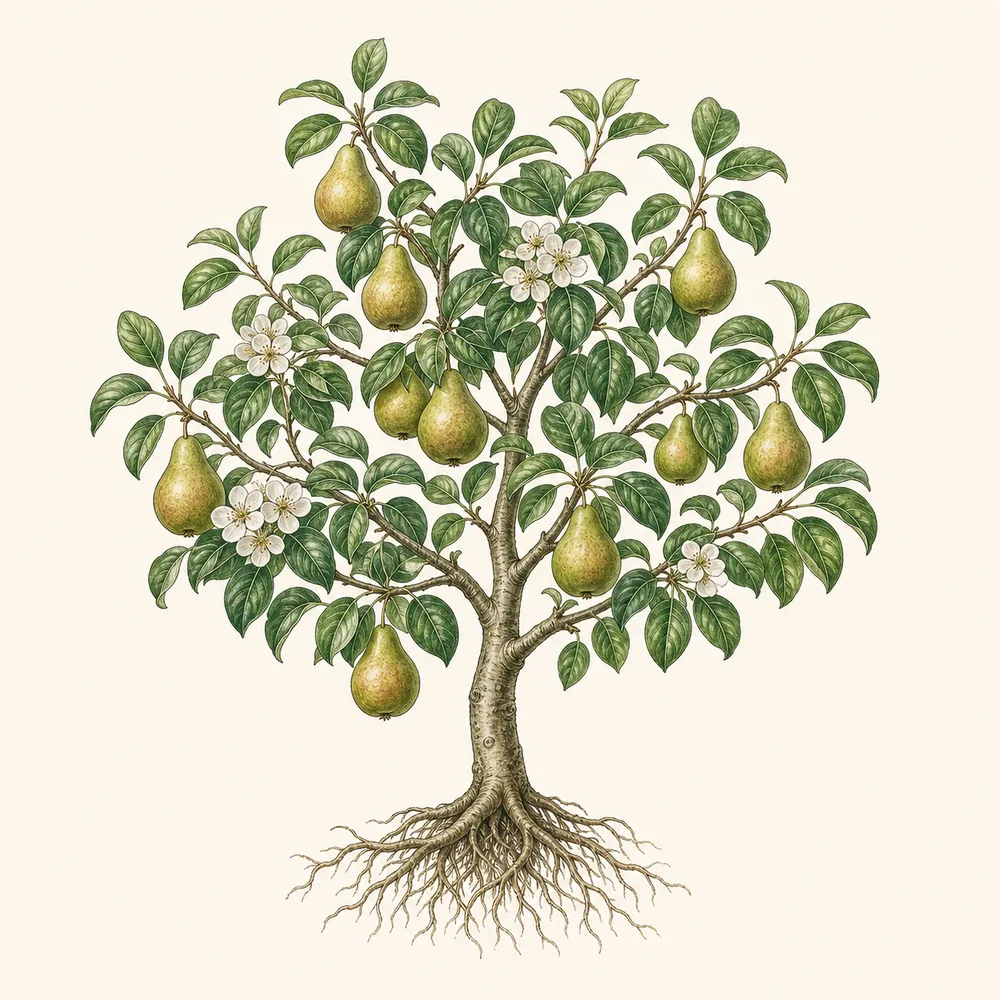
If you like this, try
Other plants with a similar temperament.
How we checked this
Care cross-checked against the RHS. Toxicity taken from the ASPCA database, which lists Prunus (cherry) as toxic — cyanogenic leaves, stems and pits; ripe flesh is fine. If our page and these sources ever disagree, believe them — and tell us.
Sources: RHS · ASPCA — toxic & non-toxic plants
Last reviewed · July 2026