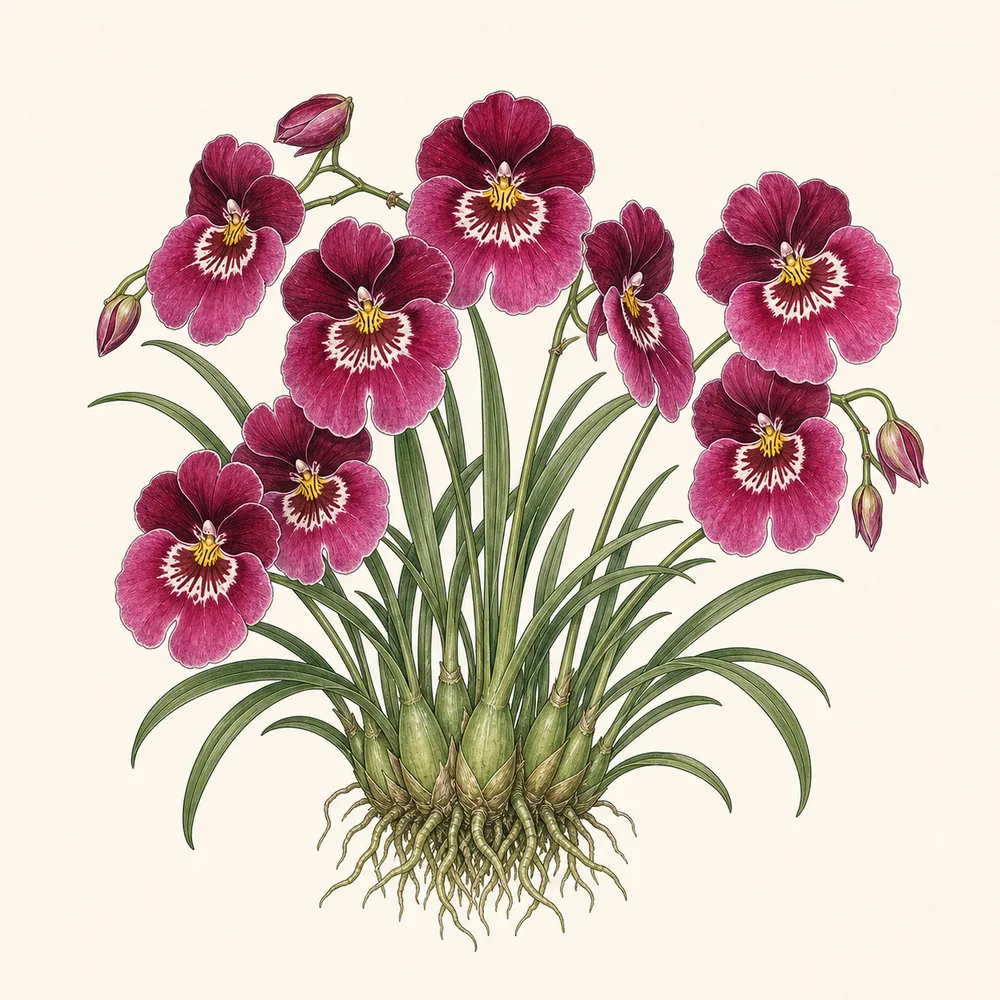
Pansy Orchid
The orchid with flat, open, velvety flowers that really do look like pansies — often beautifully scented, and completely pet-safe. It asks for cool, shady and evenly moist conditions rather than the warm, dry treatment other orchids like, so it suits a cooler room.
Non-toxic to cats, dogs & horses (ASPCA)
The pansy orchid (Miltoniopsis/Miltonia) is listed as non-toxic to cats, dogs and horses on the ASPCA database (under 'Pansy Orchid', Miltonia roezlii). A safe, often fragrant flowering orchid for homes with pets.
Care at a glance
Everything that matters, in six lines. The detail is further down.
Light
Softer light than most orchids — a shaded east or north window is ideal. Direct sun scorches the thin leaves and a pink flush on the foliage is a sign the light is too strong.
Water
The fine roots must never dry out fully. Water often enough that the bark stays lightly moist, always draining freely — this orchid is far less forgiving of drought than a moth orchid.
Temperature
A cool grower that dislikes heat. Aim for a cooler room with a night drop; steady warmth over 25 °C stresses it and can drop the buds.
Humidity
Wants humid air around 50–70% with gentle movement. Pair a pebble tray or humidifier with good ventilation to keep the fine roots healthy.
Feeding
A dilute orchid feed every second or third watering while it's growing. Flush the bark with plain water now and then, as it's sensitive to salt build-up.
Soil
A finer-grade orchid bark, sometimes with a little sphagnum, holds the even moisture the roots need. Never ordinary compost, which stays too wet and airless.
What to do, and when
New growth and often flowering. Keep the bark evenly moist, start weak feeding and repot after blooming if the mix has broken down.
The trickiest season — keep it cool, shaded, humid and moist through warm spells. Pleated new leaves are a sign it's too dry or too hot.
Growth ripens as it cools. Keep watering evenly, ease back on feed, and enjoy a second flush of flowers that many plants produce.
Growth slows. Water a little less but never let it dry out, hold off feeding, and keep it cool, bright and away from radiators.
Cool, shady and evenly moist
The pansy orchid comes from cool, misty mountain forests, so it wants the opposite of a hot sunny sill: cool temperatures, soft light and air that's humid and moving. A cooler bedroom or a shaded north-facing room often suits it far better than a warm living room.
It's grown in fine bark, not compost, sometimes with a little sphagnum mixed in to hold moisture. Repot every year or two after flowering, as the fine bark breaks down quickly and stale mix is a common cause of trouble.
Watering: never let it dry out
Unlike orchids with fat pseudobulbs, the pansy orchid has only slim ones and fine roots, so it has little water in reserve. The mix should stay evenly, lightly moist at all times — let it dry to a crisp and the leaves pleat and buds drop.
Water often, always let it drain freely, and never leave it standing. It's sensitive to mineral build-up, so rainwater or filtered water is kinder, and an occasional plain-water flush clears out fertiliser salts.
Getting it to flower again
The route back to those velvety, often fragrant blooms is simply keeping it happy: cool, humid, shaded and steadily moist so it grows strong new pseudobulbs, each of which can flower, sometimes twice a year.
Heat is the usual reason it sulks. If yours won't rebloom, the fix is nearly always a cooler spot rather than more light — and cut spent spikes right back once the flowers fade.
Light: softer than most orchids
Pansy orchids want distinctly less light than a cattleya or oncidium. A shaded east window, or a north-facing one, gives the gentle brightness they like without scorching the soft, pale-green leaves.
Read the leaves: a fresh mid-green means it's content, a reddish or pink flush means too much light, and very dark, floppy leaves mean it could take a little more.
Common problems
Pleated (concertina) leaves
It dried out or overheated while the leaf was forming. Keep it cooler and more evenly moist; the pleats stay on old leaves but new growth comes clean.
Won't reflower
Usually too warm. Move it to a cooler, humid, shaded spot so it can build strong new pseudobulbs that flower.
Root rot
Stale, soggy, airless bark. Repot into fresh fine bark, keep it evenly moist rather than wet, and give the roots some airflow.
Bud blast
Buds yellow and drop before opening — typically from heat, dry air or the mix drying out. Keep it cool, humid and steadily moist while in bud.
Everything a pansy orchid needs
Cool air, fine moist bark and steady humidity.
We take no commission on anything in the "save your money" tier — if we don't think you should buy it, we don't link it. How our recommendations work
If you like this, try
Other plants with a similar temperament.
How we checked this
Care cross-checked against the RHS. Non-toxicity taken from the ASPCA database, which lists the Pansy Orchid (Miltonia) as non-toxic. If our page and these sources ever disagree, believe them — and tell us.
Sources: RHS · ASPCA — toxic & non-toxic plants
Last reviewed · July 2026