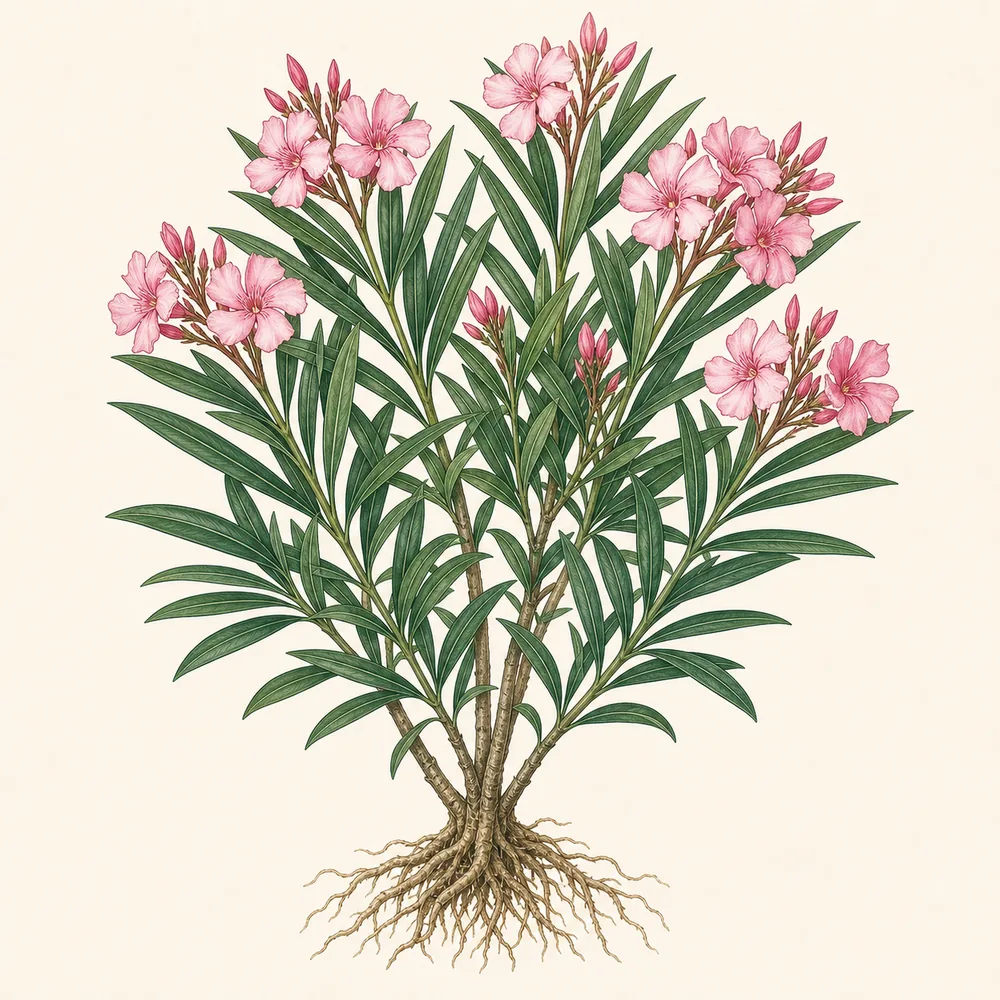
Oleander
The Mediterranean holiday shrub — months of pink, white or red flowers on a tough, drought-proof evergreen. In Britain it's a conservatory or patio-pot plant that comes indoors for winter. Beautiful, easy in the right spot, and among the most poisonous plants you can grow — including its smoke.
Highly poisonous — and never burn it
Every part of an oleander contains cardiac glycosides that disrupt the heart; the ASPCA lists drooling, abdominal pain, diarrhoea, colic, collapse and death in pets, and it is dangerous to people and livestock too. Two extra warnings make it stand out: the smoke from burning oleander is toxic, so prunings must never go on a bonfire, and water from a vase of cut stems is hazardous. Wash your hands after handling it, keep it away from animals, and dispose of clippings as green waste — never fire. Sources: ASPCA, RHS.
Care at a glance
Everything that matters, in six lines. The detail is further down.
Position
The hotter and sunnier the better — a south-facing wall or a sunny conservatory. Shade means few flowers.
Water
Surprisingly thirsty in growth despite its drought reputation; water pots generously through flowering, less in winter.
Feeding
A balanced or high-potash feed every couple of weeks keeps the long flowering going.
Compost
A John Innes-type compost in a pot gives the stability and drainage it likes.
Pruning
Trim to shape after flowering, always wearing gloves. Bag the clippings; never burn them.
Hardiness
Not frost-hardy in Britain. Grow in a pot and move it into a frost-free porch or conservatory for winter.
What to do, and when
Bring it back into growth: increase watering, start feeding, and move it outside only once frosts have finished.
Full flower in a hot sunny spot. Water and feed generously; deadhead to prolong the display. Handle only with gloves.
Flowering winds down. Before the first frost, prune lightly if needed (gloves on, bag the clippings) and move it under cover.
Keep it cool, bright and nearly dry in a frost-free place. It rests; overwatering now is the main risk.
A beautiful plant that demands respect
Oleander's toxicity is not folklore — it's one of the genuinely dangerous ornamental plants, poisonous in every part and in small amounts. The cases that make it worse than most are the unexpected routes: people have been poisoned using oleander stems as skewers, animals by drinking the vase water, and there are well-known warnings about the smoke from burning it carrying the toxins into the lungs.
None of that means you can't grow it — plenty of people do, safely, for decades. It means treating it like the serious plant it is: gloves whenever you prune or handle it, hands washed afterwards, clippings bagged for green waste rather than burned, and the plant kept well away from pets, livestock and small children who might chew a leaf or a flower.
Growing it in a British summer
Treat oleander as a container plant you move with the seasons. Give it the sunniest, most sheltered spot you have from late spring — a patio against a warm wall, or a bright conservatory — and water and feed it generously through summer; despite the drought-tolerant reputation, a flowering oleander in a pot drinks a lot.
The critical date is the first frost. Oleander is tender, so before autumn cold sets in, move the pot somewhere frost-free but cool and bright, cut watering right back, and let it rest until spring. Get the overwintering right and it flowers reliably year after year.
Common problems
Few or no flowers
Not enough sun or heat. It needs the hottest spot you have — against a south wall or under glass.
Yellowing leaves dropping
Often cold stress or waterlogging over winter. Keep it frost-free and much drier in the dormant season.
Sticky leaves, sooty mould
Scale insects or aphids and their honeydew. Wipe down (gloved) and treat the pests; improve airflow.
Buds forming then dropping
Usually a check from cold nights or erratic watering. Steady warmth and watering settles it.
Everything an oleander needs
A pot, sun, and a frost-free winter home. Plus gloves — those aren't optional.
We take no commission on anything in the "save your money" tier — if we don't think you should buy it, we don't link it. How our recommendations work
If you like this, try
Other plants with a similar temperament.
From the Notebook
Seasonal notes and guides that mention the oleander.
How we checked this
Care guidance cross-checked against the Royal Horticultural Society and NC State Extension. Toxicity confirmed against the ASPCA database (Nerium oleander — cardiac glycosides; drooling, abdominal pain, diarrhoea, colic, depression, death) and the RHS, which lists it among the most harmful garden plants; the toxic-smoke warning is well established. If our page and these sources ever disagree, believe them and tell us. If our page and these sources ever disagree, believe them — and tell us.
Sources: RHS · NC State Extension · ASPCA
Last reviewed · July 2026