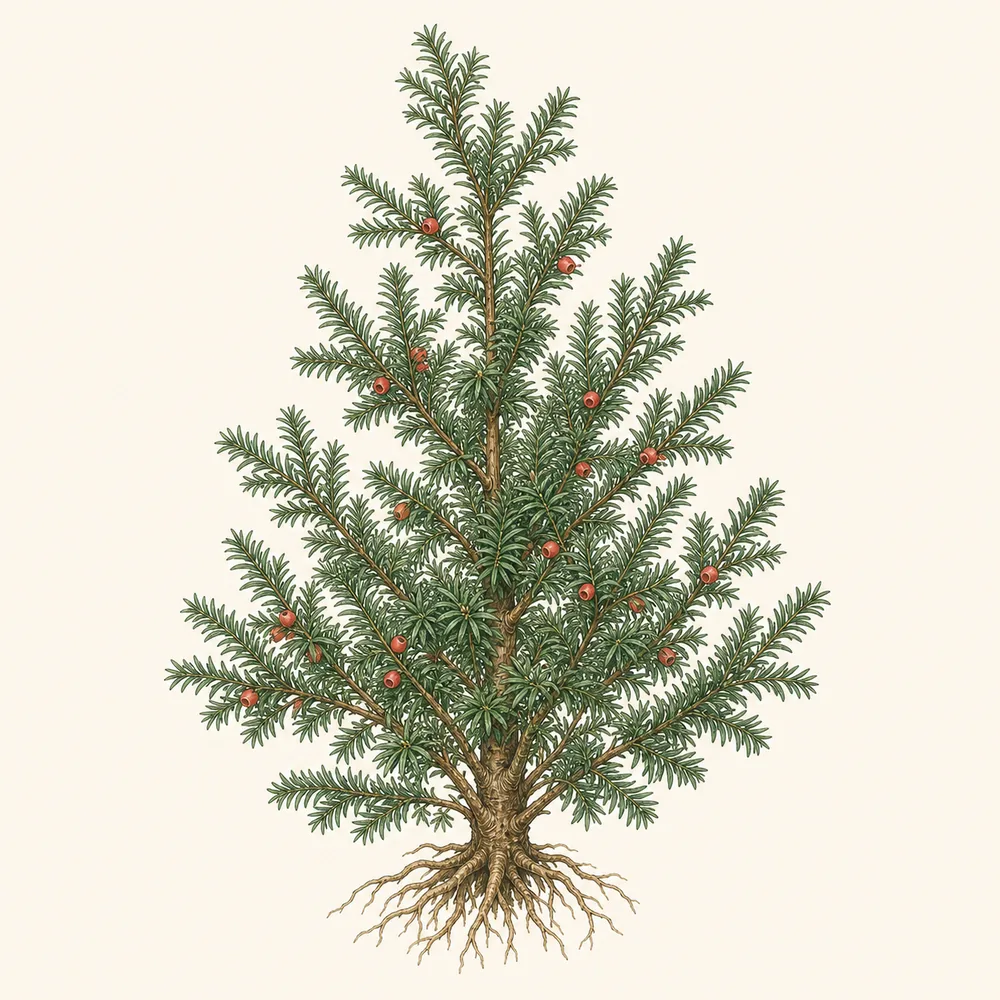
Yew
The finest evergreen hedge and topiary plant in Britain — dense, dark, endlessly clippable and genuinely long-lived. Slower than the leylandii people regret planting, and infinitely better. It is also, quietly, one of the most poisonous plants in the country.
Deadly to horses, livestock, dogs and people
Yew contains taxine alkaloids that stop the heart, often with no warning signs before sudden death. Horses and cattle are classic victims — a few mouthfuls can kill — and the toxin survives in clippings, so a pile of hedge trimmings thrown over a fence is a known way livestock die. Dogs can take a lethal dose chewing a fallen branch. The bright red berry flesh is harmless, but the seed inside is not, and all of it is dangerous to people. Never let clippings reach grazing animals; bin or burn them safely, never dump them. Sources: ASPCA, RHS.
Care at a glance
Everything that matters, in six lines. The detail is further down.
Position
One of very few plants that makes a dense hedge in full shade as happily as in sun.
Soil
Tolerates most soils including chalk. The one thing it won't forgive is waterlogged ground.
Water
Water well for the first two years; mature yew is drought-tough and needs little.
Clipping
Clip hedges and topiary in summer (and again in early autumn if needed). Uniquely, it re-sprouts from old bare wood.
Feeding
A mulch of compost in spring keeps it dense and green. It's not a hungry plant.
Hardiness
Completely hardy and extremely long-lived — yews outlast the gardeners who plant them by centuries.
What to do, and when
New growth flushes. Mulch the base. Plant bare-root or pot-grown yew now while the soil is moist — and clear every clipping away from livestock.
The main clipping season for crisp hedges and topiary. Bag up every trimming — never leave them where animals can reach.
A second light trim keeps edges sharp into winter. Bare-root planting season begins late autumn — the cheapest way to plant a hedge.
Evergreen and unbothered. A good time to plant bare-root whips on a mild, unfrozen day.
The clippings are the real danger
The counter-intuitive fact that kills animals every year: yew is often more dangerous cut than growing. Livestock tend to leave the living hedge alone, but wilted or dried clippings stay just as toxic — the taxine doesn't break down — and become oddly palatable. A neighbourly pile of trimmings tossed over a paddock fence has killed whole groups of horses and cattle.
So the rule with yew is absolute: every clipping is accounted for. Bag them, take them to a green-waste tip that composts at high temperature, or burn them where the smoke and ash won't reach animals — but never leave a heap where a horse, cow, sheep or curious dog can get to it, and never dump them on a bridleway or field edge.
Why it beats leylandii, every time
People plant leylandii for speed and spend the next decade fighting a runaway 15-metre wall — we take no commission on it, because you shouldn't buy it. Yew is the honest alternative. It's slower (20–30cm a year), but it makes a denser, darker, more beautiful hedge, tolerates hard clipping into any shape, and uniquely for a conifer will re-sprout if you cut it back into old bare wood.
Plant it as bare-root whips in the dormant season for a fraction of the pot-grown price, keep it watered for the first two summers, and you'll have a hedge your grandchildren inherit rather than one you're forever hacking back.
Common problems
Brown, dying patches in the hedge
Almost always waterlogging — yew hates wet feet. Improve drainage; it won't tolerate sitting in water.
Bare, thin base
Usually too dry when young, or deep shade plus drought. Water and mulch; yew will re-clothe old wood over time.
Yellowing after a wet winter
Root stress from saturated soil. Ease off any feeding and improve drainage around the roots.
Sparse growth on new plants
Slow to establish is normal for the first year or two. Keep watered; growth accelerates once rooted.
Everything a yew hedge needs
Cheap to plant well, and it's the last hedge you'll ever plant.
We take no commission on anything in the "save your money" tier — if we don't think you should buy it, we don't link it. How our recommendations work
If you like this, try
Other plants with a similar temperament.
From the Notebook
Seasonal notes and guides that mention the yew.
How we checked this
Care guidance cross-checked against the Royal Horticultural Society and NC State Extension. Toxicity confirmed against the ASPCA database (Taxus — taxine A and B; tremors, dyspnoea, seizures, sudden death from acute heart failure) and the RHS, which lists yew among the most harmful garden plants and warns that clippings remain toxic. If our page and these sources ever disagree, believe them and tell us. If our page and these sources ever disagree, believe them — and tell us.
Sources: RHS · NC State Extension · ASPCA
Last reviewed · July 2026