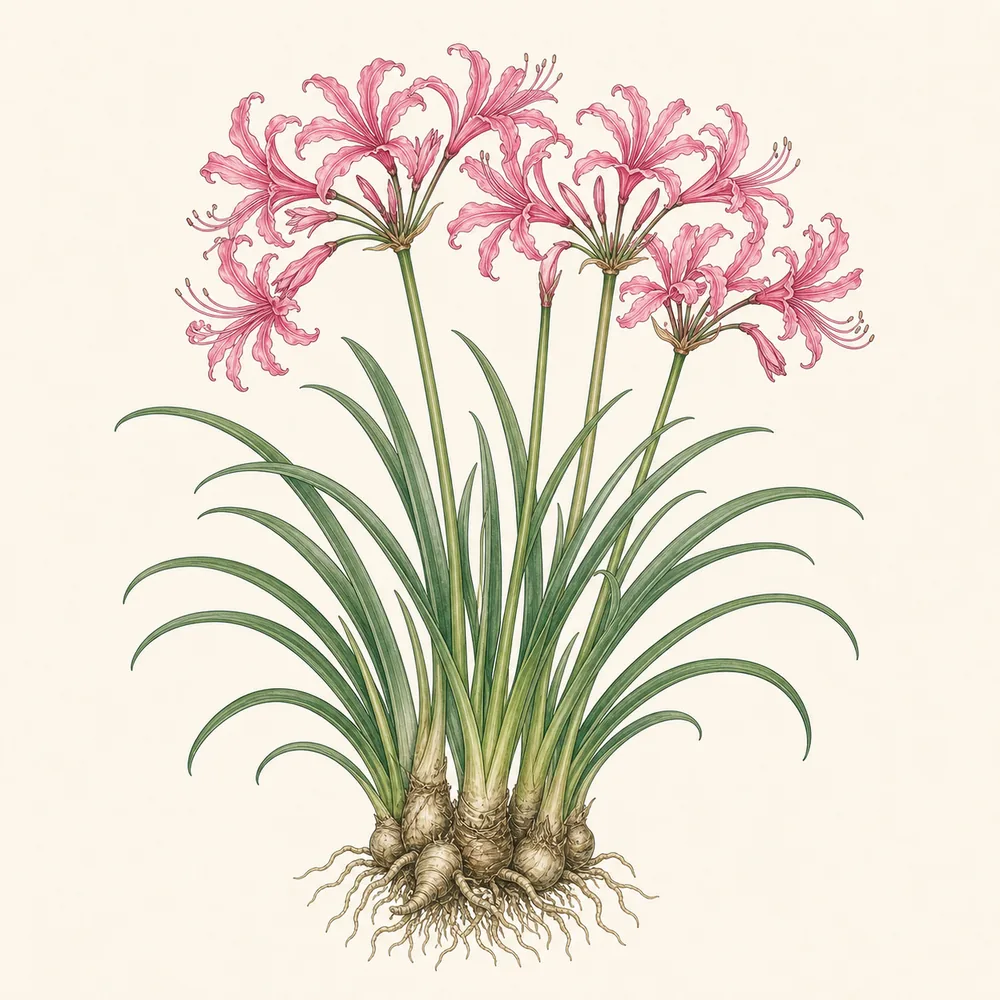
Nerine
A South African bulb that flowers when almost everything else is over — startling spidery heads of glowing pink on bare stems through autumn. Plant it at the foot of a warm, sunny wall with the bulb necks proud of the soil, then leave it alone, and it clumps up and flowers better every year.
Toxic if eaten (bulbs)
Nerines are bulbs of the amaryllis family, which contain lycorine and related alkaloids. Eating the bulbs or foliage causes drooling, vomiting and stomach upset — the bulbs are the most potent part and the usual risk is a pet digging them up. The RHS flags amaryllis-family bulbs as harmful.
Care at a glance
Everything that matters, in six lines. The detail is further down.
Light
Wants the hottest, sunniest spot you have — a south-facing wall base is ideal. The summer baking is what triggers autumn flowers.
Water
Keep it dry when dormant in summer, which ripens the bulbs. A little water as buds appear in autumn helps, then ease off again.
Hardiness
Nerine bowdenii is the hardy species, fine outdoors in most of the UK if given a sheltered, sunny wall and sharp drainage.
Planting depth
Plant shallow, with the top third of each bulb — the neck — sitting above the surface. Deep planting is the classic reason they sulk.
Feeding
A low-nitrogen, high-potash feed (tomato food) after flowering and while in leaf builds the bulb up. Avoid rich nitrogen — it favours leaf.
Soil
Free-draining, even gritty soil that never waterlogs. Rich, heavy, wet ground rots the bulbs; lean and sharp is what they want.
What to do, and when
Strap-shaped leaves are in full growth, feeding the bulb. Keep them watered and fed with potash, and let the foliage work.
The leaves die back and the bulb goes dormant. Keep it hot and dry now — the summer baking is what sets up the autumn flowers.
The main event: bare stems of vivid pink spidery flowers from September into November, long after other bulbs have finished.
Fresh leaves push up after flowering to overwinter in mild spells. Protect from hard frost with a dry mulch against a cold snap.
Plant it shallow — necks proud
This is the one rule that decides whether nerines flower for you. Unlike most bulbs, they must be planted shallow, with the necks sitting above the soil — roughly the top third of the bulb showing. Bury them deep like daffodils and they'll grow leaf but sulk for years without a single flower.
Set them at the foot of a warm, south-facing wall in sharply drained soil, spacing the bulbs close so they can knit into a clump. The wall throws back heat that bakes the dormant bulbs in summer, and that baking is exactly what triggers the autumn display.
Leave them alone to clump up
Nerines flower best when crowded and undisturbed — the opposite of most bulbs. Resist the urge to lift and divide them; a congested clump packed with bulbs jostling each other flowers far more freely than a freshly split, roomy one.
So plant them and then, essentially, forget them. They can take a year or two to settle after planting and may skip flowering while they establish. Don't panic and dig them up to check — patience is the whole game, and a happy clump will flower for decades.
The autumn payoff
What you get for so little work is remarkable: glowing pink flowers on bare stems just as the garden is winding down, often well into November. The spidery, crimped petals catch the low autumn light and there's little else that colour so late in the year.
They make superb cut flowers too, lasting a fortnight or more in a vase. After the flowers fade, the strappy leaves appear and grow through winter — feed with potash while they're in leaf to build next autumn's show, then let them die back and bake through summer.
Common problems
Lots of leaf, no flowers
Nearly always planting too deep, too much shade, or too rich a soil. Replant shallow with the necks proud, against a hot sunny wall, and feed with potash not nitrogen.
Bulbs rotting
Wet, heavy ground in winter is the killer. Improve drainage with grit, plant shallow, and choose a spot that bakes dry in summer rather than staying damp.
Sulking after planting or moving
Nerines hate disturbance and flower best when congested. Give a newly planted or divided clump a year or two to settle before expecting a full display — don't keep lifting them to check.
No flowers after a cool, dull summer
They need a hot, dry summer baking to initiate buds. A shady or wet position, or a poor summer, means fewer flowers — the warmest wall you have makes all the difference.
Everything a nerine needs
A hot wall, sharp drainage, and the nerve to plant shallow and leave it be.
We take no commission on anything in the "save your money" tier — if we don't think you should buy it, we don't link it. How our recommendations work
If you like this, try
Other plants with a similar temperament.
How we checked this
Care cross-checked against the RHS, which lists amaryllis-family bulbs (incl. Nerine) among potentially harmful plants — lycorine alkaloids concentrated in the bulbs. If our page and these sources ever disagree, believe them — and tell us.
Sources: RHS · ASPCA — toxic & non-toxic plants
Last reviewed · August 2026