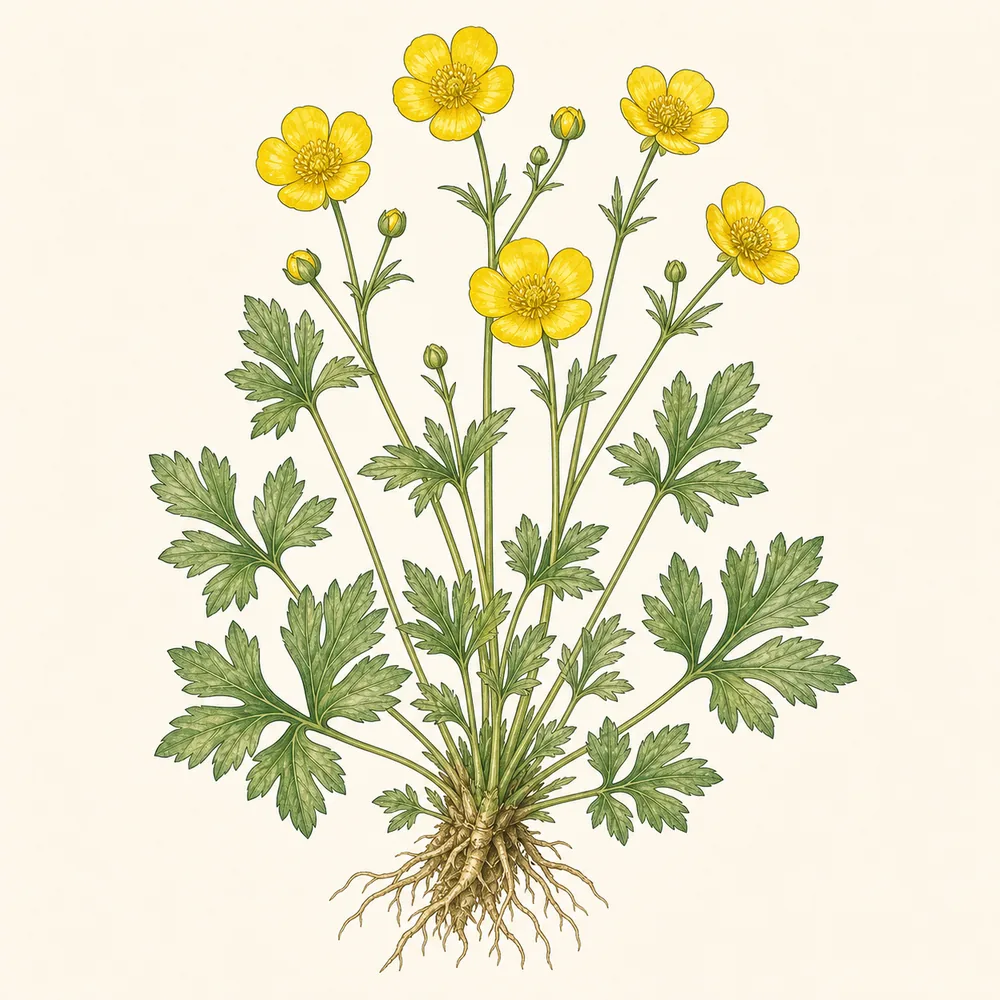
Meadow Buttercup
The tall, glossy-yellow buttercup that lights up old hay meadows in early summer. A native perennial that loves damp, unimproved grassland, it's one of the easiest wildflowers to establish and a valuable early nectar source for bees and hoverflies.
Toxic to cats, dogs & horses
Buttercups (Ranunculus) are listed as toxic to cats, dogs and horses on the ASPCA database. The fresh sap contains protoanemonin, an irritant that causes drooling, mouth ulcers, wobbliness and stomach upset. The toxin breaks down in dried hay, but fresh plants are the hazard.
Care at a glance
Everything that matters, in six lines. The detail is further down.
Light
Happiest in open, sunny grassland but tolerates a little dappled shade. The more sun it gets, the more freely it flowers.
Water
Unlike most meadow flowers it prefers soil that stays moist — it's a plant of damp meadows and won't need watering except in a real drought.
Hardiness
A native perennial, hardy everywhere in the UK. It dies back over winter and returns from the crown each spring.
Soil
Prefers heavier, moisture-retentive soil that hasn't been fed. Fertile ground grows too much grass and the buttercups get crowded out.
Feeding
Never feed it. Like all meadow flowers it needs low fertility to compete — the leaner the ground, the better it holds against vigorous grasses.
Spread
It spreads mainly by seed and forms loose drifts over a few years. Leave heads to ripen and it'll gently colonise the damper spots itself.
What to do, and when
Basal rosettes of deeply cut leaves expand and the flower stems begin to rise. Sow fresh seed now, or plant plug-grown plants into damp, thin grass while the soil is moist.
The tall branching stems carry glossy yellow flowers through May, June and July — peak meadow. Leave them to bloom and set seed; they're an easy early nectar source for bees and hoverflies.
Cut the meadow once the seed has dropped and rake off the arisings. Divide crowded clumps now if you want to spread the plant to new damp patches.
The plant dies right back and rests as a dormant crown below the soil. Nothing to do — it reappears reliably in spring.
A buttercup that belongs in a meadow
Not all buttercups are equal. The creeping buttercup (Ranunculus repens) is the low, rooting weed that invades lawns and borders on rooting runners — a genuine nuisance. The meadow buttercup (Ranunculus acris) is a taller, clump-forming, well-behaved perennial that stays put and spreads only gently by seed.
It's the meadow buttercup you want for a wildflower patch: waist-high branching stems of glossy yellow flowers that catch the light and give an old hay meadow its classic early-summer glow. Make sure you buy or collect the right species — the names are close and the plants behave very differently.
Damp ground and how to sow it
Meadow buttercup is one of the few meadow flowers that actively prefers moisture-retentive soil — it's a plant of damp meadows and low-lying grassland, so a heavier, cooler patch that other wildflowers find too wet suits it well.
Sow fresh seed direct in autumn onto bare, firmed soil with the competing weeds cleared off. Like most native seed it germinates best after a spell of winter cold, so autumn sowing is more reliable than spring. Scatter it thinly, press it in without burying it, and let the weather do the rest. Plug plants set into damp grass in autumn are the quickest route to flowers the following June.
The once-a-year cut
A buttercup meadow is managed like any hay meadow: let it grow and flower through spring and early summer, then take one cut a year once the flowers have finished and shed their seed — usually from mid to late summer.
Always rake the cut material off and remove it. Leaving it to rot returns nutrients to the soil and boosts the grass, which is exactly what shades out the flowers. Removing it year after year slowly lowers fertility and tips the balance back toward the wildflowers. If your patch is very grassy, an extra light cut in early autumn helps weaken the grass further.
Wildlife and a word on grazing
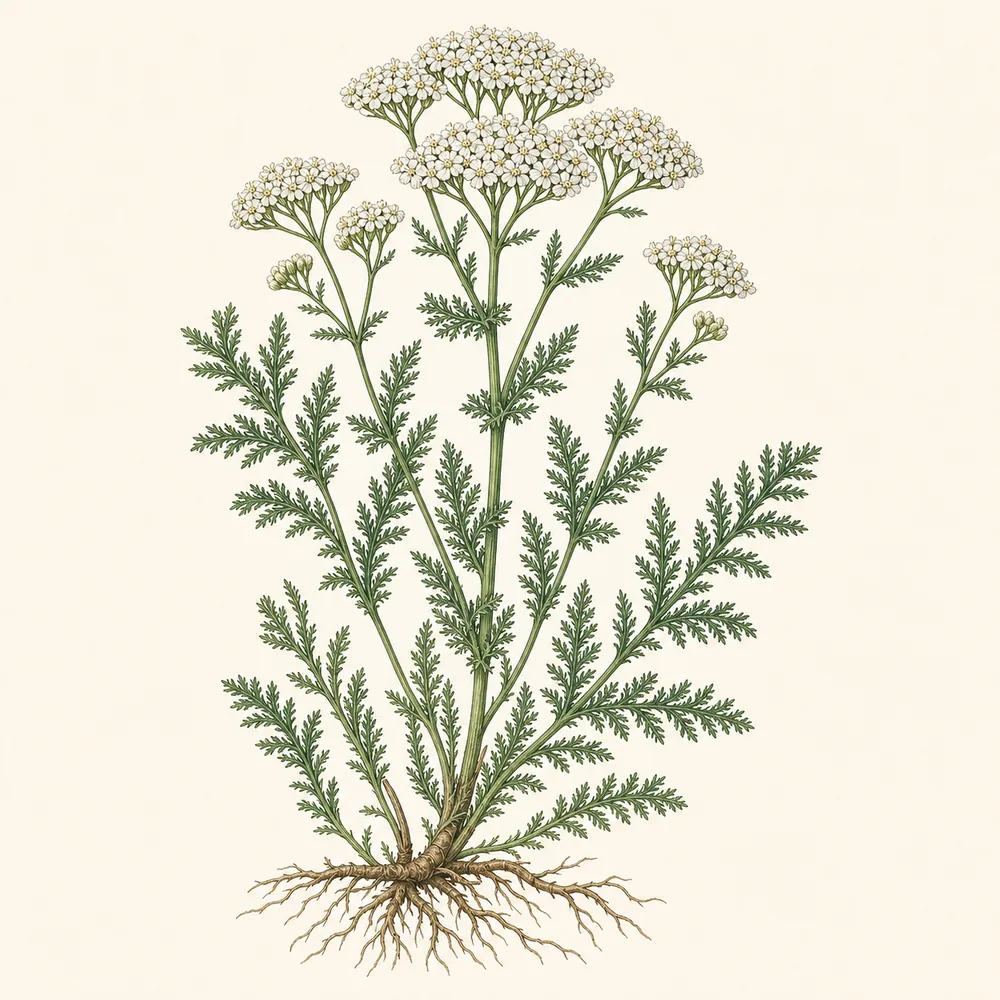
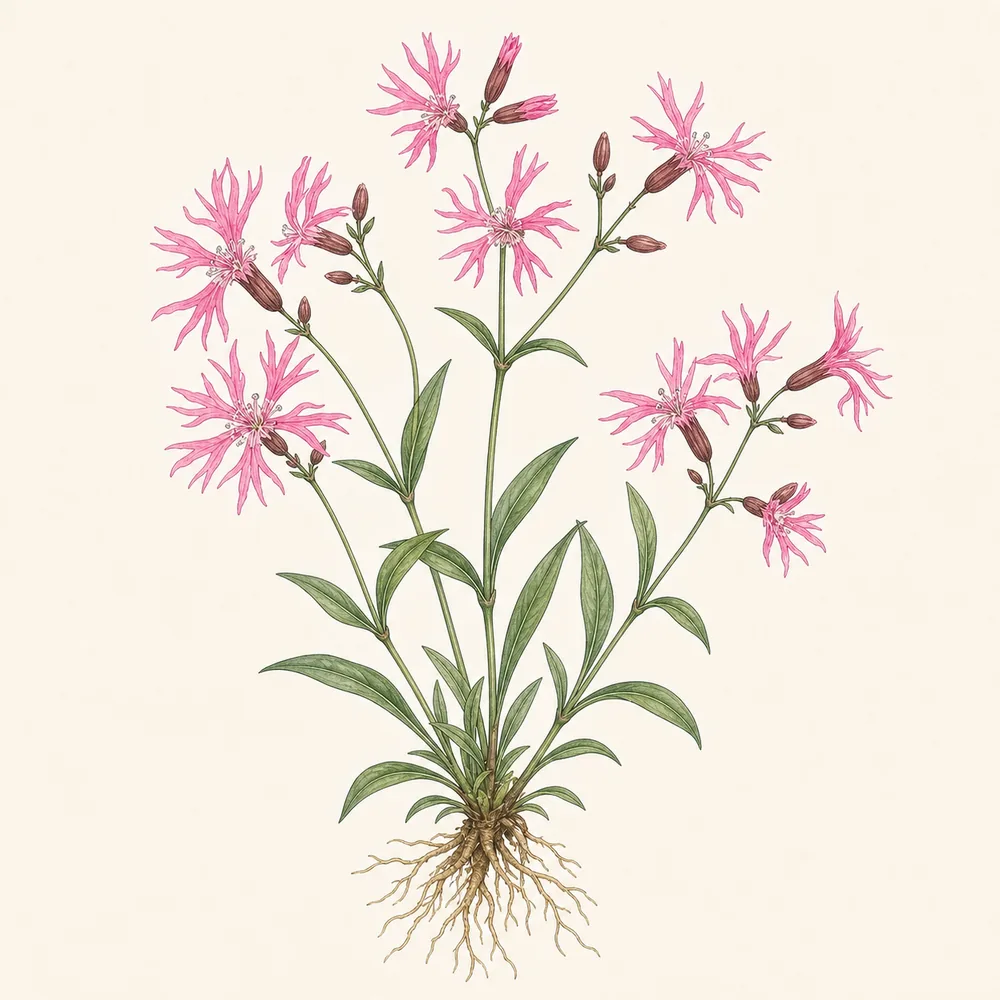
The open, five-petalled flowers are an easy, reliable early-summer nectar source for bees, hoverflies and small beetles, and the seeds feed birds later in the year. In a mixed meadow it flowers alongside ox-eye daisy, yarrow and ragged robin to give a long, overlapping run of bloom.
One practical caution: the fresh plant is an irritant to grazing animals (see the pet-safety note above). Livestock and horses generally avoid it in the field because it tastes acrid, but it's wise to keep a buttercup patch away from where pets or ponies graze, and never let fresh clippings end up where an animal might nibble them.
Common problems
Confused with creeping buttercup
If your 'meadow buttercup' is spreading by runners and invading the lawn, it's almost certainly creeping buttercup (R. repens). Dig it out and start again with the correct clump-forming species.
Swamped by grass
On rich or recently fed ground, vigorous grasses outgrow the buttercups. Stop feeding, cut and remove the arisings each year, and consider adding yellow rattle to weaken the grass.
Few flowers in shade
Too little light gives leafy plants and sparse bloom. Meadow buttercup flowers best in open, sunny grassland — thin overhanging growth or move it to a brighter spot.
Poor establishment from spring sowing
The seed needs a cold spell to break dormancy, so spring-sown seed often germinates slowly and patchily. Sow fresh seed in autumn instead, or use plug plants.
Everything a buttercup meadow needs
Damp, unimproved grassland and the right species to start with.
We take no commission on anything in the "save your money" tier — if we don't think you should buy it, we don't link it. How our recommendations work
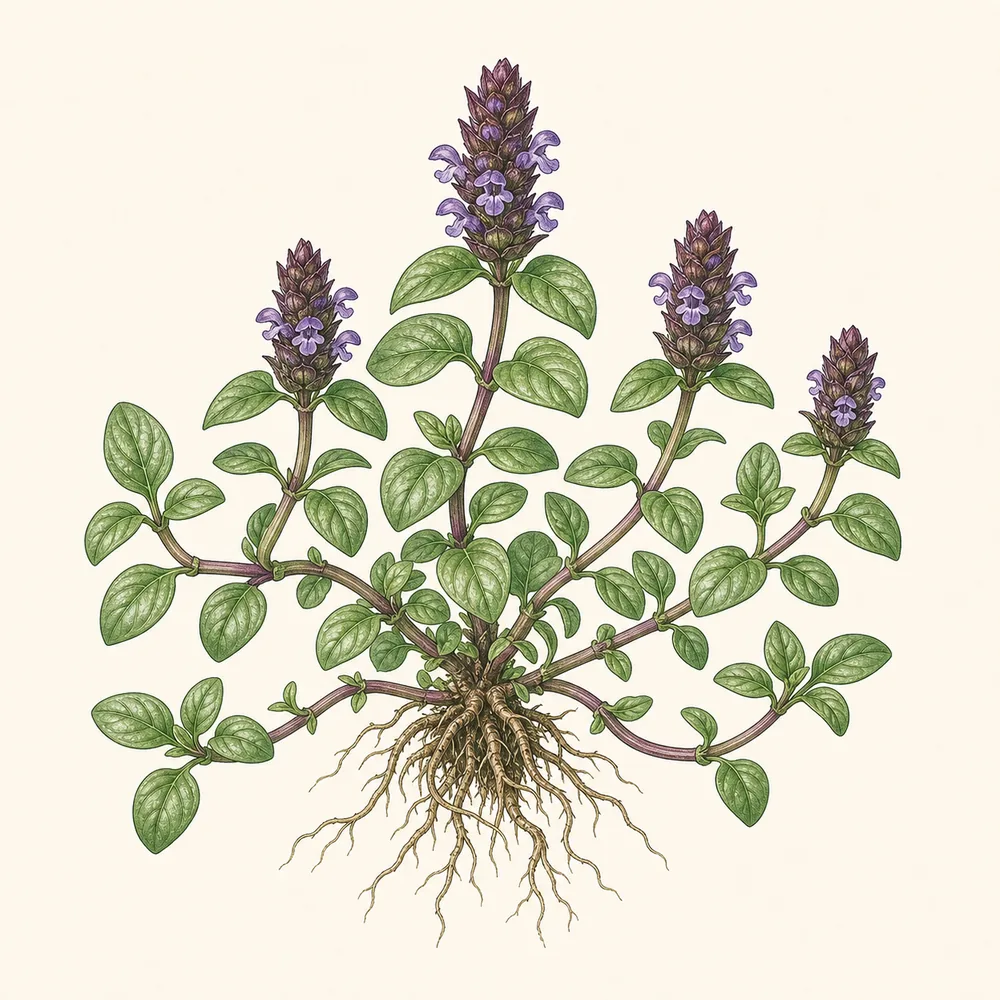
If you like this, try
Other plants with a similar temperament.
How we checked this
Care cross-checked against the RHS. Toxicity taken from the ASPCA database, which lists Buttercup (Ranunculus spp.) as toxic — protoanemonin irritant. If our page and these sources ever disagree, believe them — and tell us.
Sources: RHS · ASPCA — toxic & non-toxic plants
Last reviewed · July 2026