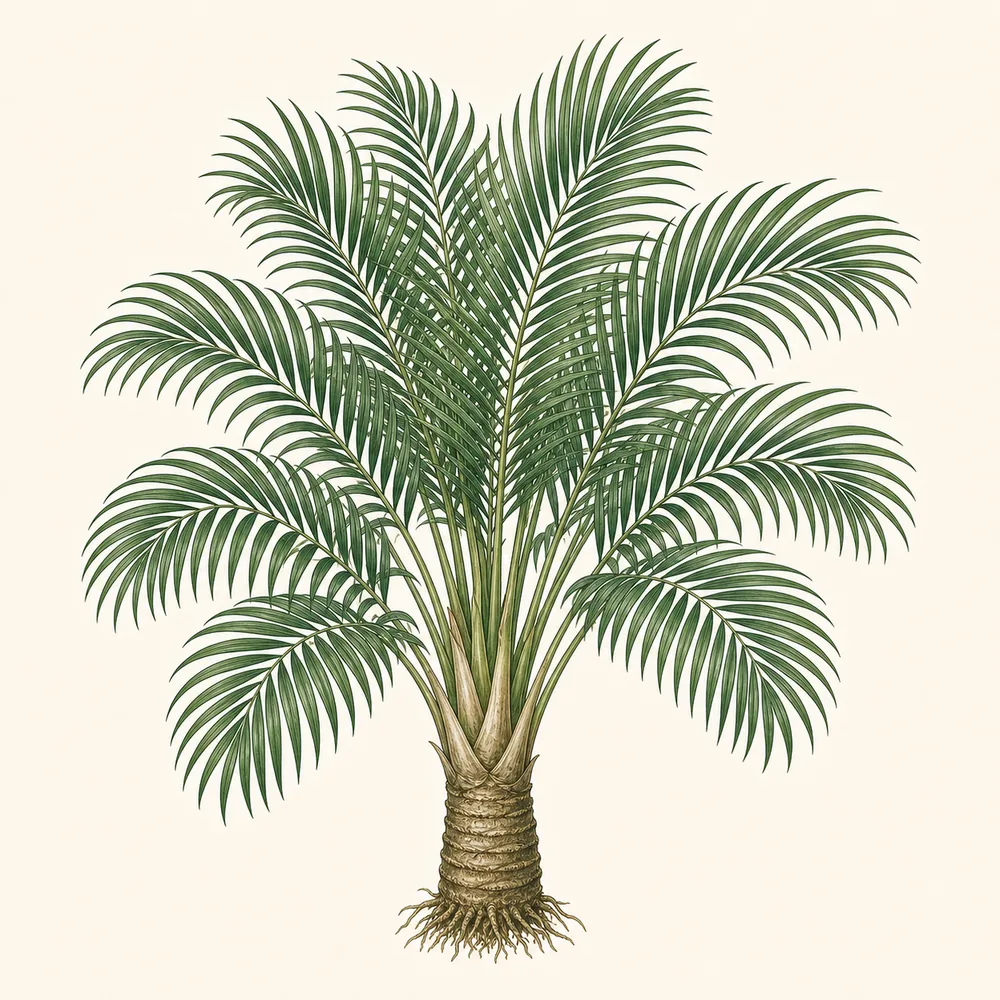
Majesty Palm
A graceful feather palm with arching, deep-green fronds — sold cheaply and everywhere, but genuinely demanding indoors. In the wild it grows on Madagascan riverbanks, and it never really forgives dry air, low light or a dried-out pot.
Not listed by ASPCA — treat with caution
Neither the ASPCA nor the Pet Poison Helpline lists the majesty palm (Ravenea), so we can't stamp it pet-safe. True palms are generally low-risk and there's no evidence of serious toxicity, but with no database entry we flag it honestly rather than guess.
Care at a glance
Everything that matters, in six lines. The detail is further down.
Light
It wants the brightest spot you can give it, including a little gentle direct sun. In dim rooms it thins out and slowly declines.
Water
A riverbank plant that hates drying out. Keep the compost evenly moist and never let it dry to the bone — but don't leave it standing in water either.
Temperature
Warmth-loving. Keep it above 15 °C, away from cold draughts and off unheated windowsills in winter.
Humidity
Dry indoor air is its biggest enemy — it browns the fronds fast. Group it with other plants, mist, or stand it near a humidifier.
Feeding
A balanced feed monthly spring to summer. It is prone to yellowing from magnesium and iron shortages — a feed for palms or an occasional dose of Epsom salts helps.
Soil
A rich houseplant mix that holds moisture but still drains — loosen a peat-free compost with a little grit so it never turns to sludge.
What to do, and when
Growth picks up as light returns. Resume feeding, repot if truly pot-bound, and move it into the brightest spot you have.
Peak growth and its thirstiest season. Keep it evenly moist, feed monthly, and watch for dry-air browning as rooms warm up.
Ease off feeding as light fades, but keep the compost moist. Move it away from radiators as the heating comes on.
Slower growth. Water a little less but never let it dry out, keep it above 15 °C, and fight the dry heated-room air with humidity.
Why so many majesty palms fail
Majesty palms are mass-produced and sold cheaply, which is exactly why they get a bad reputation. In the wild they grow with their feet almost in the water, in strong light and humid air — conditions a centrally heated living room struggles to match.
Treat it as a plant that wants more of everything: more light, more water, more humidity and more feed than a typical houseplant. Give it those and it thrives; skimp and it slowly browns from the tips inward.
Watering without drowning it
The balance to strike is consistently moist but never waterlogged. Let the very top of the compost approach dryness, then water thoroughly and let the excess drain away completely.
A moisture meter or simply pushing a finger in helps — the tricky part is that this palm punishes both extremes, browning if it dries out and rotting if it sits wet.
Fixing yellowing fronds
Overall yellowing, especially with green veins, usually signals a nutrient shortage — magnesium or iron are common culprits in fast-growing palms.
A feed formulated for palms addresses this; many growers also use a monthly dose of Epsom salts (magnesium sulphate) dissolved in the watering can. Persistent lower-frond yellowing with soggy soil, though, points back to overwatering.
Common problems
Browning frond tips
Dry air or the pot drying out. Raise humidity, keep it evenly moist, and move it off any hot, dry spots near radiators.
Yellowing fronds
Often a magnesium or iron shortage in this hungry palm — feed with a palm food or Epsom salts. Check it isn't also sitting wet.
Thin, stretched growth
Not enough light. Move it to the brightest window you have; it genuinely wants near-direct light.
Fine webbing between fronds
Spider mites, which love the dry air this palm is often kept in. Rinse the foliage, raise humidity, and treat repeatedly.
Everything a majesty palm needs
Bright light, steady moisture, humidity and a generous feed — this one earns its keep only if you commit.
We take no commission on anything in the "save your money" tier — if we don't think you should buy it, we don't link it. How our recommendations work
If you like this, try
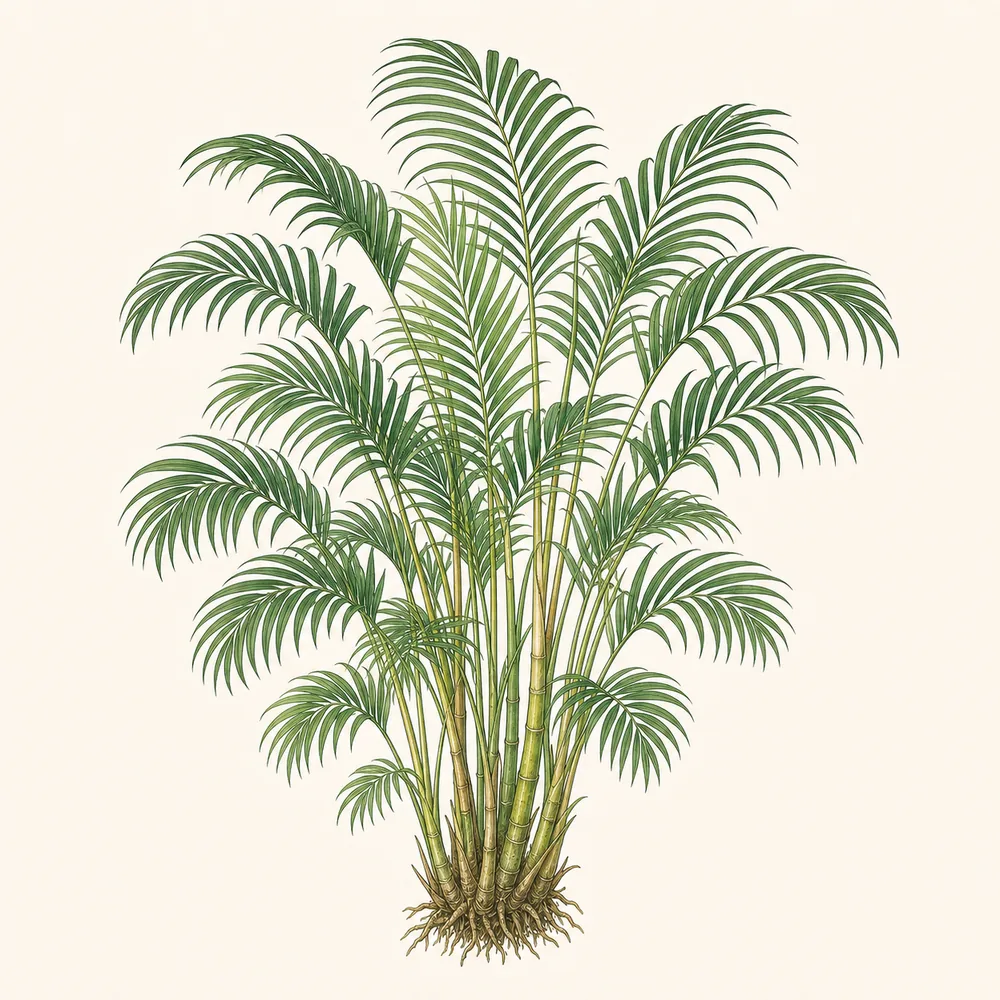
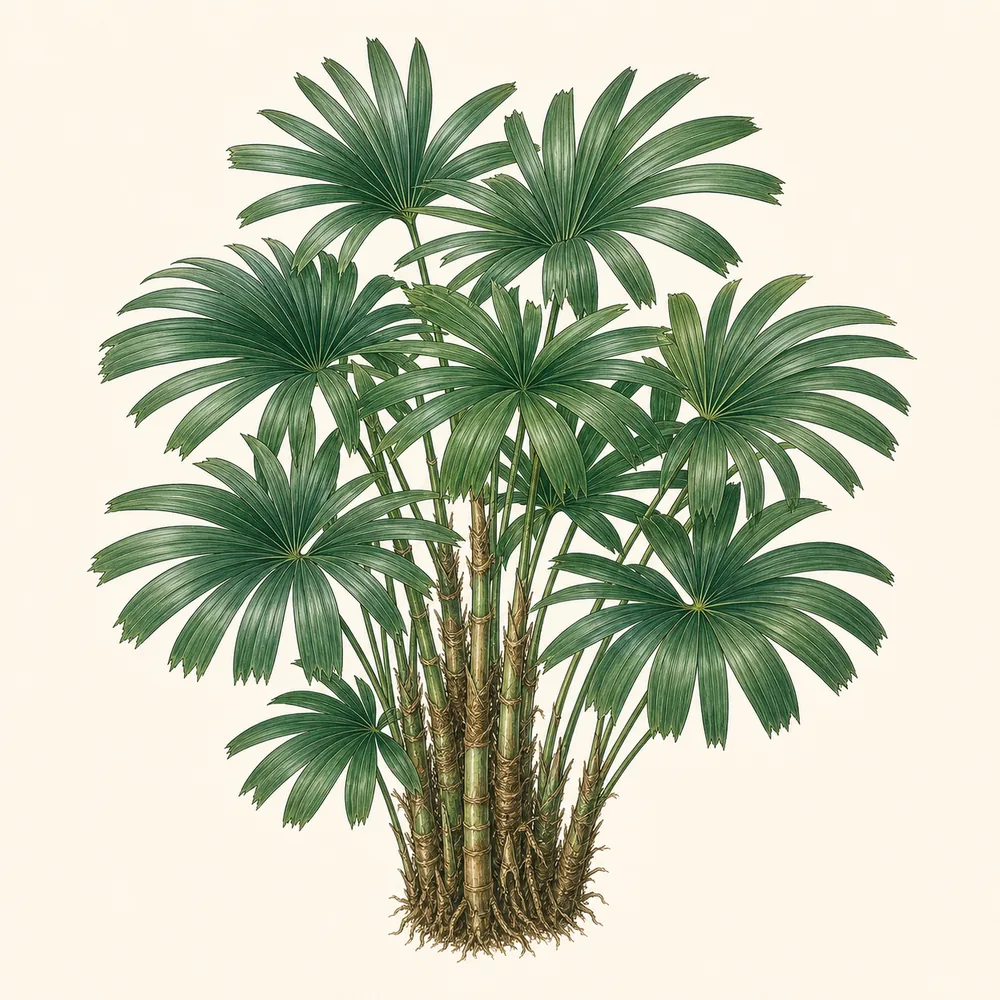
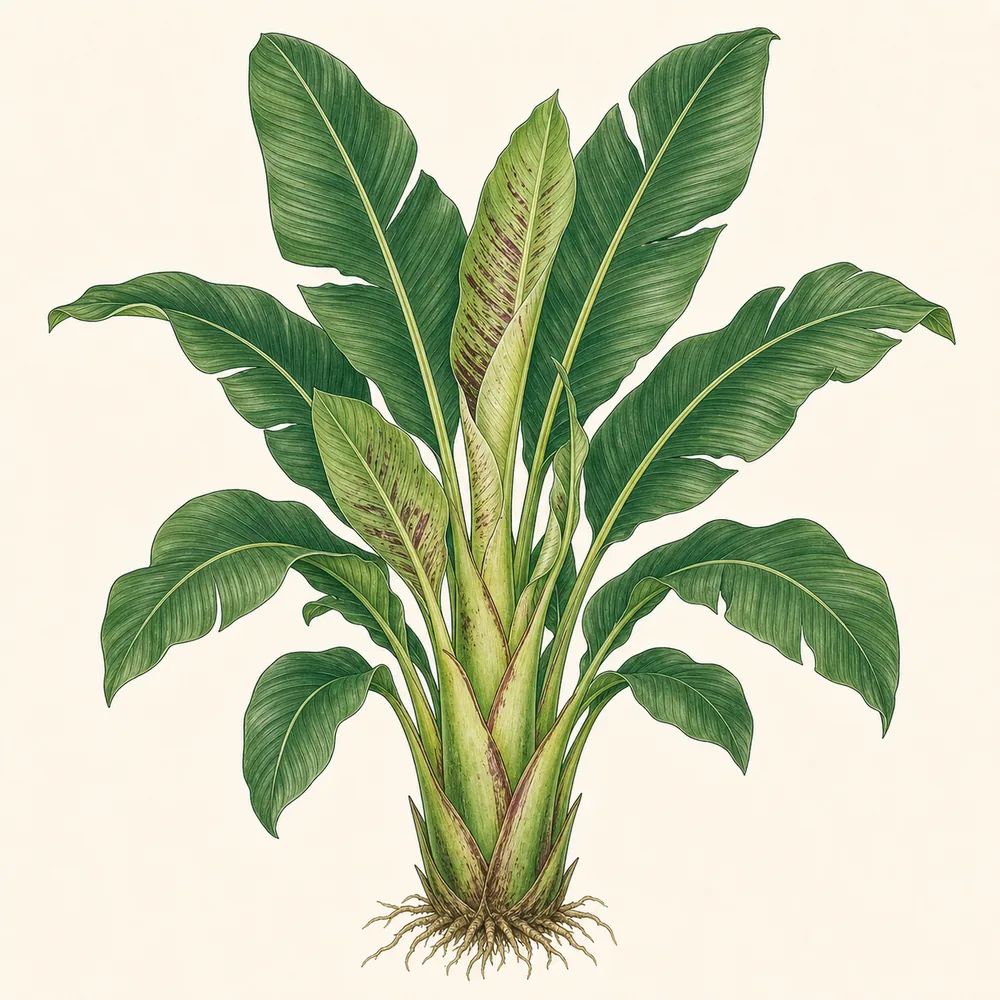
Other plants with a similar temperament.
How we checked this
Care cross-checked against the RHS. Neither the ASPCA nor the Pet Poison Helpline lists the majesty palm, so its pet-safety is unconfirmed and we have not stamped it safe. If our page and these sources ever disagree, believe them — and tell us.
Sources: RHS · ASPCA — toxic & non-toxic plants
Last reviewed · July 2026