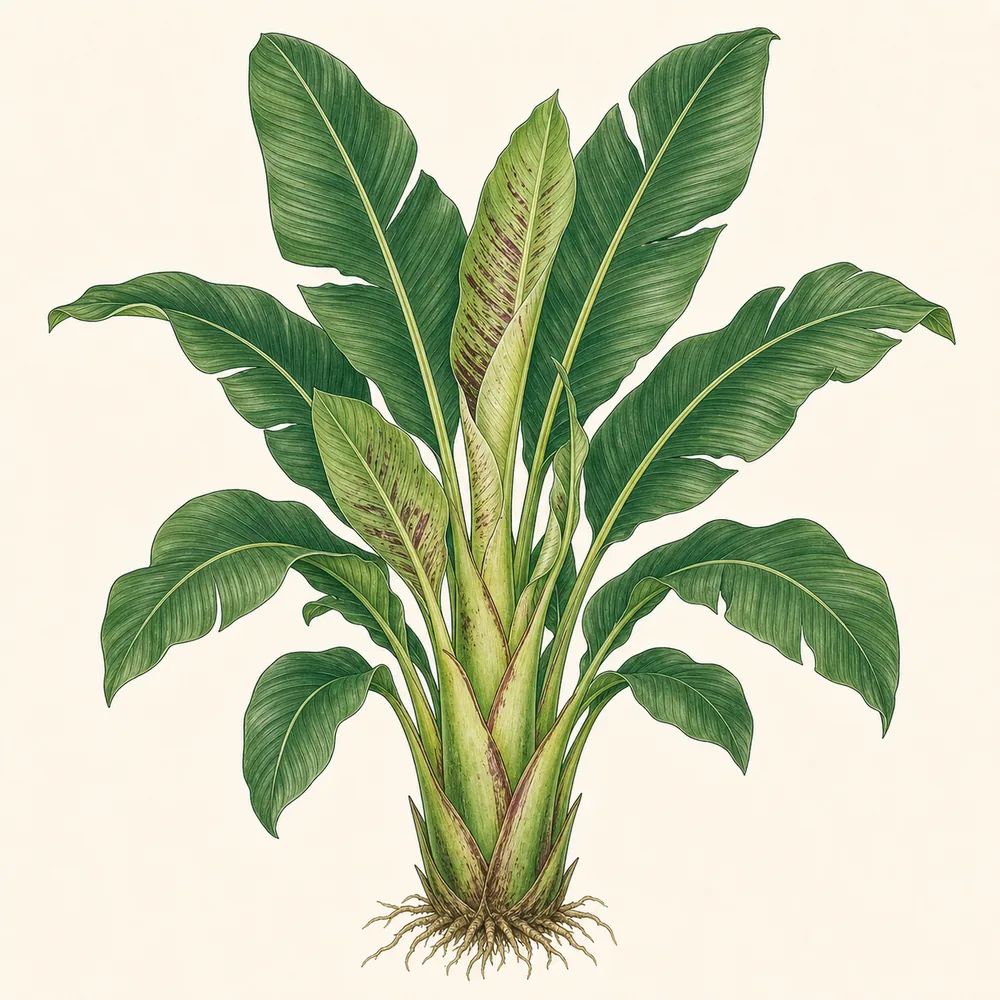
Indoor Banana
A fast, dramatic foliage plant with huge paddle-shaped leaves that unfurl bright green from a central spear. Dwarf varieties suit a home, but every banana wants the same three things in bulk: light, water and food.
Safe around cats & dogs
The banana (Musa) is listed as non-toxic to cats and dogs on the ASPCA database, so a dwarf indoor banana is a safe choice in a home with pets.
Care at a glance
Everything that matters, in six lines. The detail is further down.
Light
Give it the sunniest spot you have — a few hours of direct sun is welcome. Poor light means small, floppy leaves and stalled growth.
Water
A thirsty plant with big leaves that lose water fast. Keep the compost consistently moist in growth, watering as soon as the surface starts to dry.
Temperature
Loves warmth and grows fastest in the heat. Keep it above 15 °C and well away from cold draughts, which check its growth.
Humidity
A tropical plant that resents dry air — low humidity browns and tears the leaf edges. Group with other plants or run a humidifier.
Feeding
One of the greediest houseplants. Feed a balanced or high-potassium feed every week or two through spring and summer for those big leaves.
Soil
A rich, fertile houseplant mix that holds moisture but still drains. It quickly exhausts its compost, so pot on as it grows.
What to do, and when
Growth accelerates fast. Repot into fresh rich compost, start feeding heavily, and move it into your brightest window.
Explosive growth — new leaves can appear weekly. Water generously, feed every week or two, and consider standing it outside in a warm, sheltered spot.
Growth slows as light drops. Ease back on feeding and water a little less, and bring any outdoor plant in well before the first cold nights.
Near-dormant. Water sparingly to keep it just moist, keep it warm and above 15 °C, and expect little or no new growth until spring.
A plant that grows before your eyes
Bananas are among the fastest-growing houseplants you can keep. Given warmth, light and food, a young dwarf banana can push out a new leaf every week or two in summer, quickly filling a corner.
That speed is the appeal, but it comes with an appetite. Bananas are heavy feeders and thirsty drinkers — under-feed or under-water and the leaves stay small and the plant sulks. Think of it as a plant you actively fuel rather than one you leave alone.
Torn leaves are normal
New banana leaves emerge as tight spears and unfurl whole, but older leaves naturally split along the veins into the familiar fringed look. In the wild this lets wind pass through without shredding the plant.
Indoors, splitting is nothing to worry about — but excessive tearing, along with brown crispy edges, usually means the air is too dry. Raising humidity keeps the leaves fuller for longer.
Will it fruit indoors?
Realistically, no. Most indoor bananas are grown purely for their foliage — fruiting needs far more light, heat, root room and time than a house provides, and many ornamental dwarf types won't produce edible fruit anyway.
Enjoy it for the lush, tropical leaves. If you want the fastest, healthiest growth, stand it outside in a warm sheltered spot over summer and bring it back in before the nights turn cold.
Common problems
Brown, crispy leaf edges
Dry air or the pot drying out. Raise humidity, keep it consistently moist, and move it off hot, dry spots near radiators.
Small, pale new leaves
Too little light or food for this hungry plant. Move it brighter and feed more often through the growing season.
Yellowing lower leaves
Some loss of the oldest leaves is natural. Widespread yellowing with soggy soil means overwatering — improve drainage and ease off.
Fine webbing under the leaves
Spider mites, which thrive in dry air. Rinse the big leaves, raise humidity, and treat repeatedly until clear.
Everything an indoor banana needs
Maximum light, plenty of water and a heavy feed — fuel it and it flies.
We take no commission on anything in the "save your money" tier — if we don't think you should buy it, we don't link it. How our recommendations work
If you like this, try
Other plants with a similar temperament.
How we checked this
Care cross-checked against the RHS. Toxicity confirmed against the ASPCA database, which lists the banana (Musa) as non-toxic to cats and dogs. If our page and these sources ever disagree, believe them — and tell us.
Sources: RHS · ASPCA — toxic & non-toxic plants
Last reviewed · July 2026