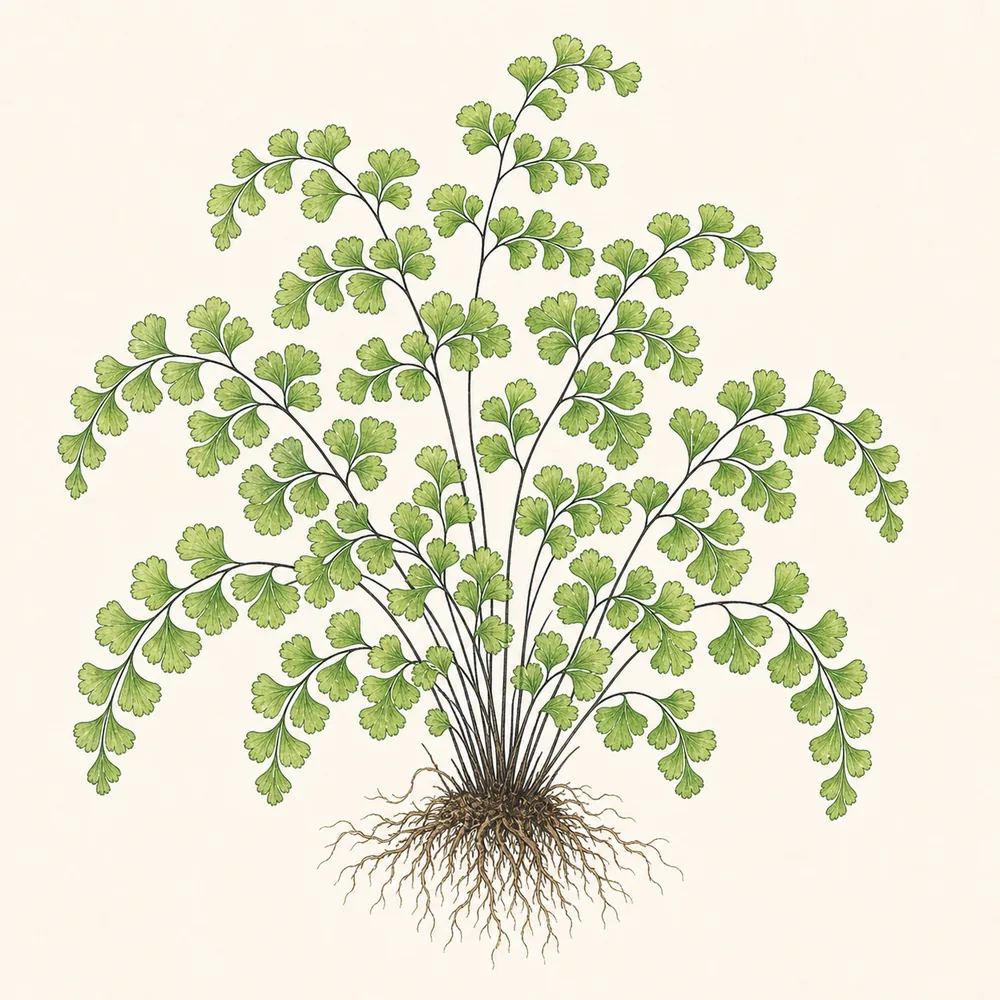
Maidenhair Fern
Clouds of delicate, fan-shaped leaflets on wiry black stems — one of the prettiest ferns you can grow, and one of the fussiest. Get the humidity and steady moisture right and it's lovely; let the air dry out and it crisps in a day.
Not listed by ASPCA
The ASPCA doesn't list the maidenhair fern (Adiantum), so we don't stamp it safe. It has no recorded toxic principle and several of its relatives are listed non-toxic, but with no database entry for this species we flag the gap honestly rather than assume.
Care at a glance
Everything that matters, in six lines. The detail is further down.
Light
Gentle, filtered light suits it best, well away from direct sun. The fine fronds scorch and bleach in even an hour of hot glare.
Water
Keep the compost consistently moist at all times — a single dry-out browns the fronds fast. Water little and often, and never let it stand in a puddle.
Temperature
Steady room warmth with no cold draughts or sudden swings. Keep it off cold windowsills in winter.
Humidity
The humidity diva of houseplant ferns. Dry air crisps it within a day; a steamy bathroom, a pebble tray or a humidifier is close to essential.
Feeding
A quarter- to half-strength balanced feed monthly from spring to late summer. The fine roots scorch easily on strong fertiliser.
Soil
A peat-free, humus-rich mix that holds moisture yet still drains — it should stay damp without ever going to sludge.
What to do, and when
New fronds appear as growth resumes. Start feeding weakly, and repot now if the roots have filled the pot or it dries out too quickly.
Fastest growth, and the trickiest season for humidity. Keep the compost damp at all times and the air moist through warm, dry spells.
Growth slows as light fades. Keep watering steady and move it away from cooling windows and the first blasts of central heating.
Near-rest, but never let it dry out. Guard hard against dry, heated air — a pebble tray or humidifier keeps the fronds from crisping.
Humidity is everything
If one thing decides whether a maidenhair thrives or sulks, it's humidity. This fern comes from damp, shaded places near water, and the fine fronds have no defence against dry indoor air. A day in a centrally heated room can brown a whole plant.
Give it the most humid spot you have — a bathroom or kitchen is ideal — or stand it on a wide tray of damp gravel, or run a small humidifier nearby. Grouping it with other plants helps too. Misting alone rarely does enough on its own.
Never let it dry out
Alongside humid air, the maidenhair wants compost that stays evenly moist at all times. Unlike a hoya or succulent, it does not want to dry between waterings — a single full dry-out is often what kills it.
Water little and often to keep the mix damp, tipping away anything that collects in the saucer so the roots aren't left standing in water. Consistency matters more than volume.
Cutting back and reviving
A crisped, sorry-looking maidenhair is very often not dead. The rootstock is tougher than the fragile fronds suggest, and plants frequently push out fresh growth once conditions improve.
If most of the fronds have browned, cut the whole plant back close to the compost, keep it warm, moist and humid, and be patient. New fronds usually unfurl within a few weeks.
Common problems
Whole fronds turn brown and crispy
Air too dry, or the compost dried out. Raise humidity, keep the mix constantly moist, and cut back crisped fronds to encourage regrowth.
Pale, scorched fronds
Too much direct sun. Move it to filtered light, away from any hot glass.
Yellowing, wilting fronds
Usually waterlogging or cold. Keep the mix moist but free-draining, and away from draughts and cold sills.
Sudden collapse after repotting
Root disturbance and dry air combined. Keep it warm, shaded and very humid while it recovers, and don't over-pot.
Everything a maidenhair fern needs
Humid air, steady moisture, and gentle light.
We take no commission on anything in the "save your money" tier — if we don't think you should buy it, we don't link it. How our recommendations work
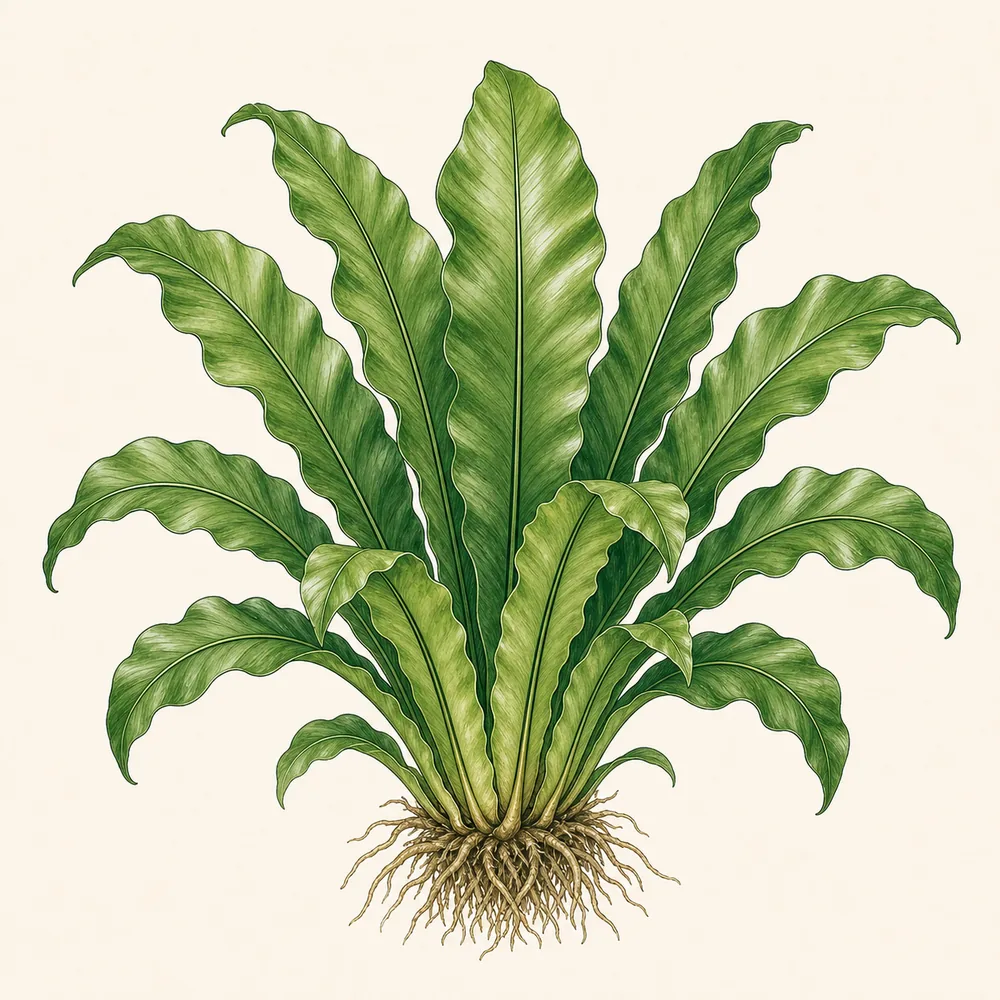
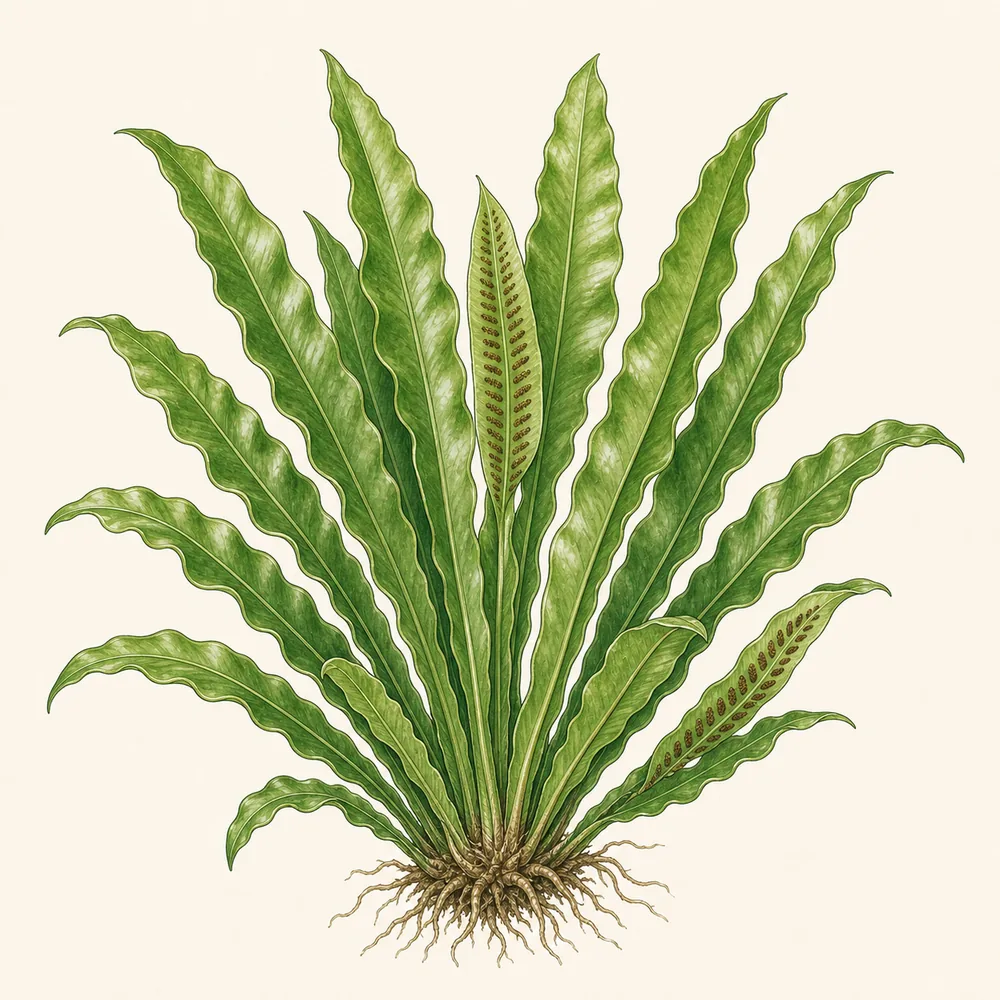
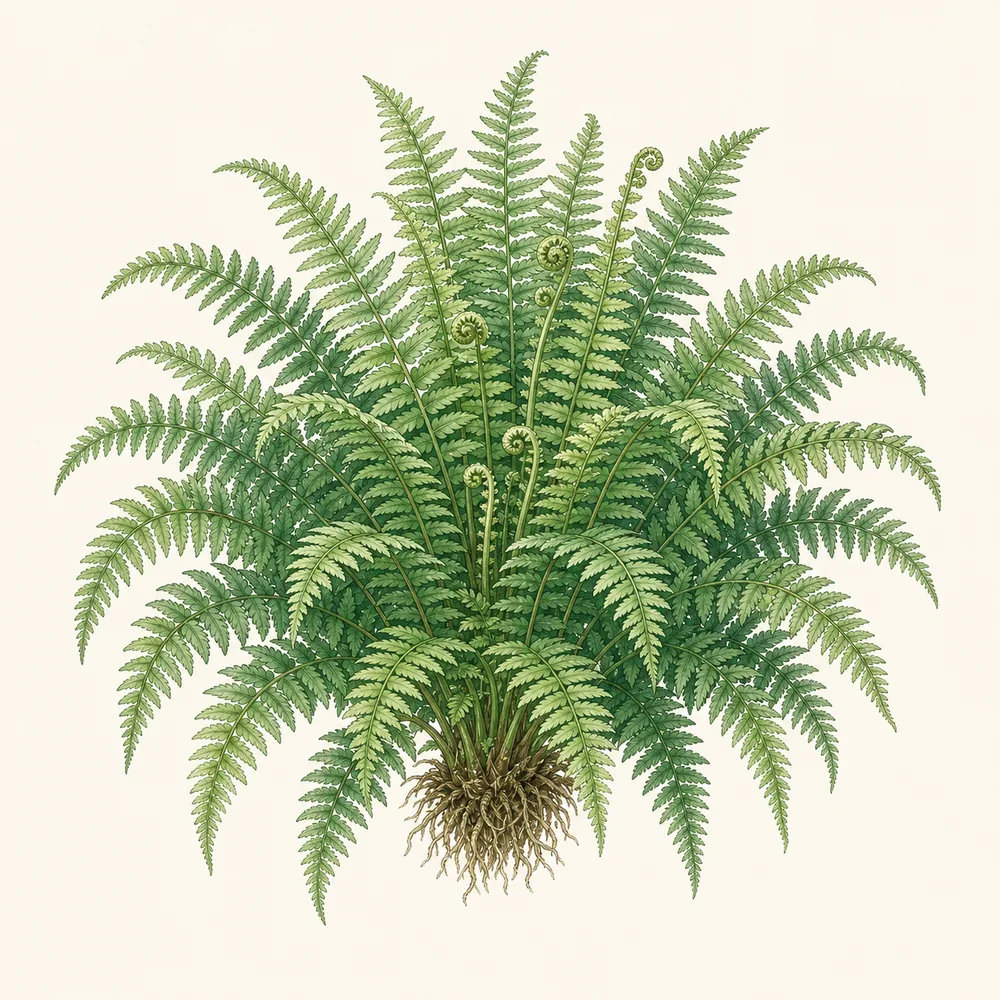
If you like this, try
Other plants with a similar temperament.
How we checked this
Care cross-checked against the RHS. The ASPCA does not list the maidenhair fern (Adiantum), so its pet-safety is unconfirmed and we have not stamped it safe. If our page and these sources ever disagree, believe them — and tell us.
Sources: RHS · ASPCA — toxic & non-toxic plants
Last reviewed · August 2026