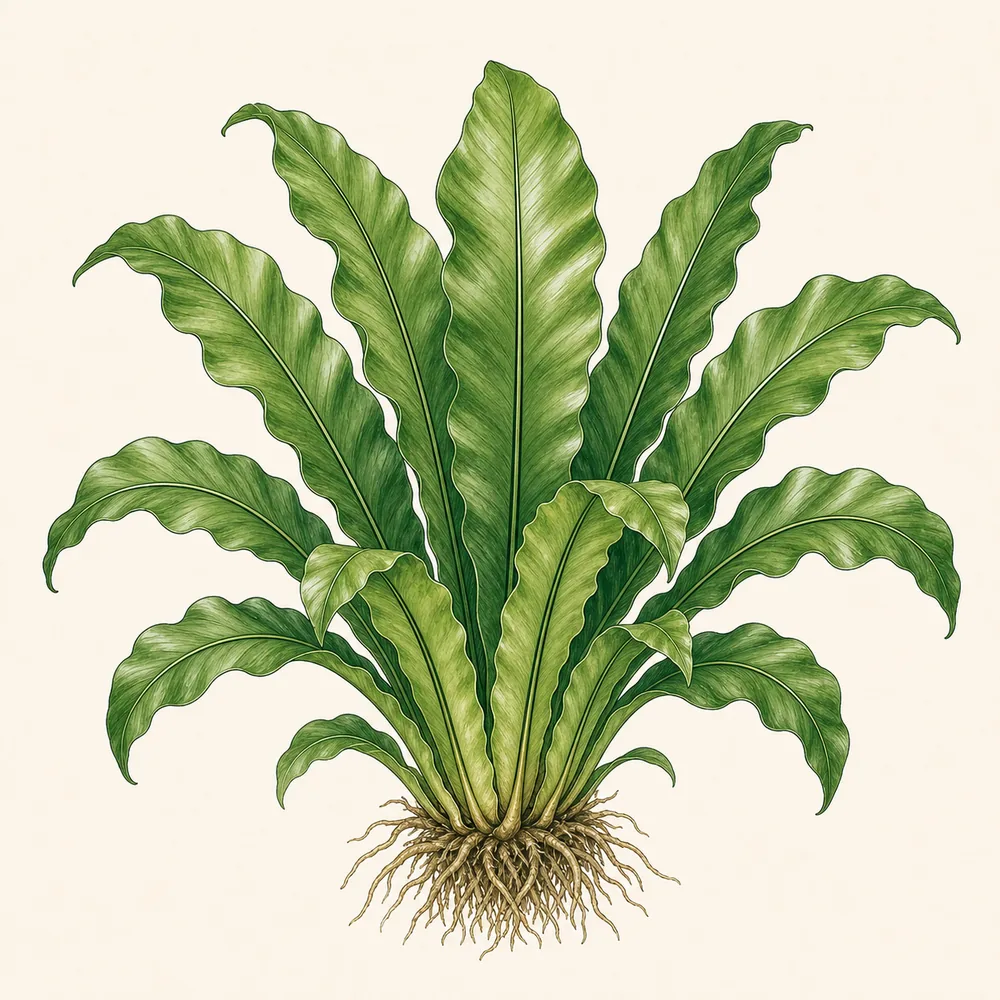
Bird's Nest Fern
A handsome rosette of glossy, apple-green fronds that unfurl from a fuzzy central 'nest'. It asks for warm shade, steady moisture and a bit of humidity — and rewards you with one of the most forgiving ferns you can grow indoors.
Not listed by ASPCA
The ASPCA doesn't list the bird's nest fern (Asplenium nidus), so we don't stamp it safe. It has no recorded toxic principle and several of its relatives are listed non-toxic, but with no database entry for this species we flag the gap honestly rather than assume.
Care at a glance
Everything that matters, in six lines. The detail is further down.
Light
Happiest in gentle, filtered light away from any direct sun, which scorches the soft fronds. It tolerates quite shady corners better than most houseplants.
Water
Water into the compost around the edge of the pot so the soil stays consistently damp but never waterlogged. Never pour into the central nest — sitting water rots the crown.
Temperature
A warm, draught-free room suits it best. Keep it away from cold glass and radiators alike.
Humidity
Loves moist air. A bathroom, a pebble tray or grouping with other plants keeps the fronds from browning at the edges.
Feeding
A half-strength balanced feed once a month from spring to late summer is plenty; ferns are easily scorched by strong fertiliser.
Soil
An epiphyte in the wild, so it wants an open, bark-rich mix that holds moisture but drains fast and never turns to sludge.
What to do, and when
Growth resumes as light returns. Start feeding weakly, and repot now if the plant is crowding its pot or drying out too fast.
Peak growth, with new fronds unfurling from the centre. Keep the compost evenly moist and the air humid in warm weather.
Ease off feeding as light fades. Keep watering steady but slightly reduced, and move it away from cooling windows.
Near-rest. Water less but never let it dry out fully, keep it above 13 °C, and mist or use a pebble tray to counter dry central heating.
Water the nest, not into it
The bird's nest fern grows as a rosette around a fuzzy central crown, and that crown is its weak point. Water poured straight into the middle collects there and quickly rots the growing point — the single most common way people lose this plant.
Instead, water into the compost around the edge of the pot, letting the roots take it up from below. Keep the soil evenly damp but never sodden, and tip out any water that collects in the saucer.
Light and leaf health
In the wild this fern perches on tree trunks in dappled forest shade, so it never sees direct sun. Indoors it thrives in filtered light and copes with genuinely shady spots better than most houseplants.
Direct sun bleaches and crisps the soft fronds fast. If the leaves look pale, scorched or papery at the tips, move it back from the window rather than closer to it.
Keeping the air humid
Brown, crispy frond edges almost always mean the air is too dry — a common problem in centrally heated rooms in winter. This fern wants humidity closer to a bathroom than a living room.
Stand the pot on a tray of damp gravel, group it with other plants, or keep it somewhere naturally humid like a bathroom or kitchen. Mist if you like, though a pebble tray does steadier work.
Common problems
Rotting central crown
Water pooling in the nest. Water the compost around the edge instead, and never let the middle of the rosette stay wet.
Brown, crispy frond edges
Air too dry, or erratic watering. Raise humidity with a pebble tray and keep the compost evenly moist.
Pale, scorched fronds
Too much direct sun. Move it to filtered light away from the window.
Yellowing, limp fronds
Usually waterlogged, cold, or over-fed. Let the mix drain, warm the room, and feed only weakly in growth.
Everything a bird's nest fern needs
Warm shade, an airy mix, and humid air.
We take no commission on anything in the "save your money" tier — if we don't think you should buy it, we don't link it. How our recommendations work
If you like this, try
Other plants with a similar temperament.
How we checked this
Care cross-checked against the RHS. The ASPCA does not list the bird's nest fern (Asplenium nidus), so its pet-safety is unconfirmed and we have not stamped it safe. If our page and these sources ever disagree, believe them — and tell us.
Sources: RHS · ASPCA — toxic & non-toxic plants
Last reviewed · August 2026