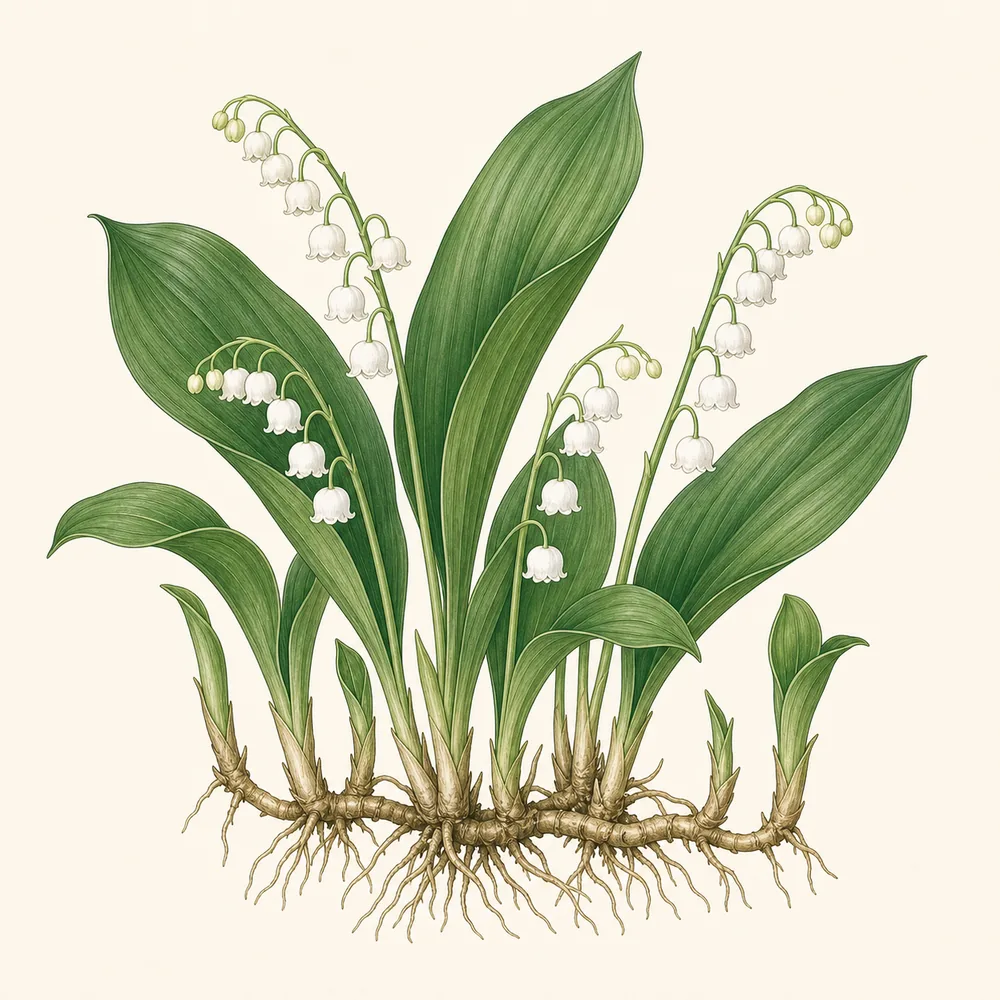
Lily of the Valley
Arching stems of tiny white bells with one of the most famous scents in the garden, carpeting a shady corner in late spring. It's about as easy as plants get in the right damp shade — the serious catch is that every part is a dangerous cardiac poison, so it's one to keep well away from children and pets.
Seriously toxic to cats, dogs & horses
Lily of the valley (Convallaria) is listed as toxic to cats, dogs and horses on the ASPCA database. Every part holds cardiac glycosides (cardenolides) that disrupt the heart — vomiting, an irregular or slow heartbeat, low blood pressure, seizures and collapse can follow even a small amount. One of the more dangerous plants in a shady border.
Care at a glance
Everything that matters, in six lines. The detail is further down.
Light
A woodland plant at heart — happiest in dappled or full shade under trees and shrubs. It scorches and struggles in hot, dry sun.
Water
Likes cool, evenly moist ground. Water in dry spells, especially while it establishes; it resents baking out over summer.
Temperature
Completely hardy and needs the winter cold. It dies back to the ground each autumn and reshoots from the rhizome in spring.
Planting
Grown from rhizome sections called pips. Plant them just below the surface in autumn, a few centimetres apart, and let them knit together.
Feeding
Little needed. A yearly autumn mulch of leaf mould or compost mimics the woodland floor and keeps it spreading happily.
Soil
Cool, leafy, humus-rich soil that holds moisture but doesn't waterlog — exactly the conditions of a woodland floor.
What to do, and when
The main show — arching stems of scented white bells open through late April and May. Wear gloves if you handle it, and keep children and pets clear.
Flowering over, the broad leaves carry on covering the ground. Keep the soil from drying out; small red-orange berries may form and are highly poisonous.
The best time to plant or divide — lift congested clumps and replant the pips. The foliage dies back; mulch with leaf mould over the resting rhizomes.
Fully dormant underground, weathering the cold untouched. Nothing to do — the pips sit and wait for spring, needing the chill to flower well.
Get the shade and soil right
Lily of the valley is a true woodlander, and it wants what a woodland floor gives: cool shade, and a leafy, moisture-holding soil. Give it those and it needs almost nothing else — it's a plant for the difficult dry-ish shade under trees and along north-facing walls where little else thrives.
It grows from horizontal rhizomes, and it's planted as sections of these called pips, set just below the surface in autumn a few centimetres apart. Don't expect much the first year while it settles in; from the second it starts to run and fill out.
A serious poison — plant it knowing that
This is a plant to grow with your eyes open. Every part of lily of the valley — leaves, flowers, roots and the red autumn berries — contains cardiac glycosides, the same class of compound used in heart drugs, and it is genuinely dangerous to people, pets and grazing animals if eaten.
That doesn't mean you can't grow it, but it does mean siting it thoughtfully: away from where young children play and pets roam, and away from vegetable beds where the foliage could be mistaken for wild garlic or other edible leaves. Wear gloves when handling or dividing it, and wash your hands afterwards.
Keeping a spreader in bounds
Given happy conditions, lily of the valley spreads steadily by those creeping rhizomes and can outgrow its spot or muscle out smaller neighbours. In a wild shady corner that's a virtue; in a mixed border, less so.
To contain it, plant it where paving, a path or a sunken barrier limits the roots, or lift and divide congested clumps in autumn, replanting only what you want and passing the rest on — bearing in mind you're handling a poisonous plant when you do.
Common problems
Spreading too far
Happy plants run by rhizome and can swamp neighbours. Contain them with a buried barrier or a paved edge, and lift and divide congested clumps in autumn.
Poor flowering
Usually too dry, too sunny, or a clump too congested. Move to cooler, moister shade, mulch with leaf mould, and divide overcrowded plants to reinvigorate them.
Scorched, browning leaves
Too much sun or soil drying out in summer. Give it more shade and keep the ground moist with watering and a moisture-retaining leaf-mould mulch.
Grey mould on the foliage
Botrytis in damp, still, crowded conditions. Improve airflow by dividing dense clumps and clear away any dead or spoiled leaves promptly.
Everything lily of the valley needs
Cool moist shade, leafy soil, and gloves when you handle it.
We take no commission on anything in the "save your money" tier — if we don't think you should buy it, we don't link it. How our recommendations work
If you like this, try
Other plants with a similar temperament.
How we checked this
Care cross-checked against the RHS. Toxicity taken from the ASPCA database, which lists Lily of the Valley (Convallaria majalis) as toxic — cardiac glycosides. If our page and these sources ever disagree, believe them — and tell us.
Sources: RHS · ASPCA — toxic & non-toxic plants
Last reviewed · August 2026