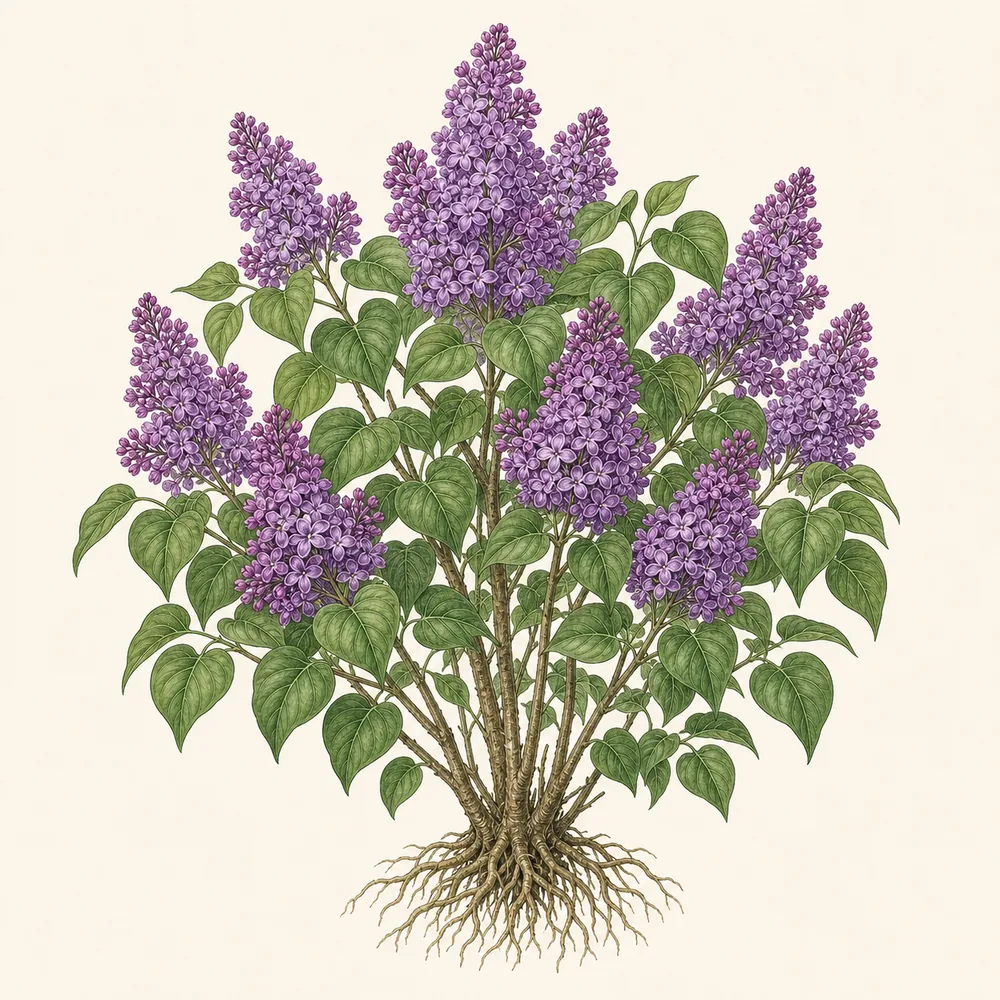
Lilac
A big, blowsy spring shrub grown above all for scent — those heavy panicles of purple, lilac or white carry one of the great garden perfumes. Easy in sun on most soils, and best pruned the moment flowering ends.
Not listed by ASPCA
The ASPCA doesn't list the common lilac (Syringa), so we don't stamp it safe. It has no recorded serious toxicity. With no database entry we flag the gap honestly rather than guess.
Care at a glance
Everything that matters, in six lines. The detail is further down.
Position
Give it as much sun as you can — at least six hours a day. Shade means few flowers and a lanky, sulky shrub.
Water
Keep new plants watered through their first couple of summers. Established lilacs are drought-tolerant and rarely need it.
Hardiness
Thoroughly hardy across the UK. It actually needs a cold winter chill to flower well, so cold gardens are no problem.
Soil
Happiest on neutral to alkaline soil that drains freely. It dislikes acid ground and hates sitting wet in winter.
Feeding
A spring mulch and a little general feed is plenty. Too much nitrogen gives leafy growth at the expense of flowers.
Pruning
Deadhead and prune the moment the blooms fade. Next year's flowers form in summer, so late pruning cuts them off.
What to do, and when
The main event — trusses of scented flowers open from late April into May. Plant new lilacs now while the soil is warming.
Deadhead and prune right after flowering, then leave it be — this summer's growth carries next spring's buds.
Little to do. Leaves yellow and drop; a good time to plant bare-root or containerised lilacs into settling soil.
Fully dormant and hardy. The winter chill it gets now is exactly what triggers a good flush of flowers in spring.
Prune the day the flowers fade
Lilac timing catches people out. It flowers on wood made the previous year, and it sets next spring's buds during summer. Prune in autumn or winter and you saw off the very stems that would have flowered.
So the rule is simple: prune straight after flowering, in late spring or early summer. Cut back the faded trusses to a pair of buds, take out any weak or crossing stems, and that's it for the year.
Grown for the scent
The whole point of a lilac is the perfume. Few shrubs fill a garden — or a room — the way a cut stem of lilac does on a warm May evening, and it's worth planting one near a path, door or seat where you'll walk past it.
Named forms give you the colour and scent you actually want rather than a seedling's lottery. 'Katherine Havemeyer' is richly double and fragrant, 'Madame Lemoine' a classic double white, and 'Sensation' purple edged in white.
Suckers and shy flowering
Many lilacs are grafted, and the rootstock can throw up suckers around the base. Pull or dig these off rather than cutting them — cutting just encourages more — or they'll slowly take over from the named variety on top.
If an established lilac flowers poorly, the usual culprits are too much shade, over-feeding with nitrogen, or hard winter pruning. Move it into full sun, ease off the feed, and only ever prune once flowering is done.
Common problems
Few or no flowers
Usually too much shade, over-feeding, or pruning at the wrong time. Give it full sun and only prune right after flowering.
Suckers around the base
Grafted plants throw up shoots from the rootstock. Pull or dig them off cleanly rather than cutting, which spurs more.
Pale blotches or brown edges on leaves
Lilac blight or leaf blotch, worse in damp seasons. Remove affected leaves, improve airflow, and avoid overhead watering.
Silvery leaves and dying branches
A sign of silver leaf disease. Cut out affected wood well below the stain, in summer, and burn or bin the prunings.
Everything a lilac needs
A sunny spot, free-draining soil, and a pair of secateurs used right after flowering.
We take no commission on anything in the "save your money" tier — if we don't think you should buy it, we don't link it. How our recommendations work
If you like this, try
Other plants with a similar temperament.

How we checked this
Care cross-checked against the RHS. The ASPCA does not list the common lilac (Syringa), so its pet-safety is unconfirmed and we have not stamped it safe. If our page and these sources ever disagree, believe them — and tell us.
Sources: RHS · ASPCA — toxic & non-toxic plants
Last reviewed · August 2026