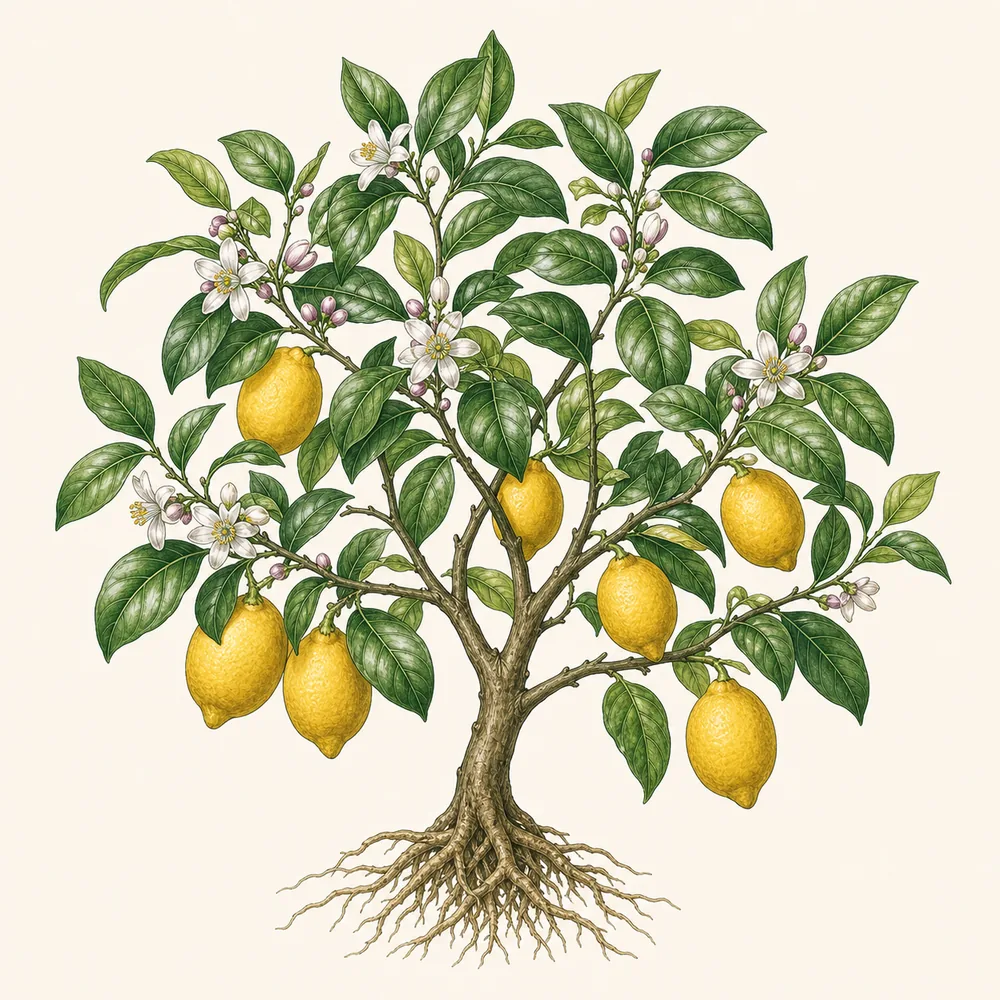
Lemon Tree
Glossy evergreen leaves, scented white blossom and your own lemons — a lemon tree brings a touch of the Mediterranean to a UK patio. The trick is treating it as a pot plant that summers outside and comes under cover before the first frost.
Toxic to cats, dogs & horses (peel, leaves & stems)
Lemon (Citrus) is listed as toxic to cats, dogs and horses on the ASPCA database. The essential oils and psoralens in the peel, leaves and stems cause vomiting, diarrhoea, low mood and possible skin irritation — the ripe flesh is edible but the plant material is the hazard.
Care at a glance
Everything that matters, in six lines. The detail is further down.
Light
Give it the sunniest spot you have all year. Outside in summer, and the brightest window or greenhouse in winter — light shortage causes leaf drop.
Water
Water freely in summer, letting the top of the compost dry between times. Water far less in winter — cold, wet roots are the main killer.
Temperature
Not hardy. Bring under glass before the first frost and keep it cool but frost-free, ideally around 5–10°C, through winter.
Humidity
In a dry winter room, mist the leaves and keep good airflow to deter scale insects and red spider mite.
Feeding
Feed with a specific citrus feed — a summer formula in the growing season, a winter one when cool and resting. They're hungry, specific feeders.
Soil
A gritty, free-draining citrus or loam-based compost with added grit. Never let the pot stand in a saucer of water.
What to do, and when
Growth and scented blossom return. Start summer citrus feed, repot or top-dress if needed, and only move the tree outside once nights are reliably frost-free, hardening it off gradually.
The tree's holiday outdoors in full sun. Water freely, feed with summer citrus feed, and enjoy the blossom and swelling fruit. Watch for scale and aphids.
Bring the tree back under glass before the first frost. Ease off watering and switch to winter citrus feed as growth slows and the weather cools.
Keep cool, bright and frost-free, ideally 5–10°C. Water sparingly, watch for scale and red spider mite, and don't let the roots sit cold and wet.
Think of it as a moveable pot plant
Lemons aren't hardy in the UK, so the whole game is growing yours in a pot you can move. It spends summer basking outdoors in the sun, then comes under glass before the first frost — a cool greenhouse, conservatory or bright porch is ideal.
The winter quarters want to be cool but frost-free, ideally around 5–10°C, and as bright as possible. A warm, dark living room is the classic way to kill a citrus over winter — it drops its leaves and sulks. Cool and light beats warm and dim every time.
Water and feed the citrus way
Citrus are fussy feeders and do far better on a dedicated citrus feed — there are separate summer and winter formulas because their needs change with the season. Use the summer feed in growth and the winter feed while they're cool and resting.
On watering, the killer is cold wet roots. Water freely in summer, letting the surface dry between times, but cut right back in winter — just enough to stop the compost drying out completely. Use rainwater if your tap water is hard.
Blossom, fruit and patience
A happy lemon can carry blossom, tiny green fruit and ripe lemons all at once — the fruit takes the best part of a year to ripen. Outdoors in summer, insects pollinate the flowers; under glass, dab the blossom with a soft brush to set fruit.
Don't panic over a little fruit drop; a tree naturally sheds some of what it sets. Steady warmth, light, feeding and even watering give you the best chance of lemons that swell and ripen rather than falling early.
Common problems
Leaf drop in winter
Almost always too warm and dark, or cold draughts and wet roots. Move to a cool, bright, frost-free spot, water sparingly, and keep it away from radiators and cold blasts.
Yellowing leaves
Often a feeding problem — citrus are hungry and specific. Use a proper citrus feed (summer or winter formula), and check the compost isn't waterlogged, which also yellows leaves.
Sticky leaves and sooty mould
Scale insects or aphids under the leaves excrete honeydew that turns black. Wipe off scale, improve airflow, and treat early — dry winter rooms make it worse.
Fruit drops before ripening
Some natural drop is fine, but heavy loss comes from erratic watering, cold or a big move. Keep conditions steady, water evenly, and don't shift the tree around when it's fruiting.
Everything a lemon tree needs
A pot to move, citrus feed, and a cool bright frost-free winter.
We take no commission on anything in the "save your money" tier — if we don't think you should buy it, we don't link it. How our recommendations work
If you like this, try
Other plants with a similar temperament.
How we checked this
Care cross-checked against the RHS. Toxicity taken from the ASPCA database, which lists Lemon (Citrus) as toxic — essential oils and psoralens in peel, leaves and stems. If our page and these sources ever disagree, believe them — and tell us.
Sources: RHS · ASPCA — toxic & non-toxic plants
Last reviewed · July 2026