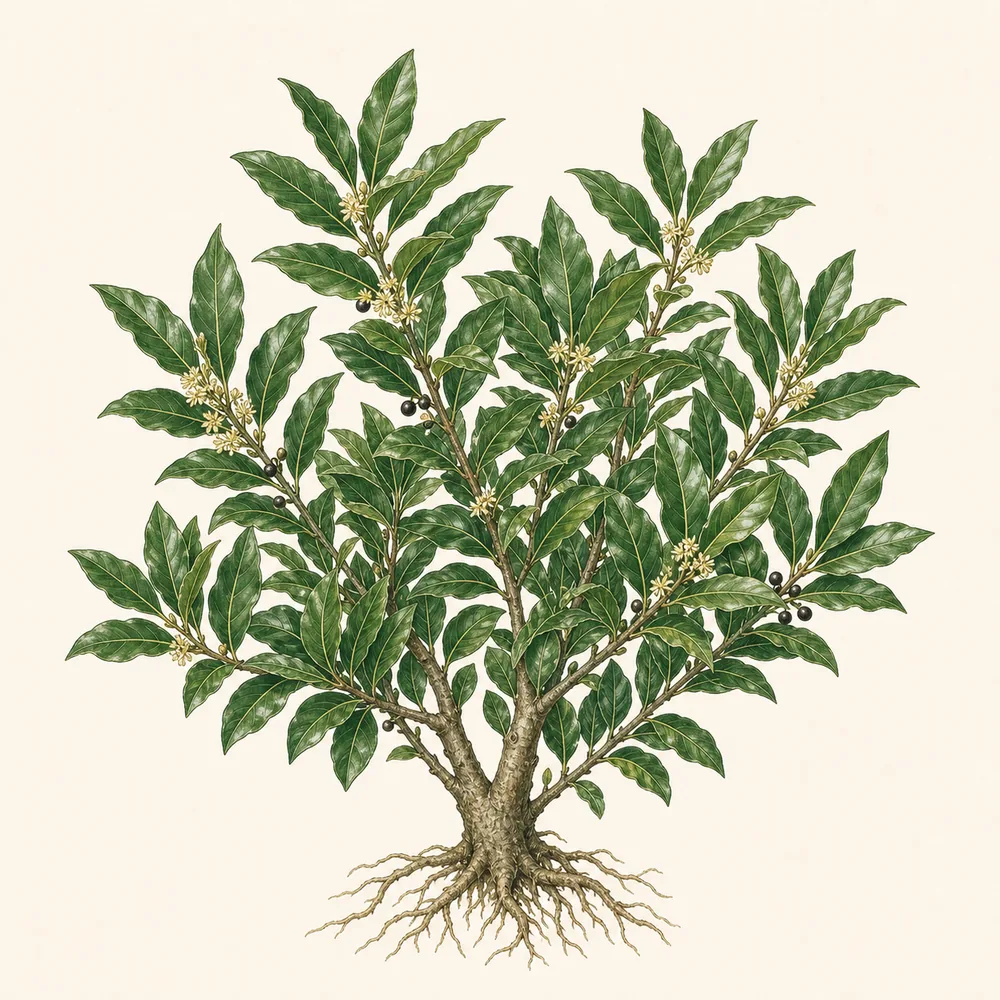
Bay
An evergreen shrub or small tree with aromatic, leathery leaves for the kitchen. Long-lived and easy to clip into shape — but its leaves are listed as toxic to pets.
Toxic to cats & dogs if eaten
Bay (Laurus nobilis, sweet bay) is listed as toxic to cats and dogs on the ASPCA database. The essential oils in the leaves can cause vomiting and diarrhoea, and the stiff whole leaves can also cause a physical hazard if swallowed. Keep pets from chewing it.
Care at a glance
Everything that matters, in six lines. The detail is further down.
Position
A sheltered, sunny-to-part-shaded spot. It grows slowly and clips well into standards or cones.
Water
Ground plants are drought-tolerant once established; pot-grown bays need regular water.
Hardiness
Hardy in most of the UK; young and pot plants need shelter from hard frost and cold winds.
Soil
Fertile, free-draining soil, or a loam-based compost in pots.
Feeding
Feed container plants monthly in the growing season; ground plants rarely need it.
Harvest
Evergreen — pick leaves year-round; flavour deepens as they dry.
What to do, and when
Main growth begins. Clip topiary and standards to shape, and repot pot-grown plants if needed.
Feed and water containers regularly; a second light clip keeps formal shapes crisp.
Ease off feeding; move tender young pot plants to shelter before hard frosts.
Protect pots and young plants from cold winds and prolonged frost, which scorch the leaves.
Slow, steady and long-lived
Bay is a marathon, not a sprint — it grows slowly but lives for decades, and clips beautifully into standards, cones and balls, which is why you see it flanking doorways.
Its main weaknesses are cold and wet: young plants and those in pots can be scorched by hard frost and cold winds, so give them a sheltered spot and protect them in a severe winter.
In a pot by the door
Bay makes an excellent container plant, handy by the kitchen. In pots it needs more attention — regular water and summer feeding — and repotting or top-dressing every couple of years.
Watch for yellowing leaves and sooty patches, signs of scale insects, which bay is prone to under cover.
Common problems
Scorched brown leaves
Cold winds or frost, especially on pots. Shelter it; new growth recovers it.
Yellowing leaves
Waterlogging, cold, or hunger in pots. Check drainage and feed container plants.
Sticky leaves, sooty mould
Scale insects. Wipe them off and treat; improve airflow.
Very slow growth
Normal for bay — it's naturally slow. Feed pots and be patient.
Everything for bay
Shelter, free drainage, and water for pot-grown plants.
We take no commission on anything in the "save your money" tier — if we don't think you should buy it, we don't link it. How our recommendations work
If you like this, try
Other plants with a similar temperament.
How we checked this
Care cross-checked against the RHS. Toxicity taken from the ASPCA database, which lists bay (Laurus nobilis) as toxic to cats and dogs — essential oils, plus a physical hazard from the stiff whole leaves. If our page and these sources ever disagree, believe them — and tell us.
Sources: RHS · ASPCA — toxic & non-toxic plants
Last reviewed · July 2026