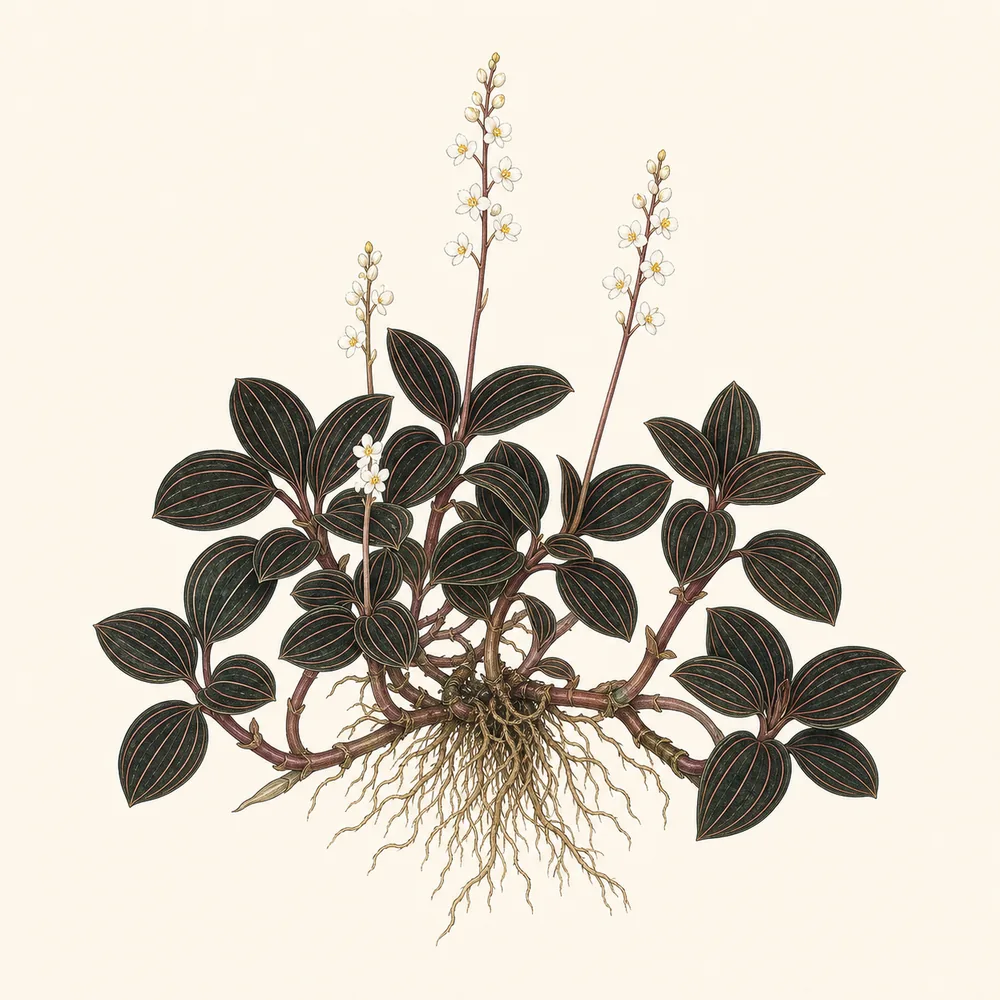
Jewel Orchid
The orchid you grow for its leaves, not its flowers — deep wine-red velvet foliage laced with fine pink-gold veins. It's an easy, shade-loving exception to the usual orchid rules, happy in low light and a moist woodland-style mix, and it's completely pet-safe.
Non-toxic to cats, dogs & horses (ASPCA)
The jewel orchid (Ludisia discolor) is listed as non-toxic to cats, dogs and horses on the ASPCA database (as 'Jewel Orchid' / Golden Lace Orchid). It's grown for its dark veined foliage rather than the small white flowers, and it's a safe pick for pet homes.
Care at a glance
Everything that matters, in six lines. The detail is further down.
Light
A shady spot away from any direct sun — this is a forest-floor plant. North light or a spot back from a brighter window keeps the leaf colour rich; strong sun bleaches and scorches it.
Water
Unlike bark-grown orchids it likes to stay evenly, lightly moist — never bone dry, never soggy. Water when the surface starts to dry, using tepid water on the mix, not the leaves.
Temperature
Warm, steady room temperatures suit it best. Keep it above about 15 °C and well away from cold draughts and chilly windowsills in winter.
Humidity
A humid spot keeps the velvety leaves looking their best. A bright bathroom, a pebble tray or a nearby humidifier all help in dry rooms.
Feeding
A dilute, balanced feed once a month or so through spring and summer is plenty. Ease off in the darker months when growth slows.
Soil
A light, free-draining terrestrial mix — fine bark, leaf mould or coir with perlite. Not soggy potting compost, and not the coarse bark used for tree-dwelling orchids.
What to do, and when
Growth picks up as light lengthens. Start monthly weak feeding, keep the mix lightly moist and repot now if it's outgrown its pot.
Active growth of new creeping stems and leaves. Keep it shaded, evenly moist and humid, and take stem cuttings now if you'd like more plants.
Slim white flower spikes often appear as the days shorten. Keep conditions steady and enjoy the modest, lightly scented blooms.
Growth slows. Water a little less but never let it dry out fully, stop feeding, and keep it warm and away from cold glass.
The orchid that breaks the rules
Most orchids are tree-dwellers grown in chunky bark. The jewel orchid is different: it's a terrestrial that creeps along the shady forest floor, so it wants a fine, moisture-retentive mix — think fine bark, leaf mould or coir with a little perlite — kept lightly moist, not the coarse dry bark other orchids need.
It's grown for foliage, not flowers: velvety near-black leaves shot through with fine copper-pink veins. Give it shade and steady moisture and it's genuinely one of the easiest orchids to keep.
Watering: lightly moist, never dry
Here the usual orchid soak-and-dry doesn't apply. The jewel orchid's fine roots want the mix to stay evenly, lightly moist — let it dry out completely and the leaves flag and crisp, but leave it waterlogged and the fleshy stems rot.
Water with tepid water when the surface just starts to feel dry, aim for the mix rather than the crown, and let any excess drain away. In hard-water areas it appreciates rainwater or filtered water.
More plants from cuttings
Jewel orchids are refreshingly easy to propagate. The creeping stems root readily, so a leggy or sprawling plant is really an opportunity.
Cut a healthy length of stem with a couple of leaves and lay or nestle it into fresh moist mix so a node sits against the surface. Keep it warm, shaded and humid and it roots in a few weeks — the tidiest way to keep an old plant full and bushy.
Light: shade is the point
This is a low-light orchid by nature, so a bright but sunless corner, a north window or a spot set back from a brighter one is ideal. It's one of the few flowering-plant choices that genuinely thrives away from a windowsill.
The leaves are your guide: rich, dark and velvety means it's happy, while pale, washed-out or brown-edged leaves mean the light is too strong and it wants moving into the shade.
Common problems
Limp or crisping leaves
Usually the mix has dried out completely, or the plant is getting too much sun. Keep it lightly moist and move it into shadier light.
Won't reflower
Flowers are a bonus here, but they come with steady warmth, humidity and a healthy plant. Keep conditions even through autumn when spikes form — and don't worry, the foliage is the real draw.
Root or stem rot
Soggy, airless mix or water sitting in the crown. Use a free-draining woodland-style mix, water the compost not the centre, and never leave it standing in water.
Bud blast
The slim flower spikes shrivel before opening, usually after a spell of dry air or a cold draught. Keep humidity up and conditions stable once buds appear.
Everything a jewel orchid needs
Shade, a fine moist mix and steady warmth.
We take no commission on anything in the "save your money" tier — if we don't think you should buy it, we don't link it. How our recommendations work
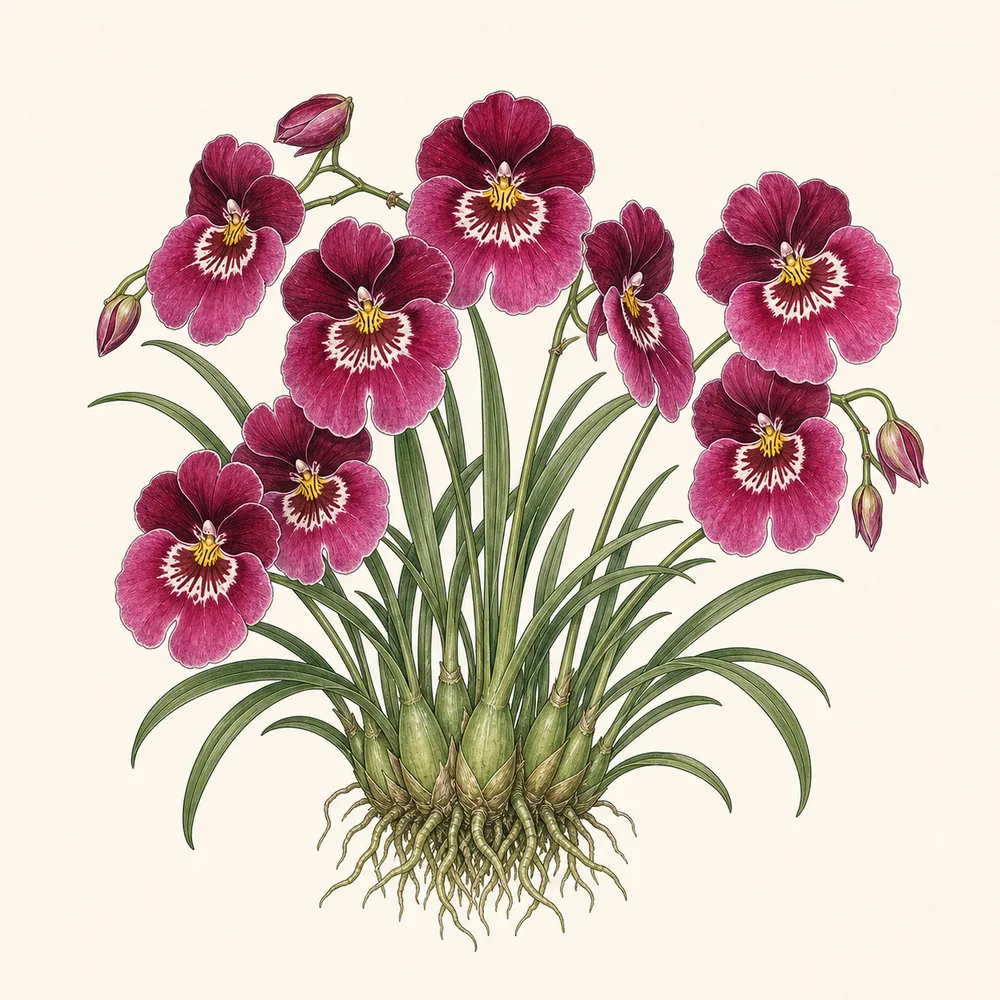
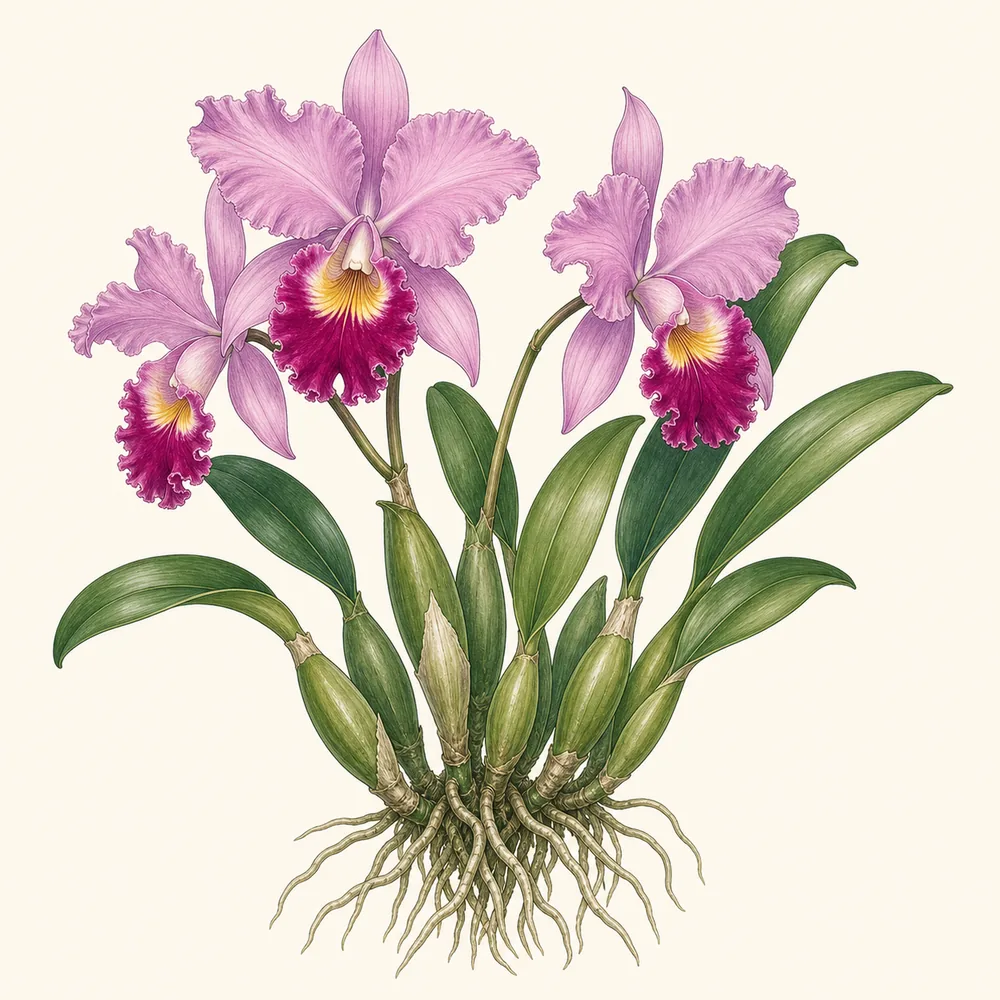
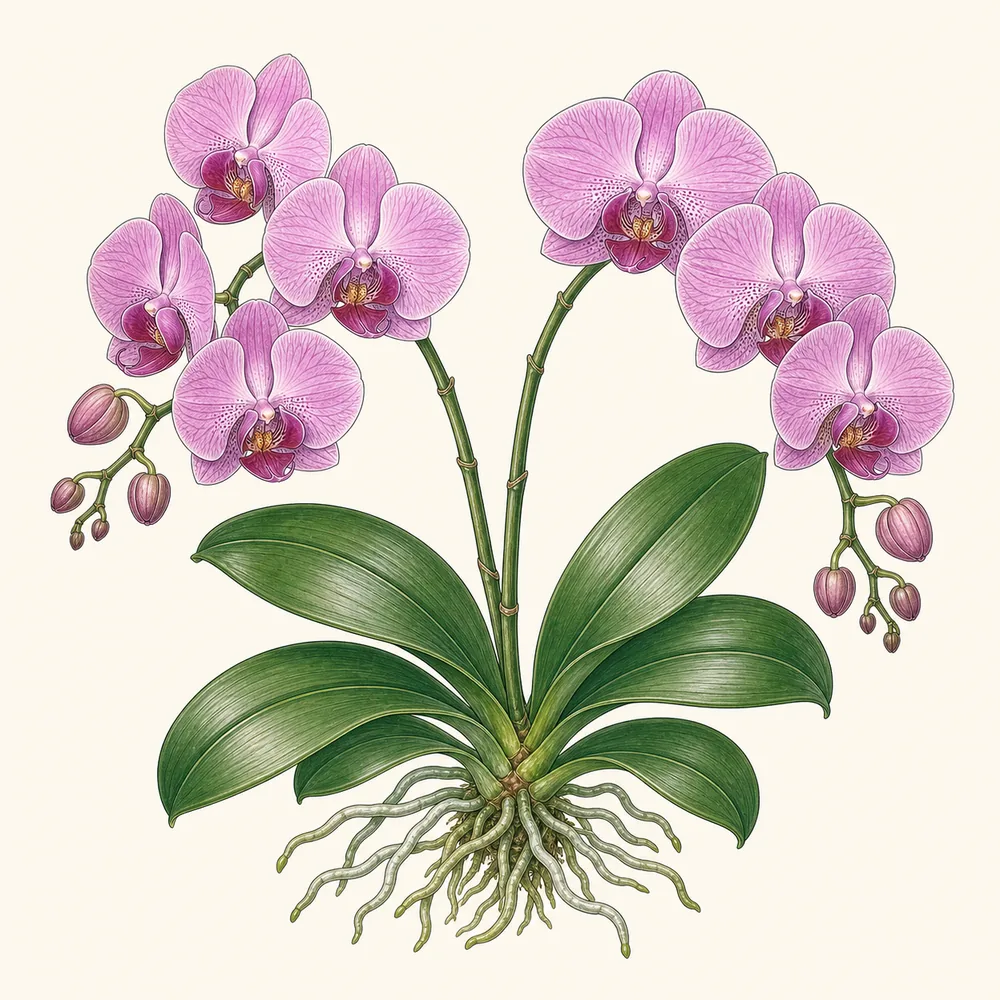
If you like this, try
Other plants with a similar temperament.
How we checked this
Care cross-checked against the RHS. Non-toxicity taken from the ASPCA database, which lists the Jewel Orchid (Ludisia/Haemaria discolor) as non-toxic. If our page and these sources ever disagree, believe them — and tell us.
Sources: RHS · ASPCA — toxic & non-toxic plants
Last reviewed · July 2026