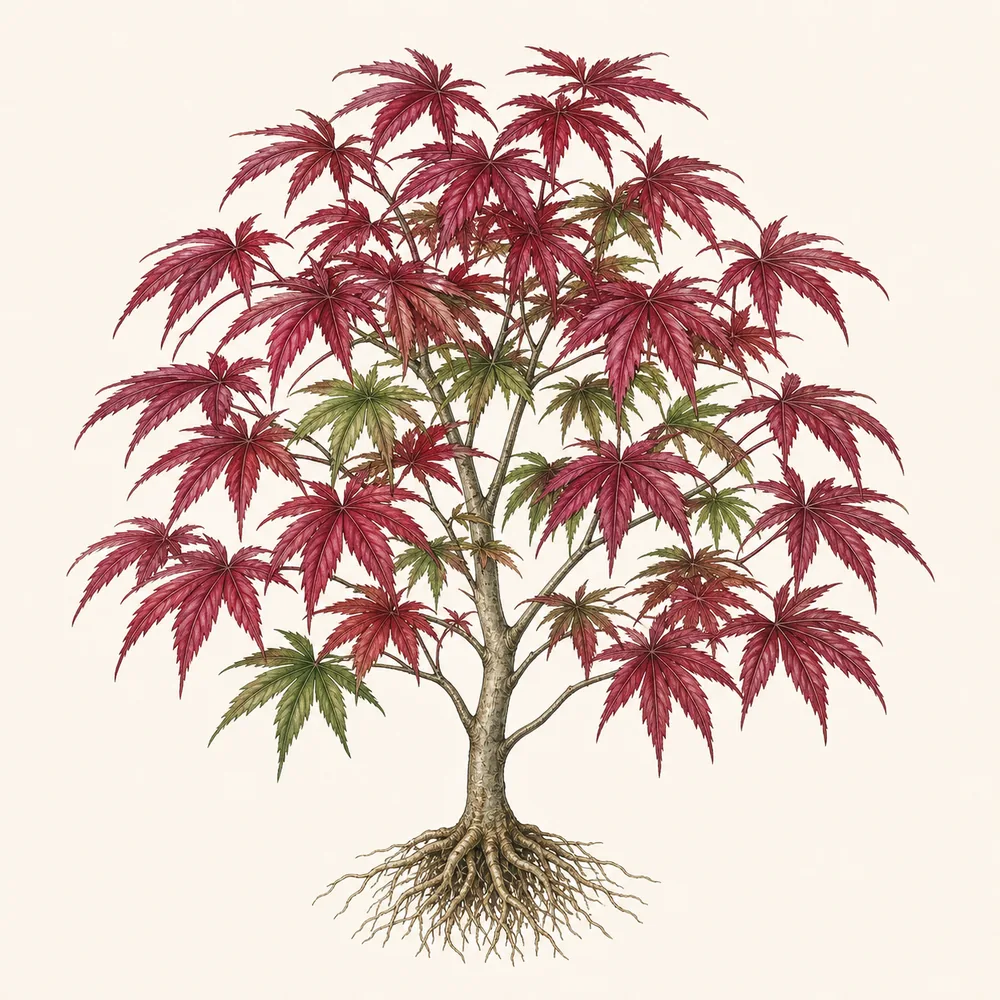
Japanese Maple
A slow, elegant small tree or shrub grown for its delicate leaves and, above all, its blazing autumn colour. It isn't difficult so much as particular: give it dappled shade, real shelter from wind, and soil that never dries out or waterlogs, and it becomes the quiet star of the garden.
Not listed by ASPCA
The ASPCA doesn't list the Japanese maple (Acer palmatum), so we don't stamp it safe. Reassuringly, it is NOT the red maple (Acer rubrum) that is seriously toxic to horses — that's a different North American species — but with no database entry for the Japanese maple itself we flag the gap honestly rather than guess.
Care at a glance
Everything that matters, in six lines. The detail is further down.
Light
Happiest in light, dappled shade with shelter from hot afternoon sun. Deep shade dulls the colour; full baking sun scorches the delicate leaves.
Water
Never let the roots dry out, especially in pots and in the young years. Dry soil is the fastest route to crisp, brown leaf edges.
Temperature
Fully hardy once established, but late spring frosts blacken the tender new leaves. A sheltered spot away from cold winds and frost pockets is key.
Shelter
Wind is the biggest enemy — it shreds and browns the fine foliage. A protected corner, a courtyard or the lee of other shrubs suits it best.
Feeding
A slow-release feed or mulch in spring is plenty. Go easy — too much nitrogen forces soft, sappy growth that scorches and spoils the shape.
Soil
Wants moist but free-draining, slightly acid to neutral soil rich in leaf mould. It sulks in dry chalk and rots in cold, waterlogged ground.
What to do, and when
Fresh leaves unfurl, often the brightest display of the year — and the most frost-tender. Watch late frosts and throw fleece over the tree on cold nights. Mulch the roots now.
Keep the roots reliably moist, especially in pots, and shade it from the fiercest afternoon sun. This is when wind and drought cause the tell-tale leaf scorch, so shelter matters.
The season it's grown for — leaves turn through gold, orange and fiery red before they fall. Sit back and enjoy it; this is when Japanese maples earn their place. Plant new trees now while the soil is warm.
Fully dormant and showing its elegant branch structure. This is the only safe time to prune, in the depths of dormancy, and to plant bare-root or pot-grown trees in mild spells.
Site it right and it's easy
Japanese maples have a reputation for being fussy, but really they just have three clear needs: dappled shade, shelter from wind, and soil that stays evenly moist without waterlogging. Get the position right and the tree more or less looks after itself.
The classic mistake is planting one in an open, sunny, windswept spot and then wondering why the leaves crisp up. Think of where it grows in the wild — the sheltered edge of woodland, under the light canopy of taller trees — and copy that: a protected corner, the lee of a wall, the shade of a bigger shrub.
Grown for the autumn fire
You grow a Japanese maple for one thing above all: the autumn colour. Few plants do it better — the fine, hand-shaped leaves light up through gold, amber, orange and deep crimson before they drop, and a well-placed maple can carry a whole corner of the garden in October.
The show is strongest where the tree gets some light — deep shade mutes the colour — and where it's had steady moisture through summer. Choose the variety with autumn in mind: some, like 'Osakazuki' and 'Sango-kaku', are legendary for their fiery finish.
Perfect for a pot
Japanese maples are one of the best trees for a large container, and for many gardens a pot is the ideal way to grow one. It lets you give the tree exactly the free-draining, humus-rich, slightly acidic compost it likes — a loam-based mix lightened with grit and leaf mould — and to move it into shelter or a prime autumn spot.
The trade-off is watering: a potted maple dries out fast and will scorch in a day of neglect, so it needs reliable moisture through summer and must never sit in a waterlogged saucer. Top-dress each spring and repot every few years, and a container maple can thrive for decades.
Common problems
Brown, crispy leaf edges (leaf scorch)
The commonest complaint — caused by wind, hot sun or dry roots, not disease. Move or shelter the tree, keep it evenly watered, and mulch the roots to hold moisture.
New leaves blackened in spring
A late frost has caught the tender young growth. Plant away from frost pockets, and fleece the tree on cold spring nights while the fresh leaves are soft.
Wilting and dieback (verticillium wilt)
A soil-borne fungus can cause whole branches to wilt and die. Cut out affected wood well below the damage, feed and water to build vigour, and avoid replanting maples in the same spot.
Poor or muddy autumn colour
Too much shade, or a stressed, under-watered tree. Give it more dappled light, keep the roots moist through summer, and choose a variety known for reliable autumn colour.
Everything a Japanese maple needs
A sheltered, dappled spot, moisture-retentive free-draining soil, and protection from wind and late frost.
We take no commission on anything in the "save your money" tier — if we don't think you should buy it, we don't link it. How our recommendations work
If you like this, try
Other plants with a similar temperament.
How we checked this
Care cross-checked against the RHS. The ASPCA does not list the Japanese maple (Acer palmatum) — distinct from the horse-toxic red maple (Acer rubrum) — so its pet-safety is unconfirmed and we have not stamped it safe. If our page and these sources ever disagree, believe them — and tell us.
Sources: RHS · ASPCA — toxic & non-toxic plants
Last reviewed · August 2026