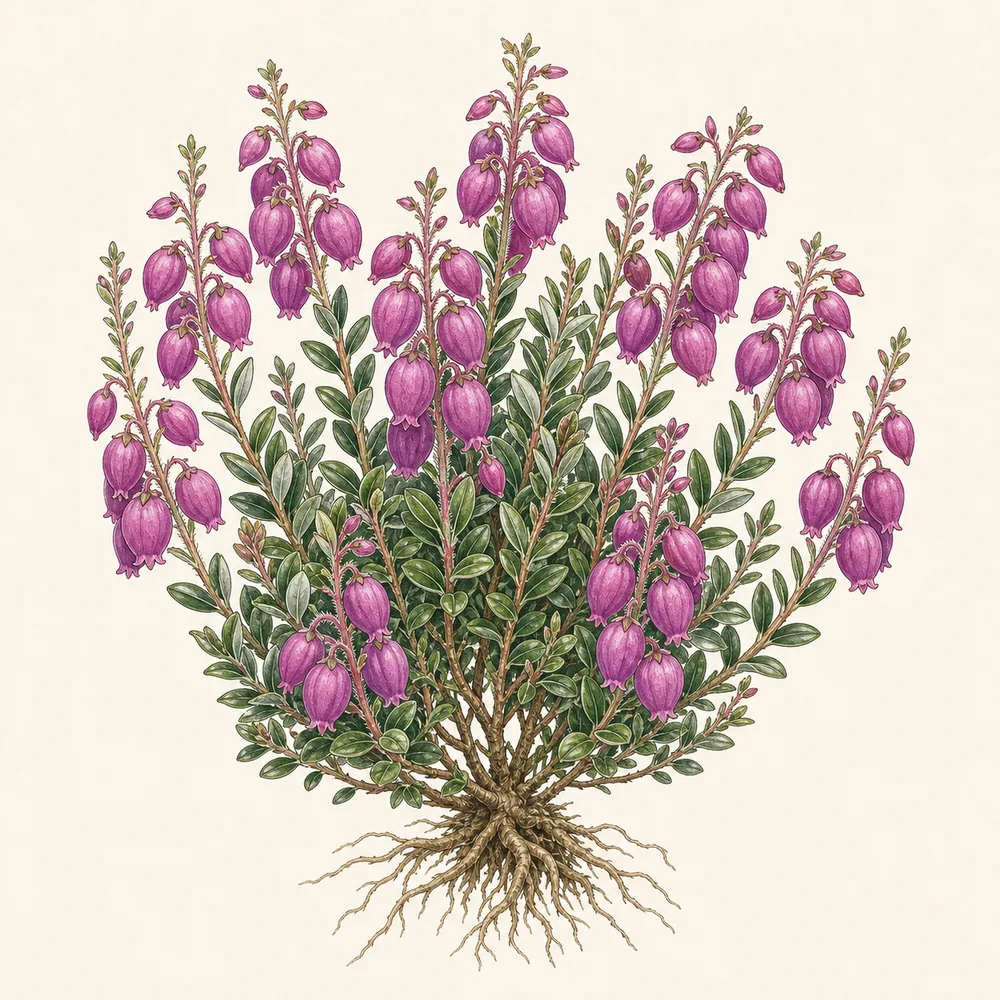
Irish Heath
A low, evergreen heath with the biggest, boldest flowers in the family — nodding urn-shaped bells of purple, rose, pink or white carried in long spikes right through summer and into autumn. Easy on acid soil in sun, it fills the gap when the winter and summer heathers are between shows, and it's loved by bees the whole time it's out.
Not listed by ASPCA
The ASPCA doesn't list Irish heath (Daboecia), so we don't stamp it safe. With no database entry we flag the gap honestly rather than guess.
Care at a glance
Everything that matters, in six lines. The detail is further down.
Position
Needs an open, sunny spot for dense growth and the longest flowering. In shade it grows leggy and flowers poorly.
Water
Keep new plants watered through their first year, ideally with rainwater. Once settled it's fairly drought-tolerant but appreciates moisture in long dry spells.
Hardiness
Hardy across most of the UK, though a touch less iron-tough than Calluna in the very coldest, most exposed gardens. A sheltered spot helps in hard winters.
Soil
An ericaceous plant that must have acid soil — it won't grow on chalk or lime. On alkaline ground, grow it in ericaceous compost in pots and water with rainwater.
Feeding
Thrives on poor, acid ground. If anything, use only a light ericaceous feed; rich soil makes it soft and floppy.
Pruning
Shear off the faded flower spikes in early spring, cutting back into last year's growth but not into bare old wood, to keep plants neat and free-flowering.
What to do, and when
New growth begins and it's the moment to tidy up — shear over each plant to remove last year's spent spikes. Plant new heaths now, water in with rainwater, and mulch.
The long flowering season gets going, with big nodding bells opening in succession from around June, alive with bees. Keep new plants watered through dry spells.
Flowering carries on well into autumn, far later than many heathers — one of its best qualities. Leave the last spikes to fade rather than cutting now.
The evergreen foliage holds through the cold. Avoid walking on frozen plants; leave the shearing until spring, and mulch to protect the roots in hard frosts.
The heather with the biggest flowers
If the fine spikes of Calluna and Erica are the small print of the heather family, Daboecia is the headline. Its nodding, urn-shaped bells are much larger and bolder, strung in long spikes of purple, rose, pink or white, and they carry a real presence in the border that the tinier heathers can't match.
It's also one of the longest-flowering of all the heaths, blooming steadily from early summer well into autumn. Planted alongside winter-flowering Erica carnea and summer Calluna, it helps stretch heather colour — and bee food — across most of the year.
Acid soil and sun, like all heaths
Daboecia has the same core needs as the rest of the family: acid, moist but free-draining soil in full sun. It won't grow on chalk or lime, so if your soil is alkaline, grow it in pots or a raised bed of ericaceous compost and water with rainwater rather than hard tap water.
Give it an open, sunny position for dense, compact growth and the fullest flowering — in shade it goes leggy and sparse. It's a touch less cold-hardy than Calluna, so in very exposed gardens a spot with some shelter pays off through a hard winter.
Shear in spring to keep it flowering
Because Irish heath flowers so late into autumn, the timing of its trim differs from summer heathers: shear it over in early spring rather than autumn, taking off the previous year's spent spikes just as new growth begins.
Cut back into last year's growth but never into the bare old wood at the base, which is slow to reshoot and leaves dead gaps. A light shear every spring keeps each plant tight, bushy and generously covered in those big bells all season.
Common problems
Yellowing leaves, poor growth
Almost always lime in the soil or water. Irish heath needs acid conditions — grow in ericaceous compost and water with rainwater.
Leggy, sparse, woody plants
Too much shade, or never sheared. Grow in full sun and shear over each spring to keep growth dense and free-flowering.
Bare gaps that won't regrow
The plant was cut back into old wood, which rarely reshoots. Trim only into last year's growth; replace very old, bare plants.
Winter damage in cold gardens
It's a little less hardy than Calluna. In very exposed spots give it shelter and a protective mulch, and hold off cutting until spring.
Everything an Irish heath bed needs
Acid soil, full sun, and a shear-over in spring.
We take no commission on anything in the "save your money" tier — if we don't think you should buy it, we don't link it. How our recommendations work
If you like this, try
Other plants with a similar temperament.
How we checked this
Care cross-checked against the RHS. The ASPCA does not list Irish heath (Daboecia), so its pet-safety is unconfirmed and we have not stamped it safe. If our page and these sources ever disagree, believe them — and tell us.
Sources: RHS · ASPCA — toxic & non-toxic plants
Last reviewed · August 2026