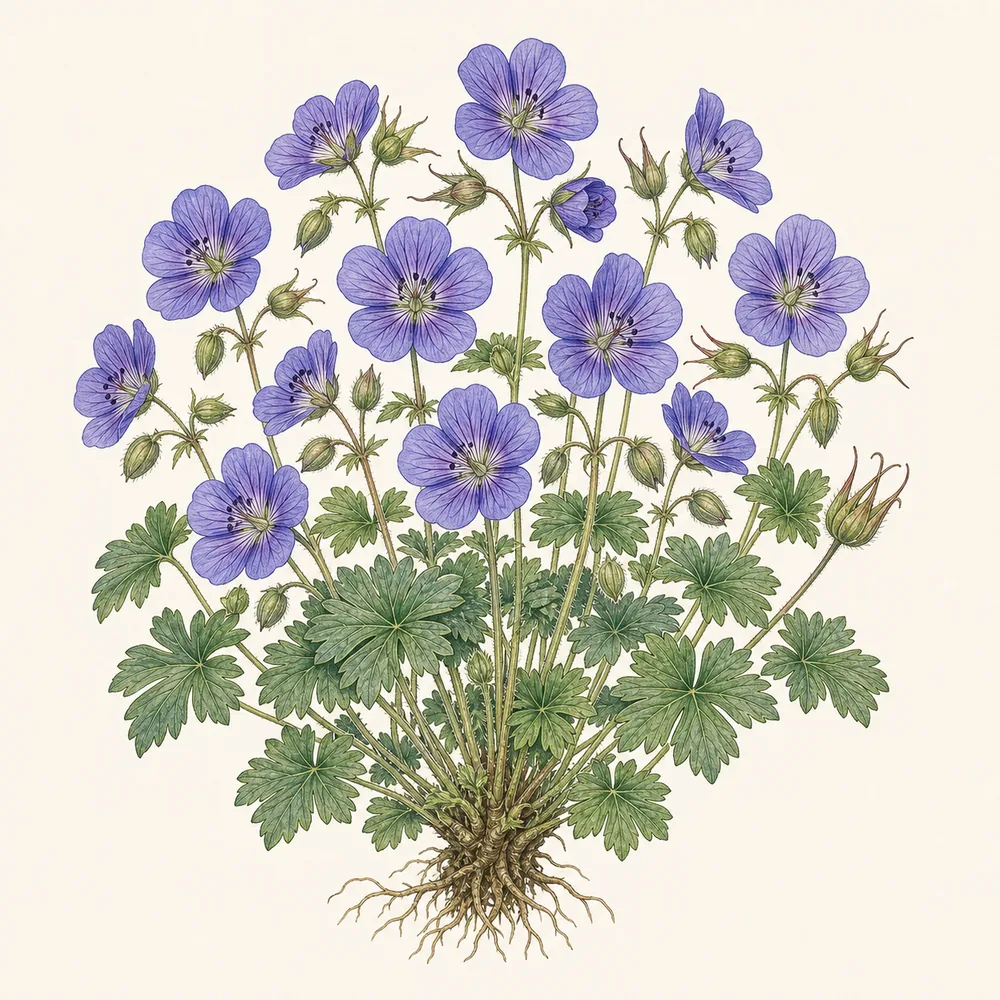
Hardy Geranium
The hardy geranium, or cranesbill, is one of the great workhorses of the border — a tough, weed-smothering perennial that flowers for months and asks almost nothing in return. Don't confuse it with the tender bedding 'geranium' (really a Pelargonium); this is the true, fully hardy Geranium that comes back bigger every year.
Not listed by ASPCA
The ASPCA doesn't list the hardy geranium (cranesbill, true Geranium), so we don't stamp it safe. Note the ASPCA's toxic 'Geranium' entry is the tender bedding Pelargonium, a different plant — the hardy border geranium has no entry. With no database entry we flag the gap honestly rather than guess.
Care at a glance
Everything that matters, in six lines. The detail is further down.
Light
Happy in full sun or dappled shade — most cranesbills flower best with a few hours of sun but tolerate a surprising amount of shade under trees and shrubs.
Water
Water through the first summer while roots establish; after that most types shrug off dry spells and rarely need watering in the ground.
Temperature
Hardy right across the UK, dying back to a crown in winter and reappearing every spring. No frost protection needed.
Position
Grows into a low, spreading mound that knits together to smother weeds — ideal for edging paths, filling gaps, or carpeting under roses and shrubs.
Feeding
Thrives in ordinary soil without feeding. A spring mulch of compost is plenty; overfeeding just produces floppy, leafy growth.
Soil
Grows in most soils from chalk to clay, in sun or shade. It only really objects to ground that stays waterlogged in winter.
What to do, and when
Fresh growth pushes up from the crown from March. Cut away any tatty old leaves, mulch around the plants, and lift and divide congested clumps now while they're still young.
The main flush of flowers opens from late spring into summer. Once it fades and the plant looks tired, shear the whole clump back hard — fresh leaves and a second flush of flowers follow within weeks.
A good season to plant new cranesbills while the soil is still warm and moist. Divide older clumps to make more plants, and cut back anything that has finished for the year.
Most types die back to a dormant crown and need nothing from you. Leave a light covering of old leaves as frost protection, or tidy them off in a mild spell.
The geranium that isn't a 'geranium'
There are two very different plants sold as 'geranium'. The bright red pots outside every garden centre in summer are really Pelargonium — tender South African plants that die at the first frost. The hardy geranium, or cranesbill, is the true Geranium: a fully hardy border perennial that comes back year after year.
It's an easy mix-up but worth getting right when you buy. If it's sold as a summer bedding plant to lift before winter, it's a Pelargonium. If it's in the perennials section and described as hardy ground cover, that's the plant on this page.
Shear it back for a second flush
This is the one trick that transforms a hardy geranium. After the first big flush of flowers fades — usually by midsummer — the plant sprawls and looks exhausted. Rather than dead-heading flower by flower, simply shear the whole clump back to a few centimetres above the ground.
It looks brutal, but within a couple of weeks fresh new leaves appear, and many varieties throw a second wave of flowers into late summer. A quick feed and water after cutting back speeds it along.
Ground cover that does a job
Cranesbills earn their place by being genuinely useful, not just pretty. They grow into low, dense mounds that knit together and shade out weed seedlings, so a run of them keeps a border far tidier with less effort.
Use the vigorous, shade-tolerant types like Geranium macrorrhizum to carpet the dry, difficult ground under trees and shrubs where little else will grow. The more free-flowering kinds like 'Rozanne' are better in an open, sunny spot where they'll flower for months.
Common problems
Sprawling, floppy growth
A natural habit for many types, and worse in rich soil or shade. Shear the whole plant back after the first flush and it regrows tighter; avoid overfeeding.
Tired, mildewed leaves in midsummer
Common after flowering, especially in a dry spell. Cut the clump right back, water it, and clean fresh foliage replaces the old within a fortnight.
Slugs on new spring growth
Fresh shoots can be nibbled as they emerge. Established clumps grow away fast and rarely suffer lasting harm; protect only young or newly planted ones.
Bare, woody centre in old clumps
After several years the middle dies out and the clump splits open. Lift it in spring or autumn, divide into vigorous outer pieces, and replant.
Everything a hardy geranium needs
The right variety for the spot, a spade for dividing, and shears for the summer cut-back.
We take no commission on anything in the "save your money" tier — if we don't think you should buy it, we don't link it. How our recommendations work
If you like this, try
Other plants with a similar temperament.
How we checked this
Care cross-checked against the RHS. The ASPCA does not list the hardy geranium (cranesbill, true Geranium), so its pet-safety is unconfirmed and we have not stamped it safe. If our page and these sources ever disagree, believe them — and tell us.
Sources: RHS · ASPCA — toxic & non-toxic plants
Last reviewed · August 2026