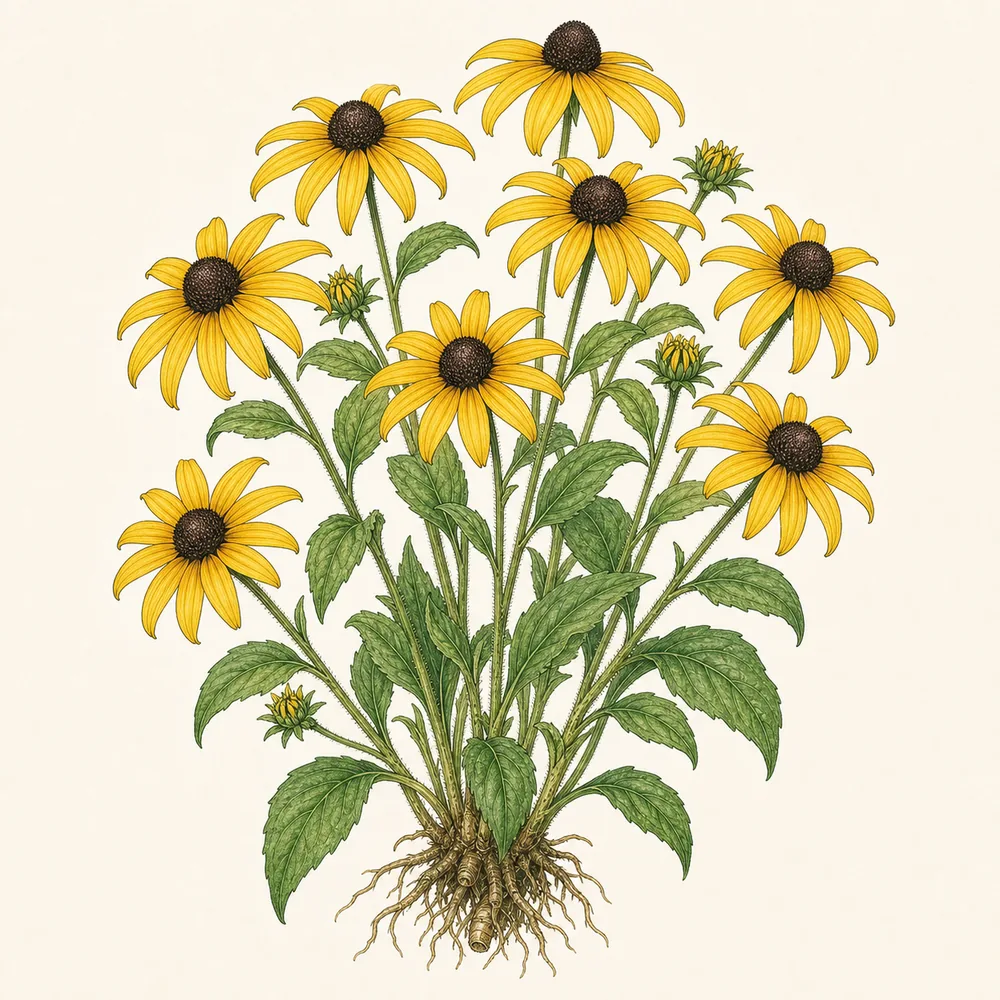
Black-eyed Susan
Golden-yellow daisies with a dark central cone that flower for weeks from late summer into autumn, just as much of the garden is winding down. A tough, sun-loving prairie perennial, rudbeckia is easy to grow, loved by pollinators, and keeps clumping up if you divide it every few years.
Not listed by ASPCA
The ASPCA doesn't list black-eyed Susan (Rudbeckia), so we don't stamp it safe. It has no recorded serious toxicity. With no database entry we flag the gap honestly rather than guess.
Care at a glance
Everything that matters, in six lines. The detail is further down.
Light
A prairie plant at heart — give it an open, sunny spot for the most flowers and sturdiest, self-supporting stems. It sulks and flops in shade.
Water
Water in prolonged dry spells, especially as the buds form and open. Established clumps are fairly drought-tolerant but flower longer with steady moisture.
Temperature
The perennial rudbeckias are hardy across the UK, dying back in winter and returning each spring. Some kinds sold for bedding are short-lived — check the label.
Position
Grows into an upright clump 60–90cm tall. Group several together for a bold late-season block, with lower plants in front to hide the bare stem bases.
Feeding
A general feed and a compost mulch in spring is plenty. Too much nitrogen produces soft, floppy growth that needs staking.
Soil
Prefers a decent, fertile soil that holds some moisture in summer but doesn't waterlog in winter. Improve thin, dry ground with compost before planting.
What to do, and when
New shoots emerge from the crown from April. Lift and divide congested clumps now to keep them vigorous, replant the strong outer pieces, and mulch around the plants.
Growth builds through summer towards the late show. Water in dry spells as buds form, and the first golden daisies open from July into August.
The main season — clumps flower on for weeks and the dark seedheads follow. Leave the stems standing for the birds and winter structure rather than cutting straight back.
Fully dormant. The seedheads feed goldfinches and look good in frost; cut the old stems down in late winter before the new shoots appear.
A plant built for the late-summer garden
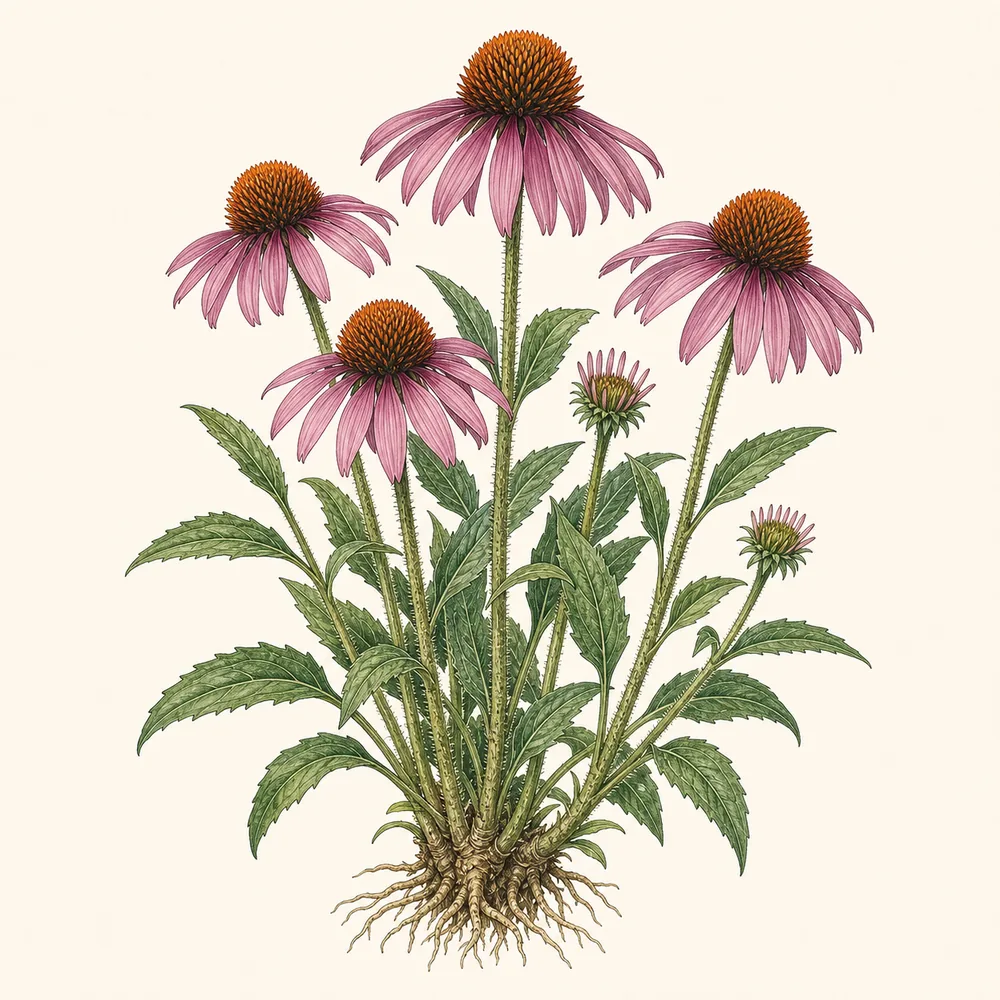
Rudbeckia comes into its own from July onwards, filling the gap when early-summer perennials are over. Its warm golden daisies are the classic partner for ornamental grasses and other prairie plants like coneflower (Echinacea) and Verbena bonariensis in the naturalistic 'new perennial' style.
Because it flowers so late and so long, a group of rudbeckia keeps a border looking full and alive well into autumn, when much else has faded. Plant it in generous drifts rather than dotting single plants about.
Divide clumps to keep them going
Rudbeckia clumps up steadily, and after three or four years the centre can grow woody and shy of flowering. The cure is simple: lift and divide the clump in spring, splitting it into fist-sized pieces from the vigorous outer edge and discarding the tired middle.
Replant the divisions with fresh compost and water them in. This keeps the plants young and free-flowering, and gives you extra clumps to spread through the border or share.
Leave the seedheads standing
It's tempting to cut everything back in autumn, but resist with rudbeckia. The dark, rounded seedheads hold seed that goldfinches and other birds feed on through winter, and they look striking rimed with frost.
Leave the stems until late winter, then cut them down just before the new spring shoots push through. You get months of extra structure, wildlife value and a tidy-up all in one go.
Common problems
Few flowers and floppy stems
Usually too much shade or too rich a feed. Move it to full sun and go easy on nitrogen — an open, sunny site gives sturdy, self-supporting flowering stems.
Powdery mildew on the leaves
A white coating in hot, dry spells or crowded plantings. Water at the roots in droughts, give plants room for airflow, and don't let them go bone dry.
Slugs and snails on spring shoots
The soft new growth is vulnerable as it emerges. Protect young clumps in spring; established plants grow away fast and usually outrun the damage.
Woody, flowerless centre in old clumps
A sign the clump is congested and ageing. Lift and divide it in spring, keep the strong outer pieces, and replant into refreshed soil.
Everything a rudbeckia clump needs
A sunny spot, decent moisture-retentive soil, and a spade for dividing every few years.
We take no commission on anything in the "save your money" tier — if we don't think you should buy it, we don't link it. How our recommendations work
If you like this, try
Other plants with a similar temperament.
How we checked this
Care cross-checked against the RHS. The ASPCA does not list black-eyed Susan (Rudbeckia), so its pet-safety is unconfirmed and we have not stamped it safe. If our page and these sources ever disagree, believe them — and tell us.
Sources: RHS · ASPCA — toxic & non-toxic plants
Last reviewed · August 2026