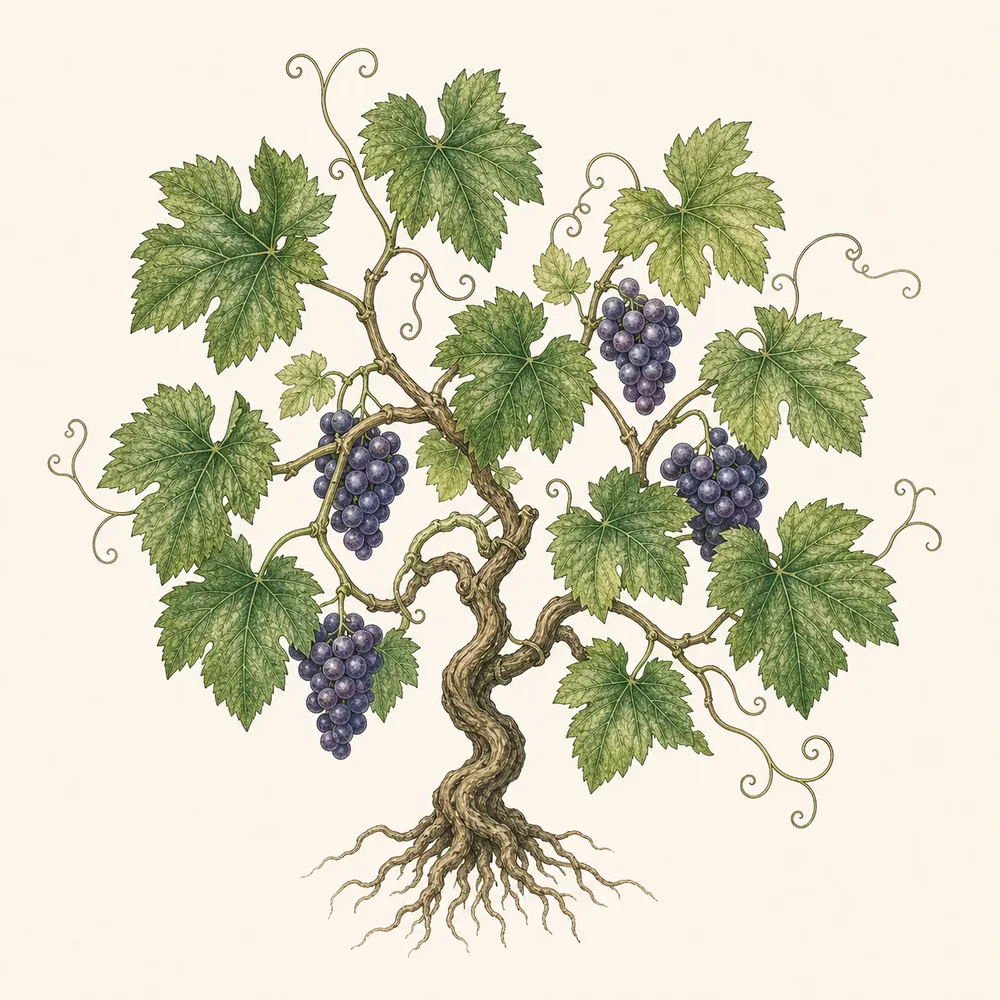
Grape
A long-lived, productive vine that will clothe a warm wall, pergola or greenhouse and crop for decades. The growing is easy; the yearly pruning is what separates a tidy, fruitful vine from a tangled, disappointing one.
Dangerous to dogs — can cause kidney failure
Grapes and vines (Vitis) are dangerous to dogs: eating grapes or raisins can cause sudden kidney failure, and even small amounts have proved fatal in some dogs. There is no known 'safe' amount. Keep dogs away from the fruit and any dropped grapes, and seek urgent veterinary help if any are eaten.
Care at a glance
Everything that matters, in six lines. The detail is further down.
Light
As much sun and warmth as possible — a south-facing wall or greenhouse. Sun is what ripens and sweetens the fruit.
Water
Water young vines to establish; mature vines root deeply and need little. Ease off as fruit ripens to concentrate the sugars.
Temperature
The vine is hardy, but a warm summer is what ripens the crop. Outdoor varieties suit our climate; dessert grapes often do better under glass.
Humidity
Good airflow is essential — crowded, humid growth invites mildew. Ventilate greenhouse vines well and thin the canopy.
Feeding
A general feed and mulch in spring, then high-potash as the fruit forms. Don't overfeed — vigorous vines fruit less.
Soil
Free-draining soil, even on the poor and stony side. Rich soil grows leaf and shoot at the expense of fruit.
What to do, and when
Buds break — tie in new shoots as they grow and rub out surplus buds. Feed and mulch. Watch for late frost on tender new growth.
Rapid growth and fruit set. Thin the bunches for bigger, healthier grapes, keep the canopy open for air and sun, and pinch back sideshoots.
Harvest as the grapes fully colour, soften and taste sweet — not just when they look ripe. Leave bunches on as long as the weather allows.
Fully dormant, and the time to prune HARD — but only in midwinter (Dec–Jan) before the sap rises, or the cuts will bleed.
Prune in midwinter, and prune hard
Grapes fruit on the current season's growth from spurs on a permanent framework. The main pruning happens in midwinter (December to January) while the vine is fully dormant — cut back the previous year's growth to one or two buds on each spur. Prune later, once the sap is rising, and the cuts 'bleed' sap badly and weaken the vine.
The two classic systems are the cordon (rod-and-spur) for a wall or greenhouse, and the Guyot for open ground and vineyards. Either way, the aim is the same: a strong, well-spaced framework rather than a congested tangle.
Thinning bunches beats leaving them all
It feels wrong to remove fruit, but a vine that sets more bunches than it can ripen gives lots of small, sour, poorly-coloured grapes. In the first couple of years remove nearly all the bunches to build a strong vine, then in following years limit each shoot to one or two bunches.
For dessert grapes, some growers also thin individual grapes within each bunch with narrow scissors so the remaining fruit swells fully and air circulates. It's fiddly, but the difference in quality is real.
Outdoors or under glass?
Hardy outdoor varieties like 'Boskoop Glory' and the wine grape 'Phoenix' ripen reliably on a warm UK wall. Sweeter dessert grapes such as 'Muscat' types generally need the extra heat of a greenhouse or conservatory to ripen well.
A common trick is to plant the vine outside the greenhouse and train the stem in through a low gap, so the roots get natural rainfall while the fruiting growth enjoys the warmth inside.
Common problems
Powdery mildew
White dusty coating on leaves and fruit, common in crowded, humid vines. Improve airflow, thin the canopy, don't overfeed, and remove badly affected growth.
Grapes stay small and sour
Usually too many bunches for the vine to ripen, or too little sun. Thin the crop hard and make sure it's in the warmest, sunniest spot you have.
Cuts bleeding sap
The vine was pruned too late, after the sap began rising. Do all hard pruning in midwinter while fully dormant; only light summer tidying later.
Wasps and birds on ripe fruit
Both love ripening grapes. Bag prized dessert bunches in fine netting or muslin sleeves, and clear any split or fallen fruit that draws wasps in.
Everything a grape vine needs
A sunny wall, sturdy wires, and the confidence to prune hard each winter.
We take no commission on anything in the "save your money" tier — if we don't think you should buy it, we don't link it. How our recommendations work
If you like this, try
Other plants with a similar temperament.
From the Notebook
Seasonal notes and guides that mention the grape.
How we checked this
Care cross-checked against the RHS. Toxicity per the ASPCA, which flags grapes/raisins as causing acute kidney failure in dogs — no established safe dose. If our page and these sources ever disagree, believe them — and tell us.
Sources: RHS · ASPCA — toxic & non-toxic plants
Last reviewed · July 2026