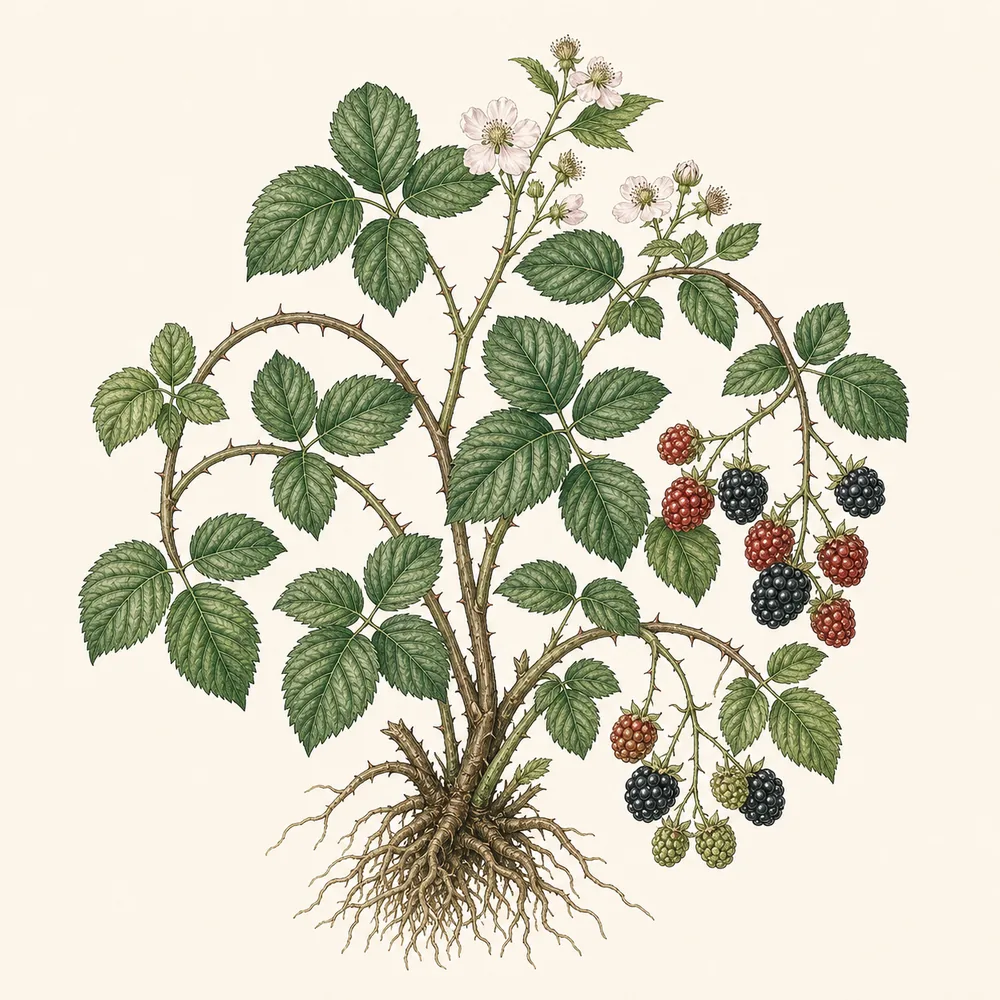
Blackberry
About the easiest fruit you can grow — so easy the wild bramble is a weed. A modern thornless cultivated variety, trained on wires, gives heavy crops of big berries with none of the scratches and half the effort.
Not listed by ASPCA
The ASPCA doesn't list the blackberry, so its pet-safety is unconfirmed. The fruit is widely considered harmless in small amounts, but the thorny canes are the real practical hazard around pets — and with no database entry we don't stamp it safe.
Care at a glance
Everything that matters, in six lines. The detail is further down.
Light
Best fruit in full sun, but blackberries are forgiving and will crop respectably even on a shadier fence or north-facing wall.
Water
Water new plants through their first summer. Once established the deep roots cope well, though watering as fruit swells improves size.
Temperature
Tough and completely hardy across the UK — one of the least fussy fruits about cold or exposure.
Humidity
Train the canes onto wires and keep the middle open so air moves through and the fruit dries — this keeps mould down.
Feeding
A general feed and a mulch in spring is plenty. They're vigorous enough that overfeeding just gives you more cane to manage.
Soil
Grows in most soils, from clay to sand. Just avoid ground that stays waterlogged, and improve very poor soil with compost.
What to do, and when
New canes emerge from the base. Feed and mulch, and tie in the fresh canes as they lengthen, keeping them separate from the fruiting ones.
Growth is fast and vigorous — keep tying in the new canes along the wires. The first berries begin ripening from late summer.
Main harvest, from August into October. Pick regularly, then after fruiting cut out the old canes that have cropped, right down to the ground.
Dormant and the ideal time to plant. Tie in and space out the young canes on their wires ready for next year's crop.
Choose thornless — your arms will thank you
The wild bramble is armed with vicious thorns, but modern cultivated varieties like 'Loch Ness', 'Oregon Thornless' and 'Loch Tay' are thornless, better-flavoured and far more productive. For any garden, a named thornless variety is a completely different (and far more pleasant) plant to grow and pick.
They're still vigorous, so give a single plant real room — a good 2–3 metres of wall or fence — and train it, rather than letting it sprawl into a thicket.
Separate this year's canes from next year's
Like summer raspberries, blackberries fruit on canes produced the previous year. The trick to keeping order is to train the two generations apart: fruiting canes to one side, and this year's new canes to the other or up the middle.
After a cane has fruited it never fruits again, so cut all the old fruited canes right out at ground level in autumn, then tie in the new canes to take their place. Keep the two clearly separated and pruning becomes obvious rather than a puzzle.
Training on wires
A post-and-wire system with three or four horizontal wires is all you need. Weave or tie the long canes along the wires in a fan or rope pattern — this keeps the fruit accessible, lets air and light in, and stops the plant becoming an impenetrable mound.
Watch for tip layering: where a cane tip touches the soil it will root and make a new plant, which is handy for propagation but a nuisance if you don't want the patch spreading. Keep the tips up on the wires unless you deliberately want more plants.
Common problems
Taking over the garden
Blackberries are vigorous and root wherever a tip touches soil. Keep canes tied up off the ground, cut back stray growth hard, and dig out unwanted rooted tips promptly.
Grey mould on the fruit
Botrytis in wet, crowded growth. Train the canes onto wires for airflow, pick ripe fruit regularly, and remove any mouldy berries you find.
Small, seedy, dry berries
Often drought while the fruit is swelling, or too much shade. Water in dry spells and, if possible, give it a sunnier position.
Scratches and snagged clothing
The thorny wild-type canes are a real hazard, especially around children and pets. Grow a thornless variety and keep the canes trained and tied in off paths.
Everything a blackberry needs
A thornless variety, some wires to train it on, and the room to let it run.
We take no commission on anything in the "save your money" tier — if we don't think you should buy it, we don't link it. How our recommendations work
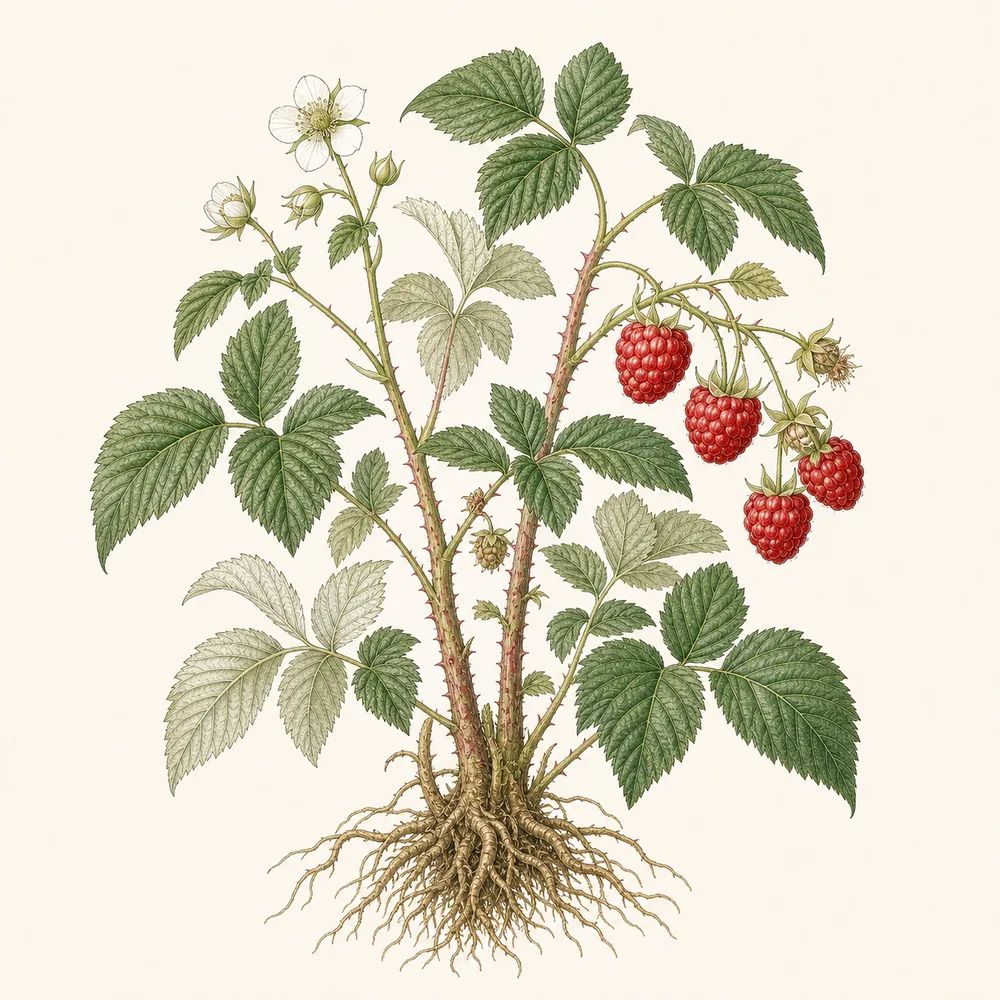
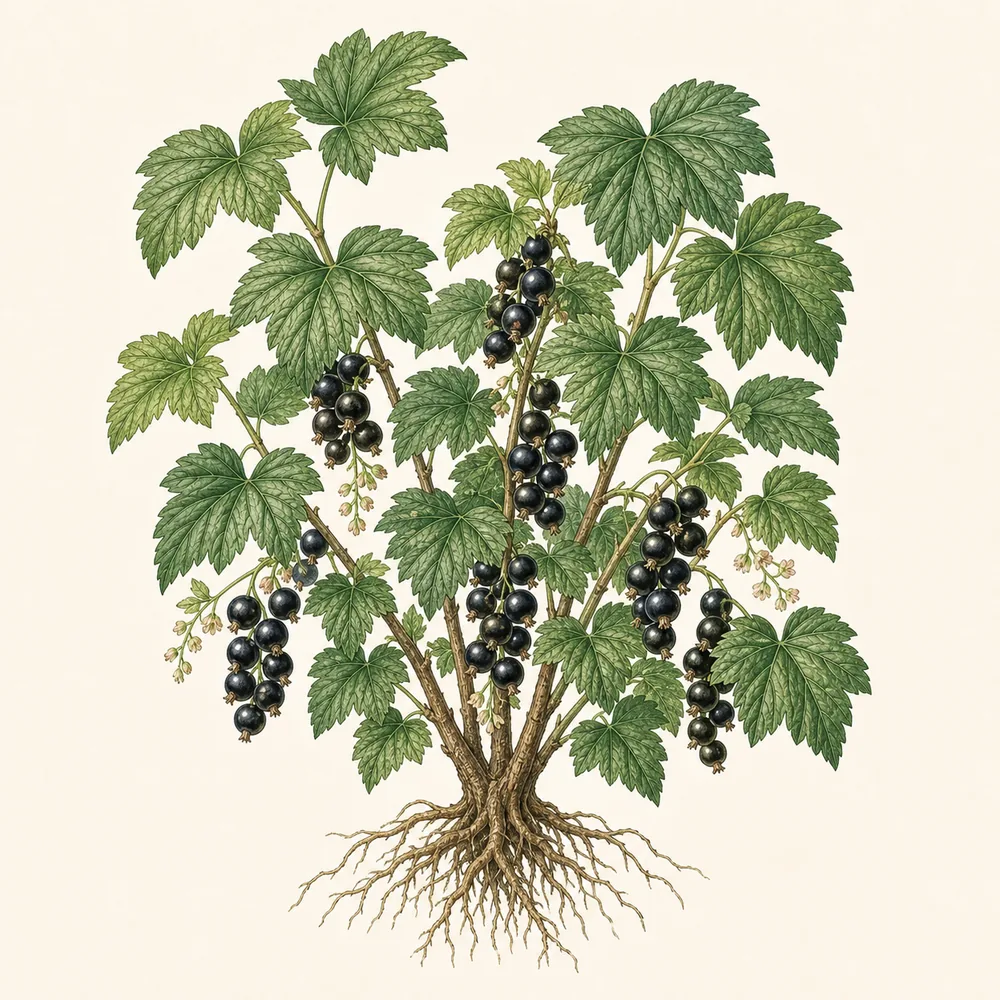
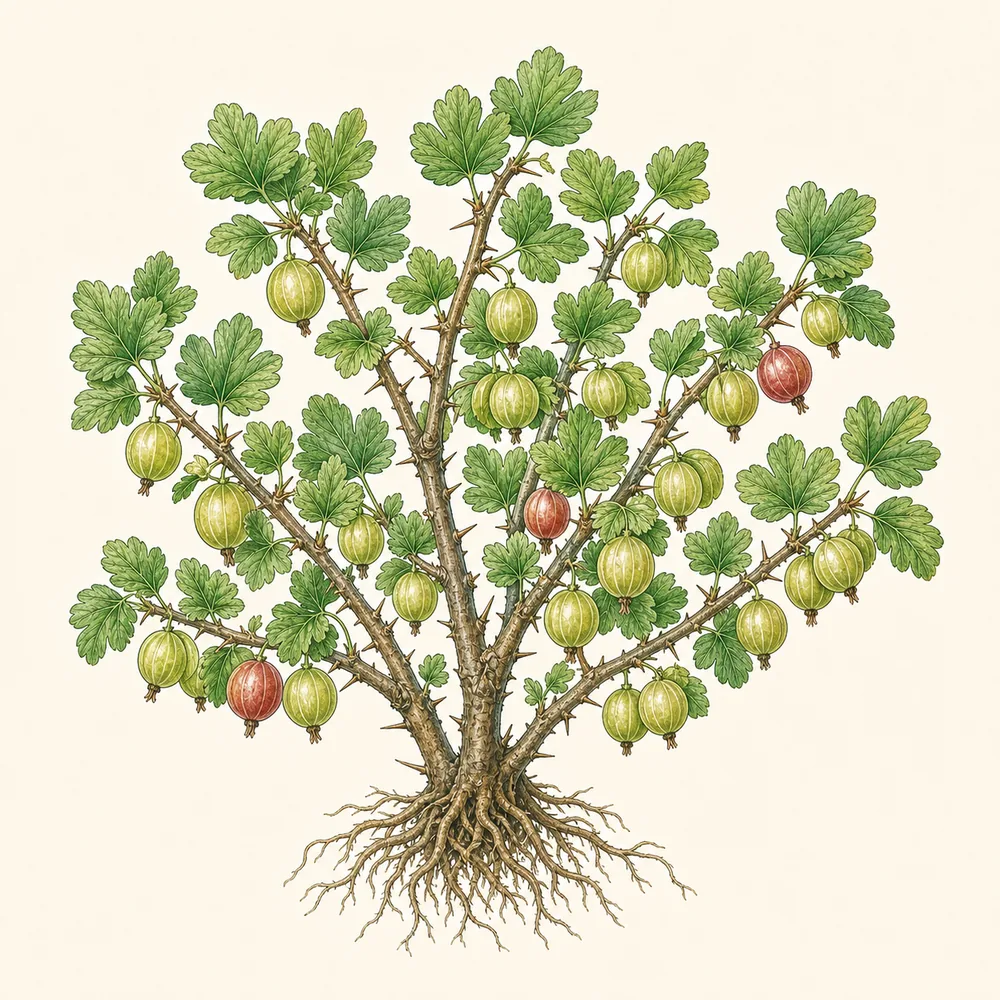
If you like this, try
Other plants with a similar temperament.
How we checked this
Care cross-checked against the RHS. The ASPCA does not list the blackberry, so its pet-safety is unconfirmed; the thorny canes are a practical hazard. If our page and these sources ever disagree, believe them — and tell us.
Sources: RHS · ASPCA — toxic & non-toxic plants
Last reviewed · July 2026