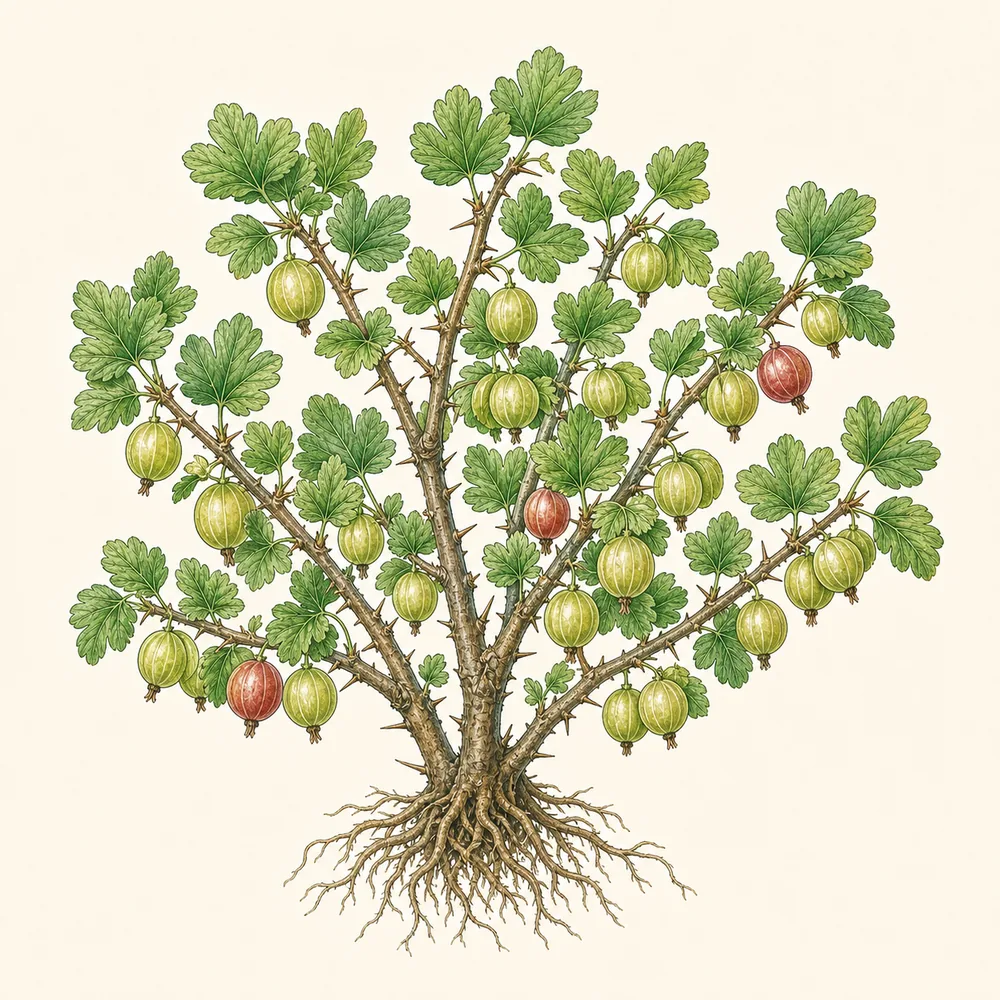
Gooseberry
An old-fashioned, thoroughly reliable soft fruit that crops early and heavily on a spiny bush. Thin some fruit young for cooking, leave the rest to ripen sweet, and mind the thorns.
Not listed by ASPCA
The ASPCA doesn't list the gooseberry (Ribes), so we can't confirm it pet-safe. There's no known serious toxicity, but the thorny stems are a practical hazard and we flag the unknown honestly.
Care at a glance
Everything that matters, in six lines. The detail is further down.
Light
Sweetest in full sun, but tolerant of light shade — dessert varieties ripen better with more sun.
Water
Water in dry spells as the fruit swells; erratic watering after drought can split the berries.
Temperature
Completely hardy across the UK and needs winter chill to fruit; sawfly is a bigger threat than cold.
Spacing
Space bushes for airflow and pick an open, goblet shape — crowded, congested growth invites mildew.
Feeding
A high-potash feed (sulphate of potash) suits fruit; go easy on nitrogen, which encourages soft, mildew-prone growth.
Soil
Happy on most soils that don't waterlog; enrich with organic matter and mulch to hold moisture.
What to do, and when
Watch for gooseberry sawfly larvae from mid-spring — they can strip a bush in days. Check the centre of the plant regularly.
Thin crowded fruit in late May or June for cooking; leave the rest to ripen sweet through July and into August.
Bare-root planting starts. Clear fallen leaves that can harbour mildew and tidy around established bushes.
Prune while dormant — open the centre and shorten side-shoots. The ideal time to plant new bushes.
Two crops from one bush
Gooseberries give you a choice. Thin the crop in late spring by removing every other berry while they're still hard and green — those thinnings are perfect for cooking, and the ones left behind swell larger and ripen sweeter for eating fresh.
It's the neatest trick in the soft-fruit garden: a tart cooking harvest in June and a dessert harvest a few weeks later, from the same plant.
Prune for an open goblet
The single best thing you can do for a gooseberry is open up its centre. Aim for a goblet shape on a short clear stem, with the middle kept airy — this cuts mildew, ripens fruit evenly, and (not least) lets your hand in to pick between the thorns.
Each winter, remove crossing and inward-growing branches and shorten the main side-shoots by about half. A quick summer prune of leafy new growth in June helps light reach the fruit.
Beat the sawfly before it beats you
Gooseberry sawfly is the one pest that can ruin a bush. The small green caterpillar-like larvae hatch low in the centre and eat outwards, and a colony can defoliate a whole plant in under a week.
The answer is vigilance, not chemicals: from mid-spring, part the branches and check the middle of the bush every few days. Pick larvae off by hand as soon as you see them, and repeat — there can be several generations a summer.
Common problems
Gooseberry sawfly
Leaves stripped to the stalks from the centre outwards. Inspect the middle of the bush from mid-spring and pick off the green larvae before they multiply.
American gooseberry mildew
White powdery growth on shoots and fruit. Prune for an open centre, avoid too much nitrogen, and choose resistant varieties like 'Invicta' or 'Hinnonmäki'.
Split berries
Caused by heavy watering or rain after a dry spell. Keep watering steady and mulch to even out soil moisture.
Birds and thorns
Birds take ripening fruit and the spines make picking painful. Net as fruit colours, and prune to an open shape so you can reach in cleanly.
Everything a gooseberry needs
A sunny open spot, sharp secateurs, and a watchful eye for sawfly.
We take no commission on anything in the "save your money" tier — if we don't think you should buy it, we don't link it. How our recommendations work
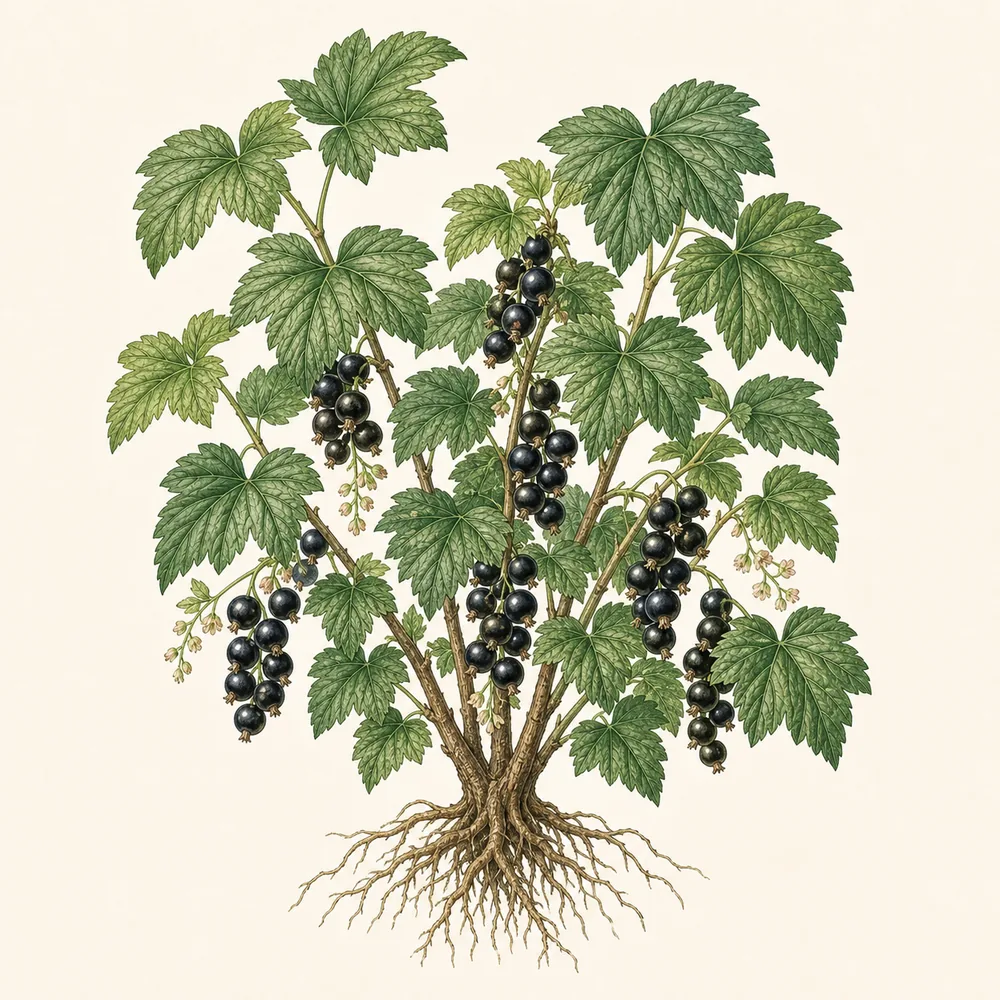
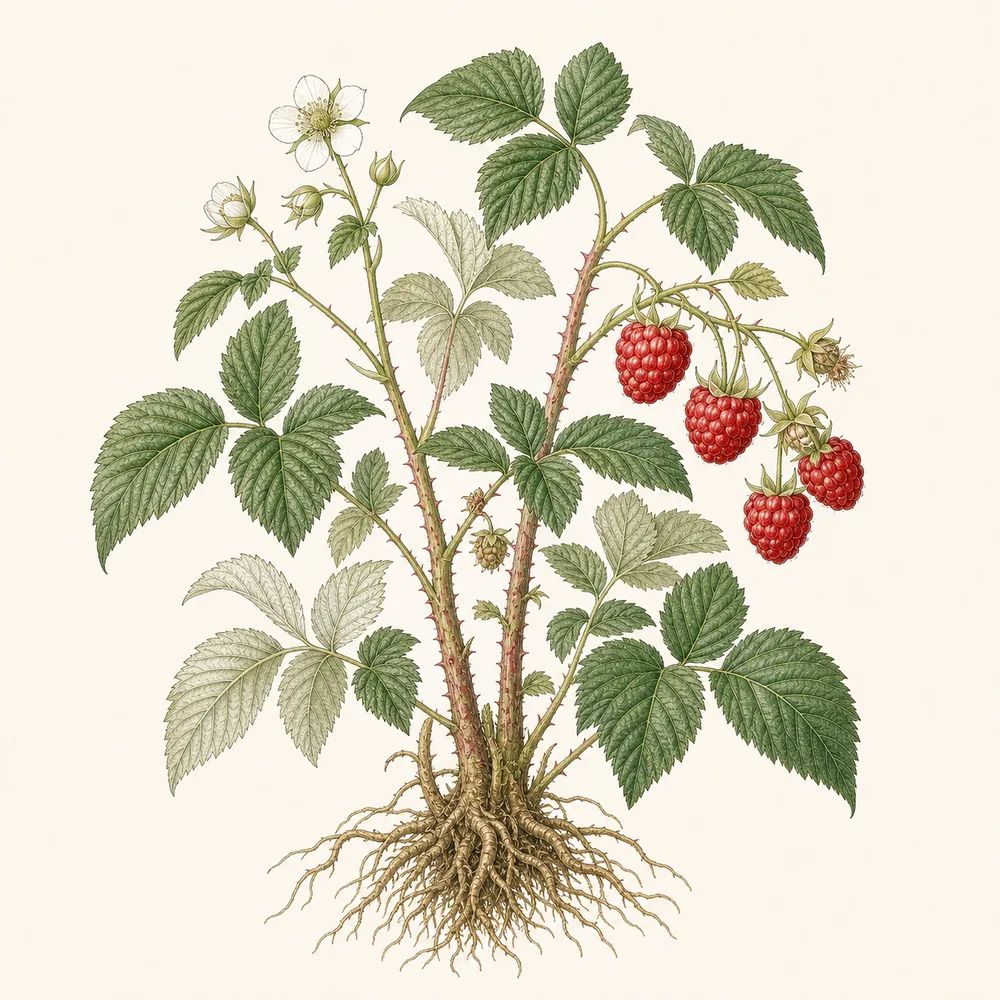
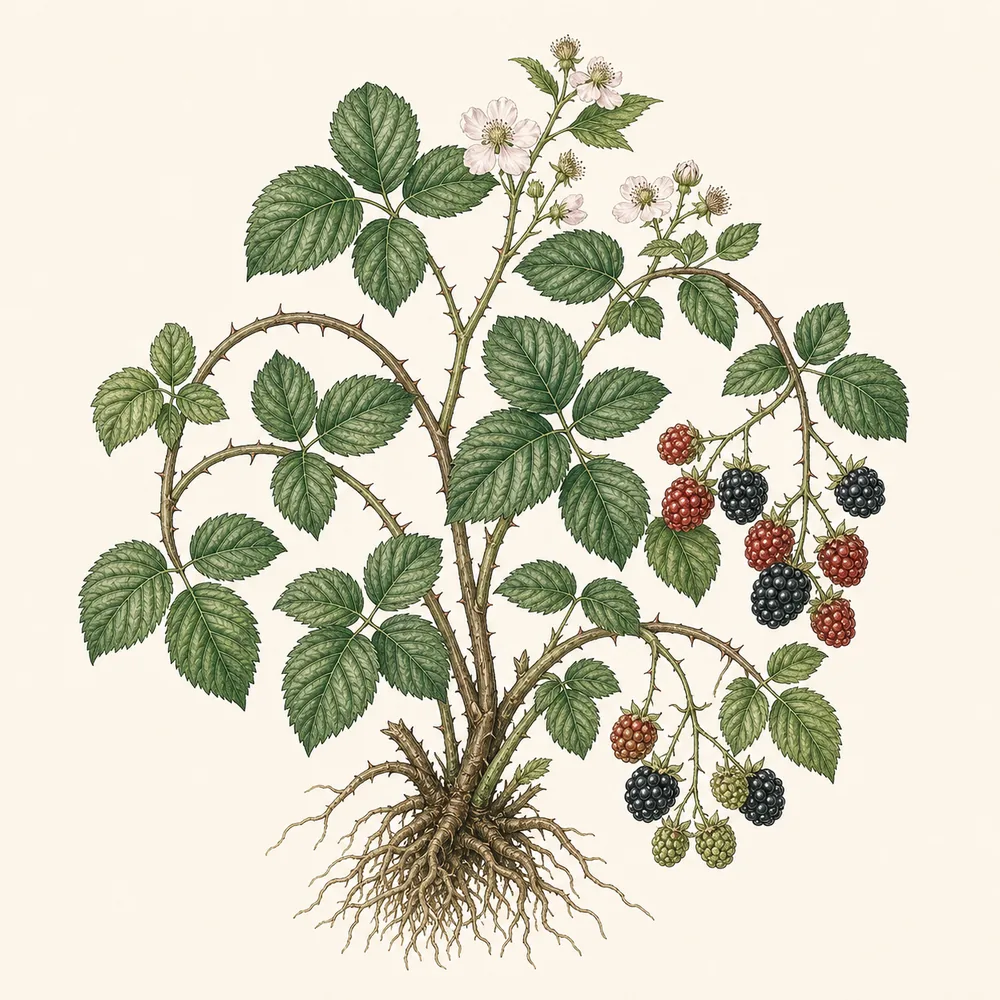
If you like this, try
Other plants with a similar temperament.
How we checked this
Care cross-checked against the RHS. The ASPCA does not list the gooseberry, so its pet-safety is unconfirmed; the thorny stems are a practical hazard. If our page and these sources ever disagree, believe them — and tell us.
Sources: RHS · ASPCA — toxic & non-toxic plants
Last reviewed · July 2026