Fig
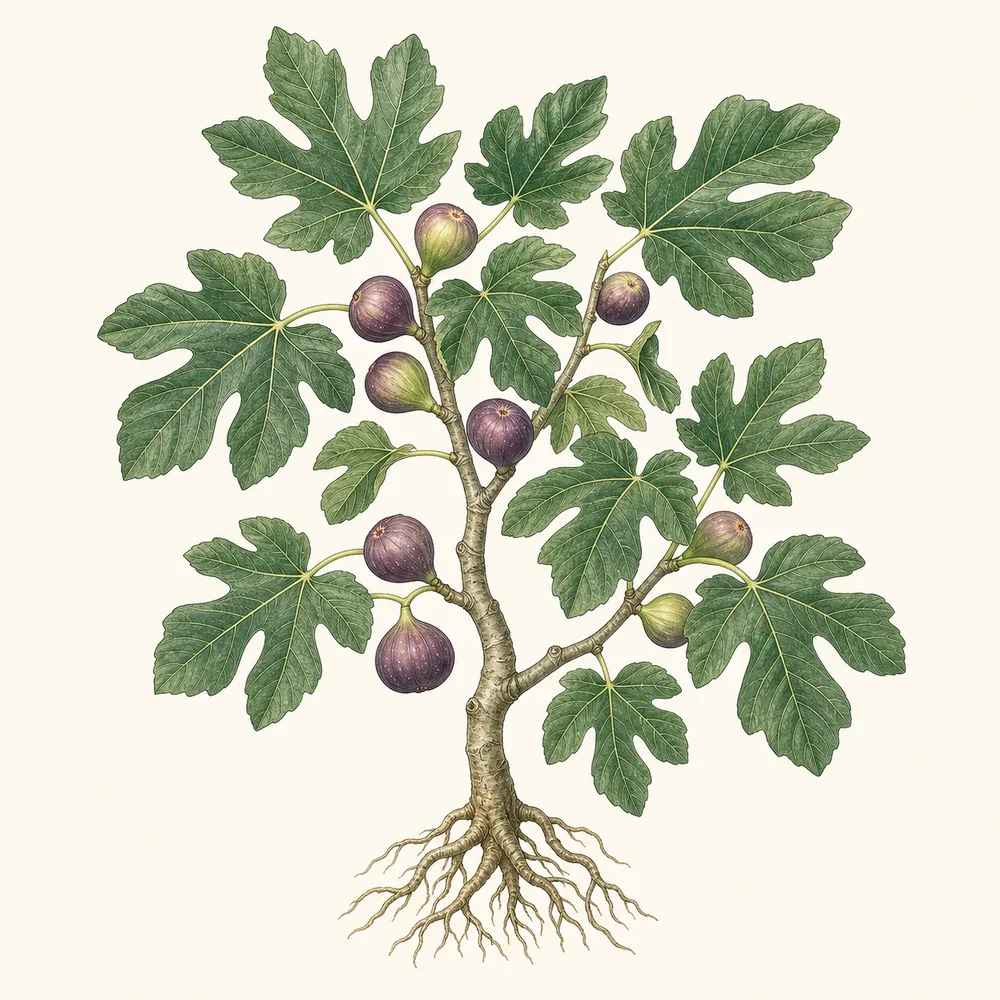
A handsome Mediterranean tree with bold lobed leaves that crops well in the UK against a warm wall — as long as you do the one counter-intuitive thing figs need: cramp the roots to get fruit.
Toxic to cats & dogs if chewed
The fig (Ficus carica) is listed as toxic to cats and dogs on the ASPCA database. Its milky sap contains ficin and psoralens; chewing the leaves causes mouth irritation and vomiting, and the sap can cause skin irritation made worse by sunlight. Keep pets from the foliage.
Care at a glance
Everything that matters, in six lines. The detail is further down.
Light
The hottest, sunniest wall you have. A south- or west-facing wall stores heat and ripens the fruit that a cold open site never will.
Water
Water consistently through the growing season, especially in a pot or a restricted root run. Drought stress makes figs drop their fruit.
Temperature
The tree survives most UK winters, but the tiny pea-sized figs that carry next year's crop need protecting from hard frost.
Humidity
Likes warmth and good air movement. Nothing special needed beyond a sheltered, sunny position.
Feeding
A tomato-type high-potash feed every couple of weeks in summer, especially for pot-grown figs. Avoid rich nitrogen — it grows leaf, not fruit.
Soil
Free-draining and deliberately confined. Unrestricted roots give a huge leafy tree and almost no fruit.
What to do, and when
Growth restarts. Remove any winter frost protection once hard frosts pass, feed, and rub off any large marble-sized figs — they won't ripen here.
Main growth and ripening. Water and feed pot-grown figs regularly; harvest as fruits hang down, soften and split. Pinch shoot tips in June.
Pick the last ripe figs. Remove any remaining large unripe fruit but keep the tiny pea-sized embryo figs at the shoot tips — those are next year's crop.
Dormant. In colder areas protect the embryo figs and stems with fleece or straw. Prune now while dormant if the framework needs shaping.
Restrict the roots — this is the whole secret
Left to roam, a fig pours its energy into lush foliage and gives you barely any fruit. Confine the roots and the tree switches to cropping. The classic method is a planting pit lined with paving slabs or a bottomless container, roughly 60cm cube, with rubble in the base to force the roots to stay put.
Growing in a large pot does the same job and has a bonus: you can wheel it into a shed or against the house over winter to protect the embryo figs. For most UK gardeners, a big container is the easiest route to a reliable crop.
Understanding which figs will ripen
In the UK, only the tiny pea-sized embryo figs that form at the shoot tips in late summer will ripen — the following year. They overwinter, then swell and ripen the next summer. Larger, marble-sized figs left on over winter almost never ripen here and just rot; rub these off in spring.
This is why winter protection of those little end-of-shoot figs matters so much. Lose them to frost and you lose the whole next crop. Reliable varieties for our climate include 'Brown Turkey' and 'Brunswick'.
Pruning and pinching
Prune in early spring or winter while dormant, removing dead, crossing or overcrowded branches to keep an open, fan-like shape against the wall. Wear gloves — the milky sap irritates skin and, in sunlight, can cause a burn-like reaction.
In early summer, pinch out the growing tips once each shoot has five or six leaves. This encourages the tree to form the embryo figs that become next year's fruit, rather than running to long leafy growth.
Common problems
Lots of leaf, no fruit
The roots are unrestricted and the tree is too comfortable. Grow it in a pot or a slab-lined pit, ease off nitrogen feeding, and it will start to crop.
Fruit drops before ripening
Usually erratic watering or drought stress, common in pots. Keep the compost evenly moist through summer and feed regularly with high-potash.
Embryo figs killed over winter
Hard frost has taken the tiny end-of-shoot figs, so there's no crop that year. Protect them with fleece or straw over winter, or move a potted fig under cover.
Sap rash on skin
The white sap plus sunlight can burn skin. Wear gloves and long sleeves when pruning, and wash off any sap promptly.
Everything a fig needs
A hot wall, restricted roots, and a little winter protection for next year's crop.
We take no commission on anything in the "save your money" tier — if we don't think you should buy it, we don't link it. How our recommendations work
If you like this, try
Other plants with a similar temperament.
How we checked this
Care cross-checked against the RHS. Toxicity taken from the ASPCA database, which lists the fig (Ficus carica) as toxic — ficin/psoralen sap. If our page and these sources ever disagree, believe them — and tell us.
Sources: RHS · ASPCA — toxic & non-toxic plants
Last reviewed · July 2026