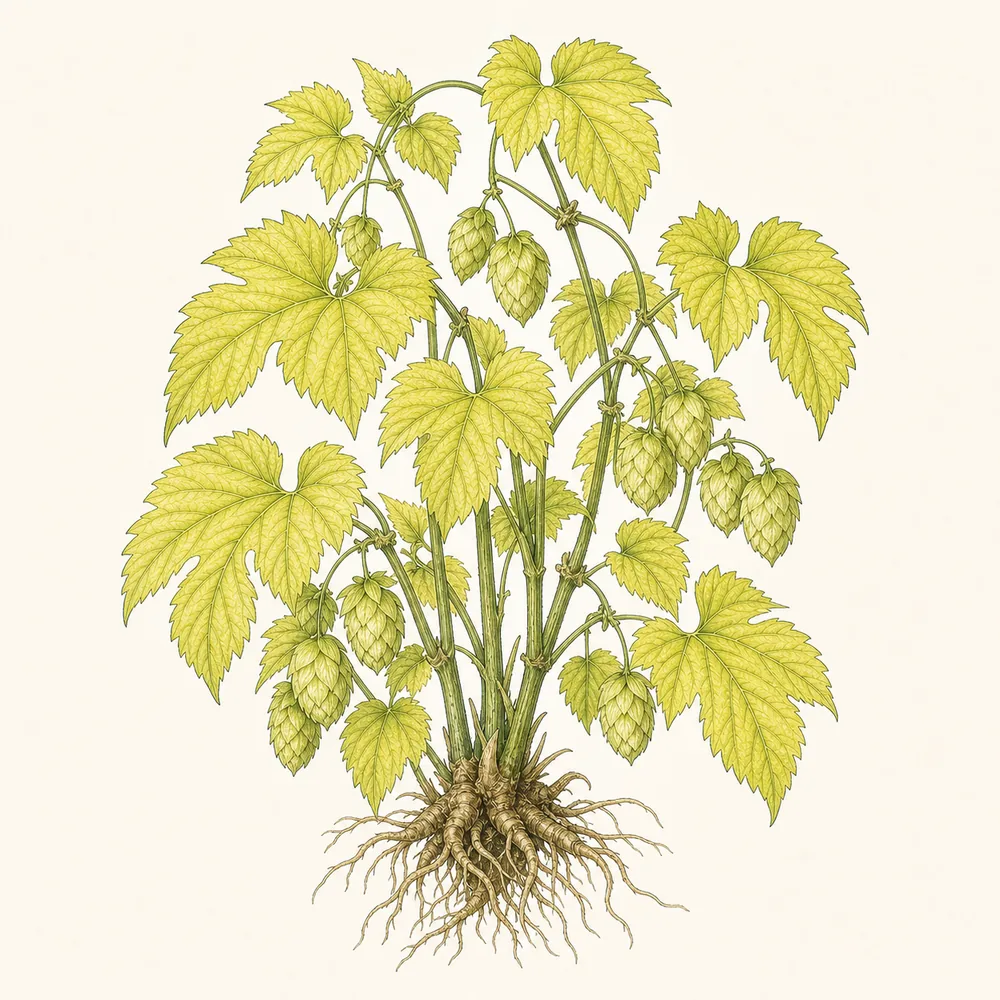
Golden Hop
A fast, herbaceous climber with soft, lime-gold leaves that dies back to nothing each winter and then rockets skyward again every spring. Give it a big support and it will cover it — and papery hop cones follow on female plants in late summer.
Dangerous to dogs — seek urgent help
Hops (Humulus lupulus), including the golden hop, are dangerous to dogs: the ASPCA flags them as causing malignant hyperthermia — a rapid, dangerous rise in body temperature that can be life-threatening. Panting, a racing heart and a high temperature after contact need urgent veterinary help. Keep dogs well away from the plant and any spent hops.
Care at a glance
Everything that matters, in six lines. The detail is further down.
Position
Best leaf colour comes in full sun; it takes light shade but the gold turns greener. Give it a large, sturdy support to scramble up.
Water
A thirsty grower — water in dry spells, especially while it's climbing hard, or the lower leaves scorch and brown.
Hardiness
Completely hardy. The top growth dies down every winter and the roots resprout from the ground each spring.
Soil
A deep, fertile soil that holds moisture suits it best. It fuels a huge amount of growth in a single season, so it likes to be fed.
Feeding
A thick mulch of compost or manure in spring and a general feed help it power up to full size.
Pruning
No fiddly pruning — simply cut the dead stems back to the base in late autumn or winter and clear them away.
What to do, and when
New shoots burst from the ground and climb astonishingly fast — guide them onto their support and feed generously.
Full, leafy cover at its brightest gold; keep it watered and it may carry papery hop cones by late summer.
Growth fades and the leaves die back; hop cones ripen on female plants before the top collapses.
Fully dormant — cut all the dead top growth to the ground and mulch, ready for next year's surge.
It comes back bigger every year
Golden hop is herbaceous, not woody — every autumn the whole plant dies back to the ground, and every spring it regrows from the roots, often reaching four or five metres in a single season. That's a feature, not a fault: it means you get a clean slate each year and never have to untangle old woody stems.
Because it puts on so much growth so fast, it needs feeding and a genuinely strong support — an arch, a robust trellis or a stout post-and-wire run. A flimsy structure will simply be pulled over.
Best colour, and keeping dogs safe
The lime-gold leaves are the whole point, and they hold their colour best in full sun; in shade they fade towards ordinary green. A little midday shelter, though, stops the brightest foliage from scorching in a heatwave.
One serious note for dog owners: hops are toxic to dogs and can trigger a dangerous rise in body temperature. Keep dogs away from the growing plant, and be especially careful to bin any spent hops or prunings well out of their reach.
Common problems
Scorched, brown lower leaves
Usually drought — this thirsty plant dries out fast in summer. Water deeply and mulch to hold moisture at the roots.
Greener than expected leaves
Too much shade. Golden hop needs good sun to keep its bright lime-gold colour.
Powdery grey coating on leaves
Powdery mildew, common on hops in dry soil. Keep the roots moist and improve air movement around the plant.
Popping up where you don't want it
It spreads by underground roots and can travel. Dig out stray shoots, or plant it where its wandering roots have room.
Everything a golden hop needs
A big strong support, rich moist soil, and a hard cut-back each winter.
We take no commission on anything in the "save your money" tier — if we don't think you should buy it, we don't link it. How our recommendations work
If you like this, try
Other plants with a similar temperament.
How we checked this
Care cross-checked against the RHS. Toxicity taken from the ASPCA database, which lists Humulus lupulus (hops) as toxic to dogs — causing malignant hyperthermia, a dangerous rise in body temperature that needs urgent veterinary help. If our page and these sources ever disagree, believe them — and tell us.
Sources: RHS · ASPCA — toxic & non-toxic plants
Last reviewed · July 2026