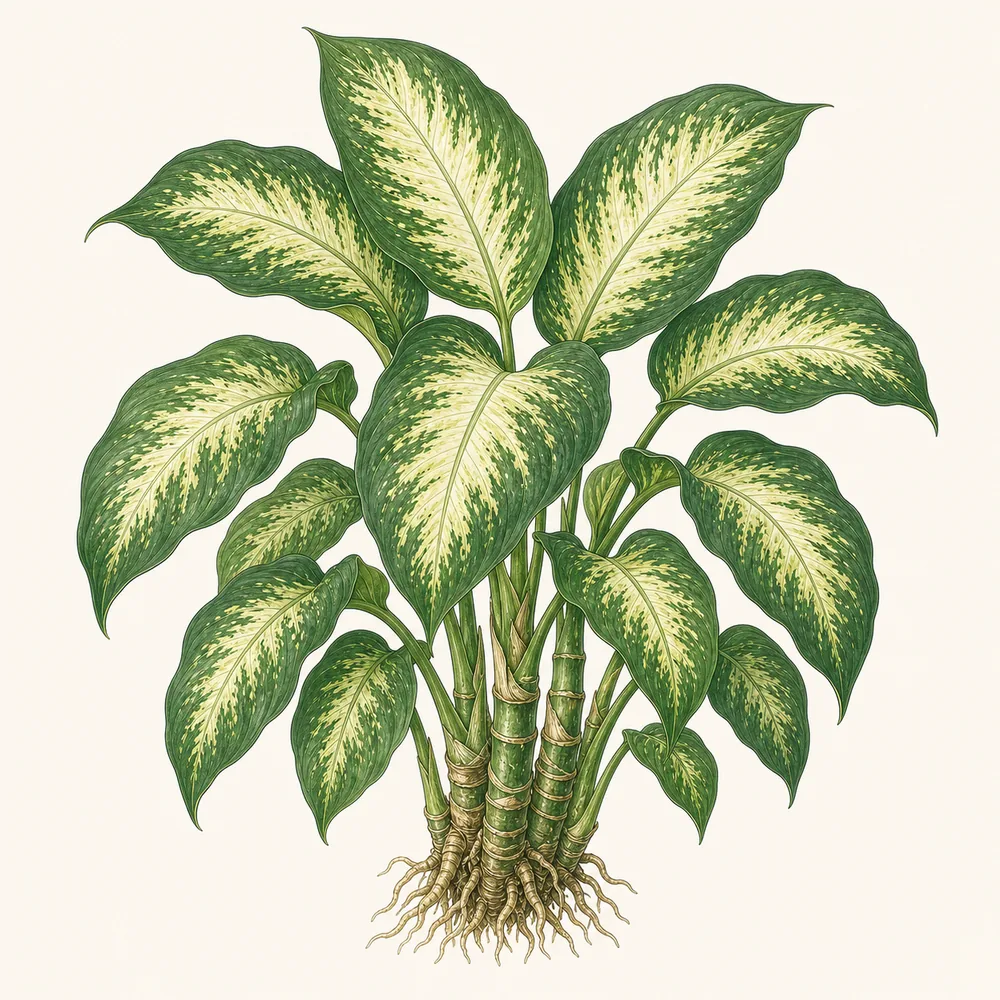
Dumb Cane
A bold, fast-growing foliage plant with big cream-splashed leaves. Easy to grow, but its sap deserves respect — the name comes from the mouth-numbing effect of chewing it.
Toxic to cats, dogs & people if chewed
Dumb cane (Dieffenbachia) is listed as toxic on the ASPCA database. It contains insoluble calcium oxalate crystals: chewing causes intense mouth and throat irritation, pain, drooling and swelling — more pronounced than most aroids, hence the name. Keep it away from pets and children, and wash your hands after handling cut stems.
Care at a glance
Everything that matters, in six lines. The detail is further down.
Light
Bright filtered light keeps it full and the variegation strong. Tolerates medium light; avoid direct sun.
Water
Water when the top few centimetres dry, then drain fully. Even moisture in growth; drier in winter.
Temperature
Warmth-loving and sensitive to cold — keep it above 15 °C and off draughts.
Humidity
Happier with a little extra humidity; dry air browns the edges.
Feeding
A balanced feed monthly through spring and summer for lush leaves.
Soil
A rich but airy houseplant mix that drains freely.
What to do, and when
Growth restarts — repot if crowded and resume feeding. Wear gloves if you cut or divide it.
Peak growth. Keep it warm, lightly moist and fed; wipe the big leaves to keep them clean.
Ease back on water and feed as light drops.
Slower growth. Water sparingly, keep it warm, and keep it well away from cold glass.
Handle the sap with care
Dumb cane is easy to grow but its sap is a genuine irritant. Chewing a leaf causes painful mouth and throat swelling — the mouth-numbing effect that gives the plant its name — and the sap can irritate skin and eyes.
None of this makes it a bad houseplant, but it does mean keeping it out of reach of pets and small children, and washing your hands (or wearing gloves) after cutting or repotting it.
Keeping it full
With age dumb cane can go leggy, dropping lower leaves and revealing a bare cane. You can cut the stem back hard in spring — it resprouts from the base — and root the cut top as a new plant.
Turn the pot regularly so it grows evenly toward the light rather than leaning.
Common problems
Yellowing lower leaves
Often overwatering; some lower-leaf loss with age is normal. Let the top dry more between drinks.
Brown, crispy edges
Dry air or cold draughts. Raise humidity and move it somewhere warmer.
Leggy, bare stem
Age and low light. Cut it back hard in spring and it will resprout bushier.
Drooping leaves
Cold, or soil too wet or too dry. Check the temperature and the watering.
Everything a dumb cane needs
Warmth, bright indirect light — and gloves for pruning.
We take no commission on anything in the "save your money" tier — if we don't think you should buy it, we don't link it. How our recommendations work
If you like this, try
Other plants with a similar temperament.
How we checked this
Care cross-checked against the RHS. Toxicity taken from the ASPCA database, which lists Dieffenbachia (dumb cane) as toxic — insoluble calcium oxalates causing pronounced oral pain and swelling. If our page and these sources ever disagree, believe them — and tell us.
Sources: RHS · ASPCA — toxic & non-toxic plants
Last reviewed · July 2026