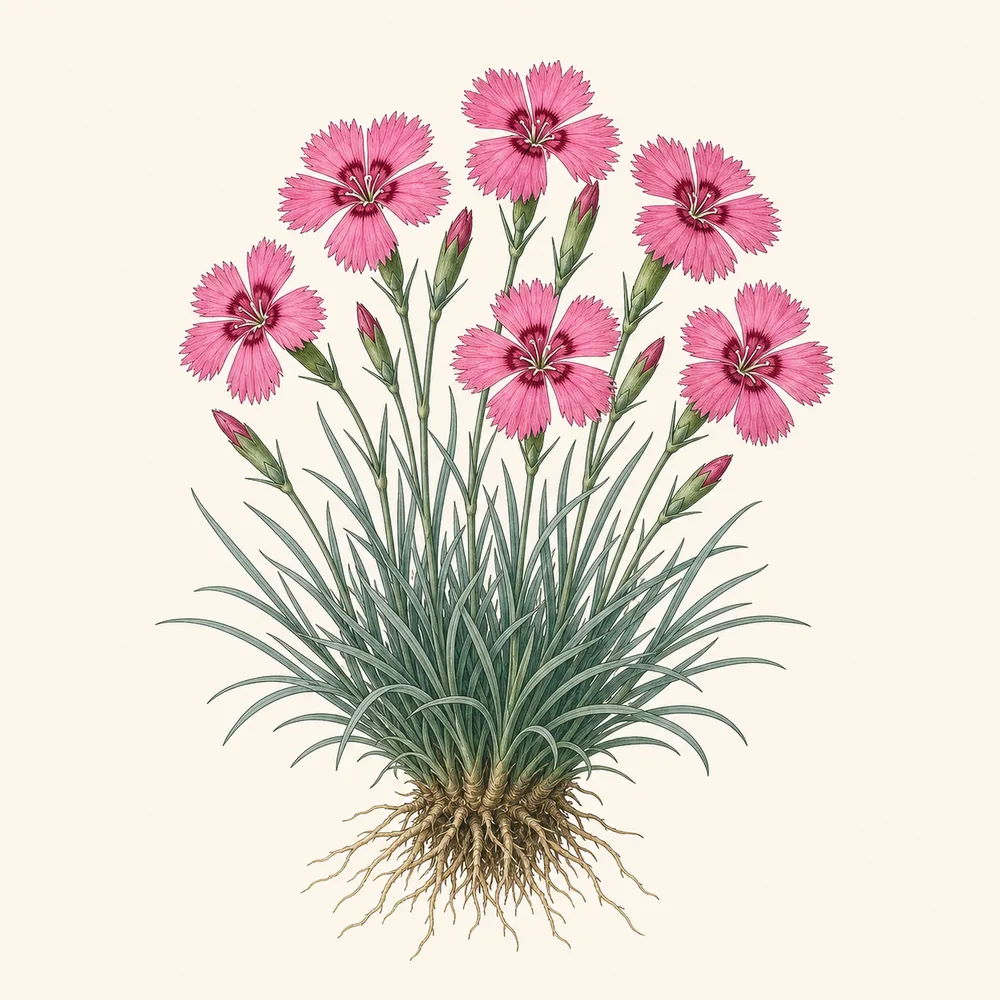
Dianthus
Pinks are the cottage-garden classic — neat evergreen cushions of grey-blue foliage topped with clove-scented flowers all summer. Give them sun and sharp drainage, keep deadheading, and they reward you for very little effort.
Toxic to cats, dogs & horses (mild)
Pinks and carnations (Dianthus) are listed as toxic on the ASPCA database. Eating the plant causes mild gastrointestinal upset and mild skin irritation — unpleasant but rarely serious. Worth knowing if a pet likes to chew on borders.
Care at a glance
Everything that matters, in six lines. The detail is further down.
Light
Pinks are sun-lovers — a good six hours of direct sun keeps them compact and flowering. In shade they grow leggy and sparse.
Water
Water new plants until established, then leave them be. Established pinks shrug off dry spells and hate sitting wet far more than dry.
Temperature
Most garden pinks are fully hardy and keep their grey foliage through winter. They cope with cold far better than damp.
Spacing
Space plants so air moves freely around the cushions — good airflow keeps the foliage dry and fungal problems away.
Feeding
A little general fertiliser in spring is plenty. Rich soil and heavy feeding give soft, floppy growth and fewer flowers.
Soil
Sharp drainage is everything; they love a bit of lime. Add grit to heavy soil, or grow them in a gritty pot or raised bed.
What to do, and when
New growth begins. Tidy any winter-tatty foliage, add a little general feed, and plant new pinks. A gritty mulch keeps the collar dry and the weeds down.
The main show. Deadhead regularly to keep the flowers coming, and cut a few clove-scented stems for the house. Take cuttings ('pipings') in July to make new plants.
Flowering winds down. Trim over straggly plants lightly and clear fallen leaves off the cushions so they don't rot in the damp.
The grey foliage stays put through the cold. Little to do — just make sure plants aren't sitting in wet, as winter damp kills more pinks than frost ever does.
Sun and sharp drainage above all
Pinks come from lean, rocky hillsides, and everything about growing them well follows from that. They want full sun and free-draining soil — ideally neutral to slightly alkaline, with a bit of lime. On heavy clay they simply rot away over winter.
If your soil is rich or wet, don't despair: work in plenty of grit before planting, grow them at the front of a raised bed, or pop them in a gritty pot. A gravel mulch around the neck keeps the base dry and stops the cushion sitting in moisture.
Deadhead for months of flowers
The single best thing you can do for pinks is deadhead them. Snap or snip off each flower as it fades and the plant keeps producing more rather than setting seed — repeat-flowering types will bloom on and off right through summer.
A light trim over the whole plant after the first big flush tidies the cushion and often triggers a second wave. Don't cut back hard into the old woody base, though — pinks resent it and may not reshoot from bare wood.
Keep them young with pipings
Pinks are short-lived perennials — after three or four years the cushions go woody, bare and sparse in the middle. The answer is to make new plants regularly, and they couldn't be easier.
In summer, pull out a non-flowering shoot at a leaf joint — this is a 'piping' — and push it into gritty compost. It roots in a few weeks, giving you fresh, vigorous plants to replace the tired ones for free.
Common problems
Plants rot over winter
Almost always wet soil, not cold. Improve drainage with grit, mulch the neck with gravel, and grow in raised beds or pots on heavy ground.
Leggy, sparse growth and few flowers
Too much shade or over-rich soil. Move to full sun, ease off the feeding, and deadhead regularly to keep the plant compact and blooming.
Woody, bare centres
Old pinks naturally go woody after a few years. Take summer pipings (cuttings) to raise fresh plants, and replace tired cushions rather than trying to revive them.
Foliage yellow or spotted
Usually rust or leaf spot in damp, crowded conditions. Space plants for airflow, keep water off the leaves, and remove badly affected foliage to slow it down.
Everything pinks need
Full sun, sharp drainage, and regular deadheading.
We take no commission on anything in the "save your money" tier — if we don't think you should buy it, we don't link it. How our recommendations work
If you like this, try
Other plants with a similar temperament.
How we checked this
Care cross-checked against the RHS. Toxicity taken from the ASPCA database, which lists Dianthus (pinks, carnation, sweet William) as toxic with mild GI and skin signs. If our page and these sources ever disagree, believe them — and tell us.
Sources: RHS · ASPCA — toxic & non-toxic plants
Last reviewed · July 2026