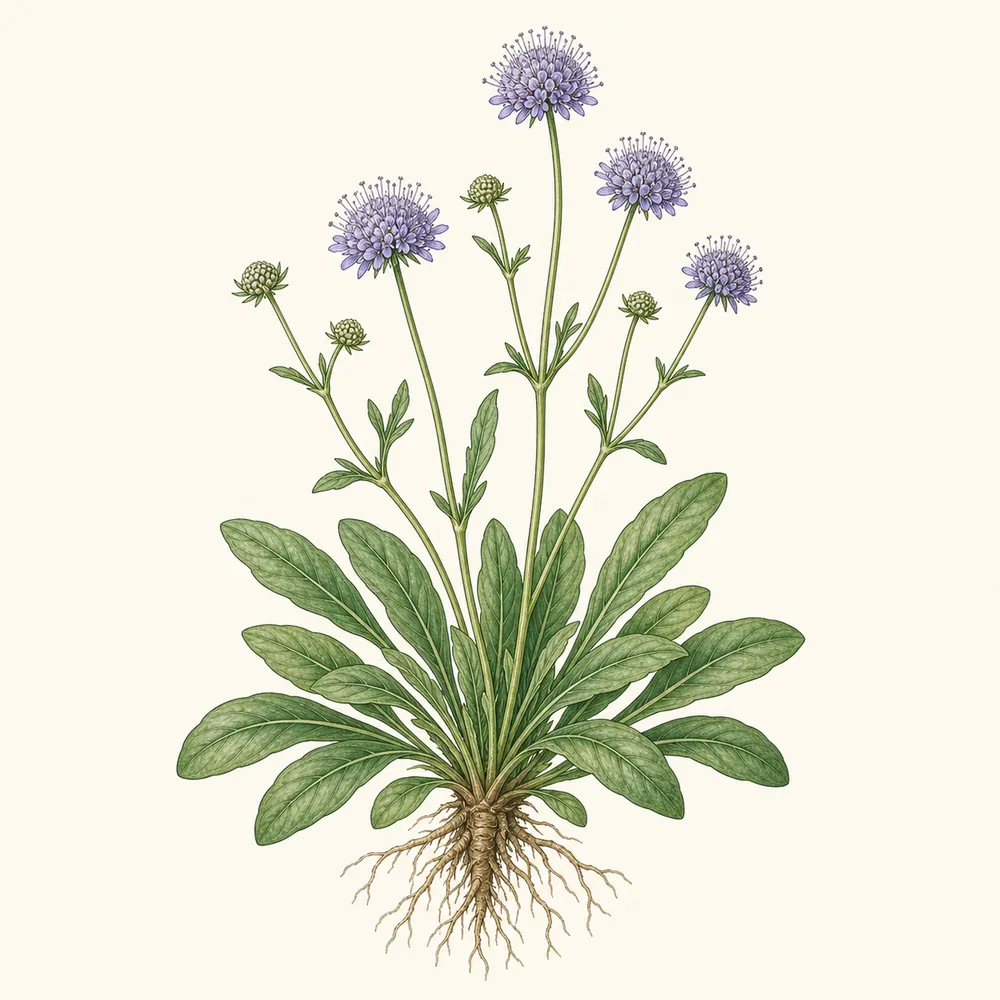
Devil's-bit Scabious
Neat rounded pincushions of blue-violet flowers held on wiry stems in late summer, when much of the meadow is going over. A perennial of damp ground, it's the vital late-season food plant of the rare marsh fritillary butterfly and a magnet for bees — one of the most valuable natives you can grow for wildlife.
Not listed by ASPCA
The ASPCA doesn't list devil's-bit scabious, so we don't stamp it safe. It's a UK native wildflower with no recorded serious toxicity to pets, but with no database entry we flag the gap honestly rather than guess.
Care at a glance
Everything that matters, in six lines. The detail is further down.
Light
Flowers best in full sun but tolerates dappled light, so it suits a damp meadow edge or the sunnier side of a woodland margin.
Water
A plant of moist ground that dislikes drying out. Keep it in soil that stays reliably damp; it struggles on parched, free-draining sites.
Temperature
Hardy across the UK. It dies back to a leafy rosette over winter and comes again from the crown, living for many years.
Spacing
Set plants a hand's width or more apart through damp grass so the wiry flower stems rise clear into their own space.
Feeding
Never feed or add rich compost. It belongs on damp but low-fertility ground; enrichment just powers up the grasses that crowd it.
Soil
Thrives on moist, unimproved soil — including heavy clay and neutral-to-acid ground where drier meadow flowers would sulk.
What to do, and when
Rosettes of smooth, oval leaves expand in the damp grass. The marsh fritillary's caterpillars, if present, are feeding up now on the young foliage.
Wiry flower stems climb through July, opening their blue-violet pincushions from late summer just as the rest of the meadow fades.
One of the last flowers standing, feeding late bees into September before setting seed. Cut the patch and clear the hay once it's shed.
Rests as a flat leaf rosette at ground level. Leave it be, or take fresh seed now; the crown sits dormant, ready to rise again in spring.
The late-summer lifeline
Most meadow flowers are finished by August, but devil's-bit scabious is only just getting into its stride — its blue-violet pincushions open from late summer into autumn, exactly when nectar is running short. That timing makes it one of the most valuable natives you can grow for bees, hoverflies and late butterflies.
It earns its keep for a rarer reason too: it is the main food plant of the marsh fritillary, one of Britain's most threatened butterflies, whose caterpillars feed on the leaves. Even without the fritillary nearby, a good damp patch of it is a genuine wildlife asset.
Give it damp ground
This is the one clear rule. Devil's-bit scabious is a plant of damp meadows, marshy corners and moist grassland, and it will not thrive on dry, free-draining soil. If your ground bakes hard in summer, it isn't the plant for that spot.
The flip side is a gift for anyone with heavy, moisture-retentive clay or a low, damp corner where drier meadow flowers sulk. Give it those conditions and it settles in for years, making a long-lived, reliable perennial clump.
Sowing and settling it in
Sow in autumn onto damp, unimproved soil where it's to grow — no rich compost, which just feeds competing grass. The seed wants the cold of winter to germinate well, so autumn sowing beats spring.
On established grass it can be slow to take from seed, so many gardeners find plug plants the surer route. Scalp small bare patches in the turf, press plugs or seed in firmly, and keep the ground from drying while young plants root down.
The late cut on damp ground
Because it flowers so late, cut a devil's-bit patch later than a dry meadow — wait until it has finished and shed its seed, usually well into autumn. Then shear the whole area down and rake off and remove all the cuttings to keep the soil lean.
If you're managing for the marsh fritillary or other late insects, cut in stages or leave some rosettes uncut over winter, so caterpillars and overwintering creatures keep their cover. On damp ground, avoid cutting when it's so wet you'd churn and compact the soil.
Common problems
Fails on dry soil
It needs moisture and dies back on parched, free-draining ground. Grow it only where the soil stays reliably damp, such as heavy clay or a low corner.
Swamped by vigorous grass
Rich, damp soil grows rank grass that smothers it. Never feed, cart off the hay after cutting, and cut a little harder if grass dominates.
Slow to establish from seed
Seed can be reluctant in established turf. Sow in autumn onto scalped bare soil, or use plug plants for a surer, quicker patch.
Cut too early, no late nectar
A midsummer cut removes the very flowers that make it valuable. Delay cutting until it has finished flowering and set seed in autumn.
Everything a damp scabious patch needs
Moist, unimproved soil, autumn seed or plugs, and a late cut.
We take no commission on anything in the "save your money" tier — if we don't think you should buy it, we don't link it. How our recommendations work
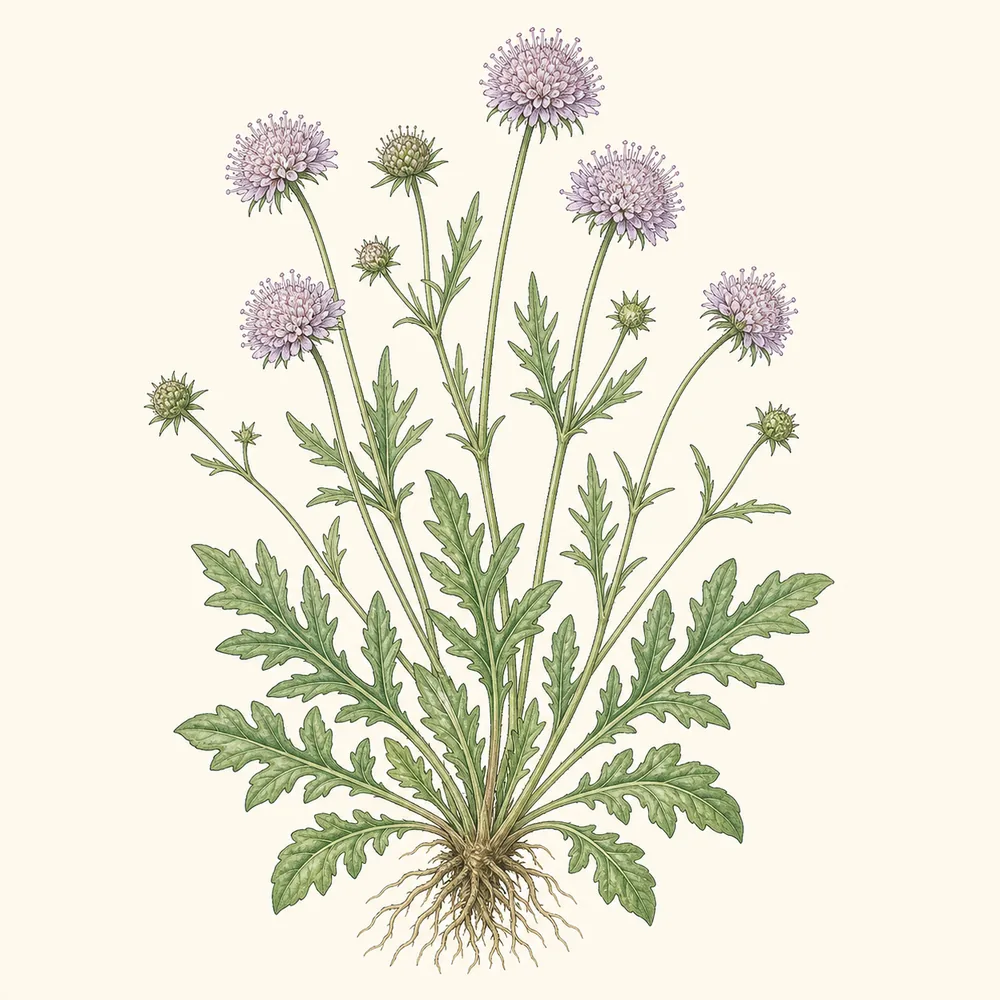
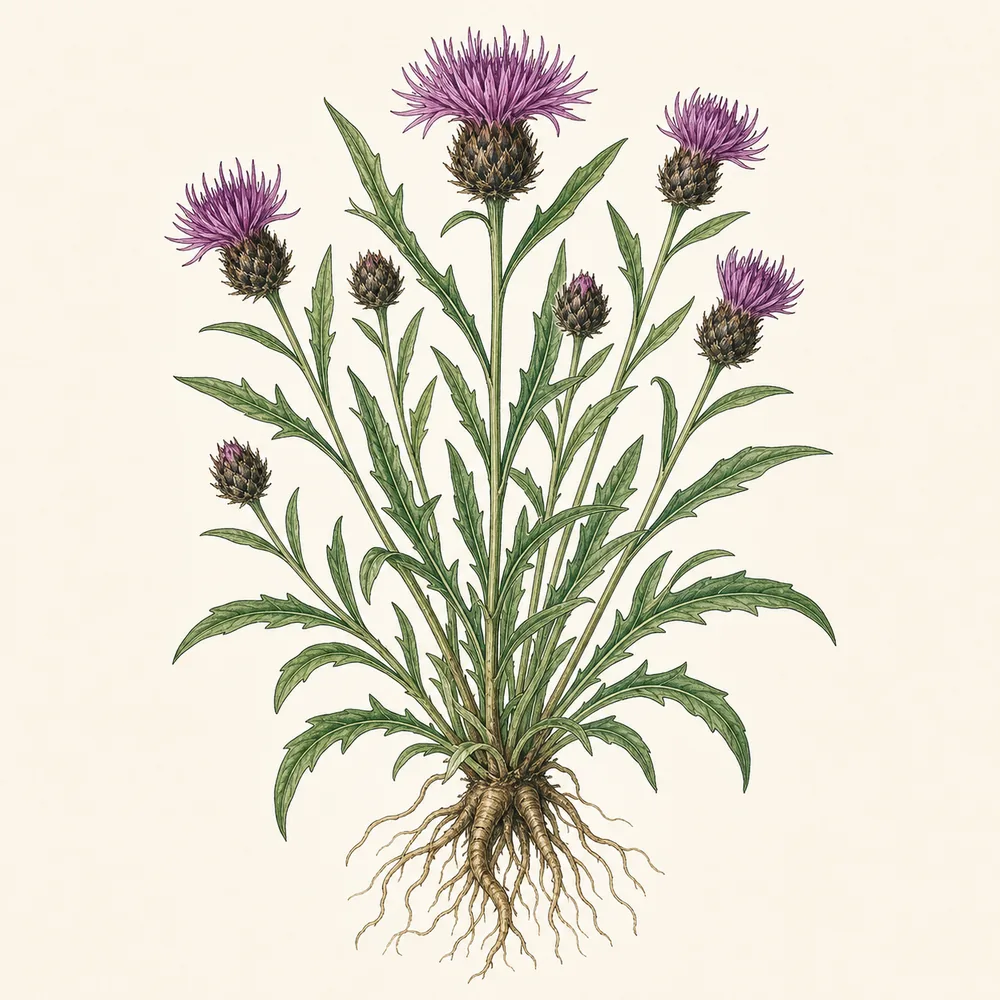
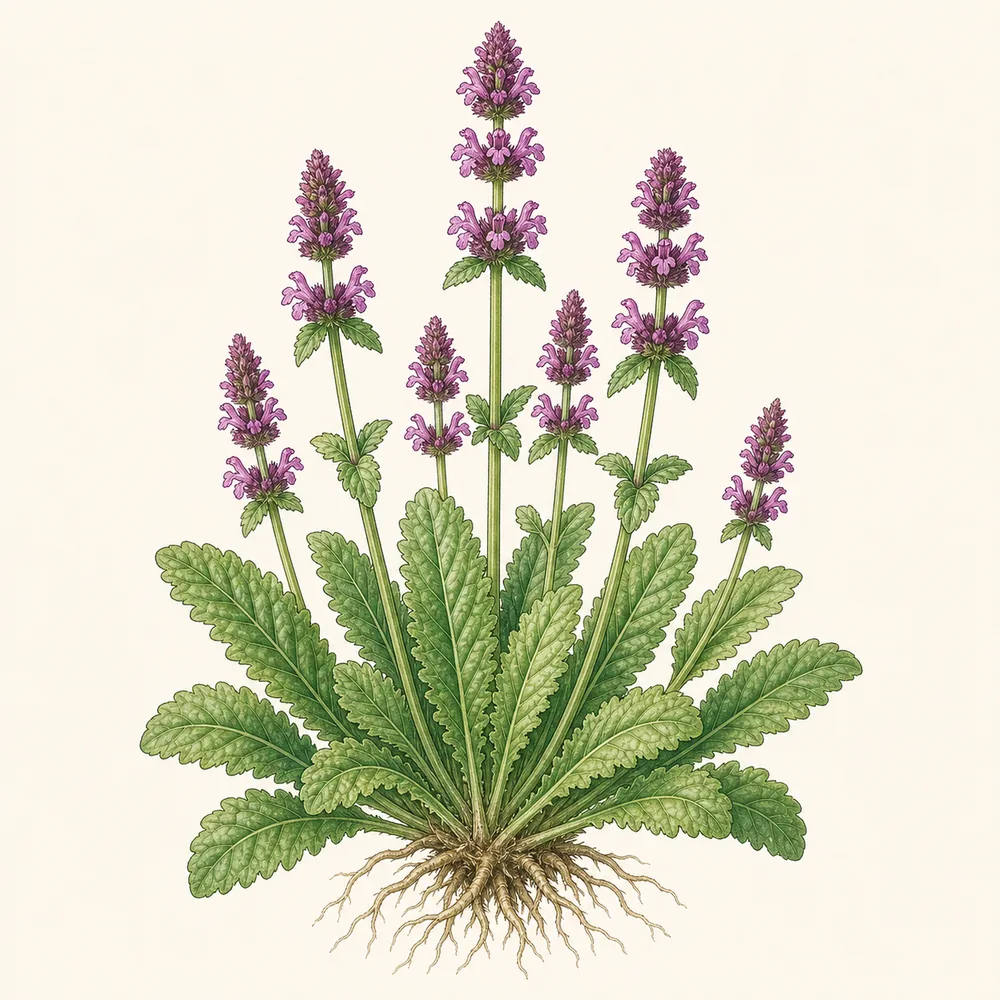
If you like this, try
Other plants with a similar temperament.
How we checked this
Care cross-checked against the RHS. The ASPCA does not list devil's-bit scabious, so its pet-safety is unconfirmed and we have not stamped it safe. If our page and these sources ever disagree, believe them — and tell us.
Sources: RHS · ASPCA — toxic & non-toxic plants
Last reviewed · August 2026