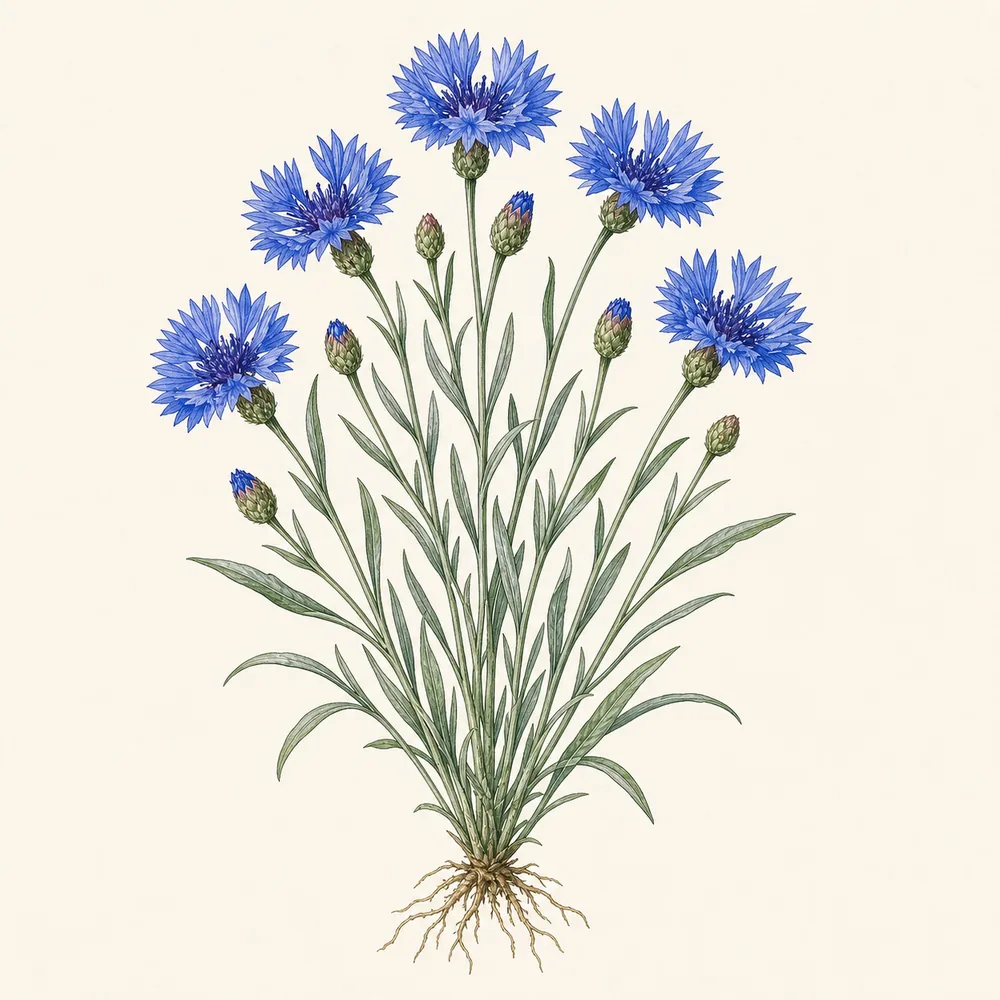
Cornflower
One of the easiest hardy annuals you can grow, with those unmistakable true-blue buttons that bees and hoverflies can't resist. Scatter seed in autumn or spring, keep deadheading, and a single packet fills a cutting patch or a wildlife border for months.
Non-toxic to cats & dogs (ASPCA)
Cornflowers (Centaurea cyanus, bachelor's buttons) are listed as non-toxic to cats and dogs on the ASPCA database. A safe, easy hardy annual for a wildlife or cutting border, and a magnet for bees.
Care at a glance
Everything that matters, in six lines. The detail is further down.
Light
An open, sunny spot gives sturdy stems and the most flowers. In shade the plants flop and bloom half-heartedly.
Water
Water young plants until they settle, then leave them be — established cornflowers cope well with dry spells.
Temperature
Autumn-sown plants overwinter happily outdoors in most of the UK and flower earlier and bigger than spring sowings.
Spacing
Thin seedlings so each has room to bush out; crowded plants grow spindly and are quicker to keel over.
Feeding
Cornflowers flower best on lean soil. Rich ground or feeding gives lush leaves and floppy stems at the expense of blooms.
Soil
Any ordinary, free-draining soil suits them. They dislike sitting wet, so improve heavy, sticky ground before sowing.
What to do, and when
Sow straight into the ground from March to May where the plants are to flower. Thin the seedlings and stake taller sowings early, before they flop.
Flowering runs through the summer. Deadhead every few days to keep new buds coming, and cut stems for the vase just as the flowers open.
The best time to sow in mild areas — a September sowing overwinters as a small plant and flowers weeks earlier next year. Leave a few late heads for the birds.
Autumn-sown seedlings sit out the cold quietly; a cloche helps on wet or exposed sites. Nothing to sow outdoors now — order seed and plan the cutting patch.
Autumn or spring — the choice that matters most
Cornflowers are hardy, which gives you a useful trick: sow in autumn and the young plants sit out the winter, building roots so they romp away in spring and flower earlier, taller and more heavily than anything sown later.
A spring sowing from March onwards is easier and still gives a good show — just a few weeks behind. In colder or wetter gardens, spring is the safer bet; on free-draining soil in a milder spot, autumn wins hands down.
Keep picking, keep deadheading
The single thing that keeps cornflowers flowering is removing the faded blooms. Leave them to set seed and the plant decides its job is done and winds down; snip them off and it keeps throwing up more buds for weeks.
This is why they make such a good cutting flower — every stem you take for the vase is a deadhead by another name. Pick in the morning, just as the flowers open, and they'll last well in water.
A genuinely good plant for bees
Cornflowers aren't just pretty — the open, nectar-rich flowers are a reliable food source for bees, hoverflies and butterflies right through summer. They're a mainstay of proper wildflower and pollinator mixes for good reason.
For the most wildlife value, grow a patch rather than dotting single plants about, and let a few of the last flowers set seed. They'll often self-sow a modest crop for next year, and the seedheads feed finches into autumn.
Common problems
Floppy, sprawling stems
Too rich a soil, too much shade, or no support. Grow on lean ground in full sun and push in twiggy sticks or netting for the stems to lean through.
Flowering stops early
The plant has been allowed to set seed. Deadhead or cut for the vase every few days and it will keep producing new buds for much longer.
Powdery mildew on the leaves
A white dusty coating in hot, dry spells, especially on crowded plants. Thin for airflow and water the roots in dry weather; it rarely kills the plant.
Poor or patchy germination
Sown too deep or into cold, wet soil. Cover the seed only lightly and wait for the ground to warm and drain in spring, or sow in autumn while it's still mild.
Everything a cornflower patch needs
Open sun, lean soil, a bit of support, and regular deadheading.
We take no commission on anything in the "save your money" tier — if we don't think you should buy it, we don't link it. How our recommendations work
If you like this, try
Other plants with a similar temperament.
How we checked this
Care cross-checked against the RHS. Non-toxicity taken from the ASPCA database, which lists the Cornflower (Centaurea cyanus) as non-toxic to dogs and cats. If our page and these sources ever disagree, believe them — and tell us.
Sources: RHS · ASPCA — toxic & non-toxic plants
Last reviewed · August 2026