Cordyline
An architectural evergreen with a spray of sword-shaped leaves that brings an instant exotic, seaside look to a garden. Easy and near-carefree in mild and coastal spots — the one real challenge is nursing it through a hard, cold winter inland.
Not listed by ASPCA
The ASPCA doesn't list the cabbage palm (Cordyline australis) grown in UK gardens, so we don't stamp it safe. The ASPCA's 'Ti plant' entry is a different species (Cordyline fruticosa), so it doesn't apply here. With no database entry we flag the gap honestly rather than guess.
Care at a glance
Everything that matters, in six lines. The detail is further down.
Light
Best in full sun, which keeps the form tight and the leaf colour strong on the bronze and variegated types; it tolerates light shade.
Water
Water young plants and any in pots through their first summers; established plants in the ground cope well with dry spells.
Temperature
Fine in mild and coastal gardens but vulnerable to hard frost inland — the crown and young plants need protecting in a cold snap.
Habit
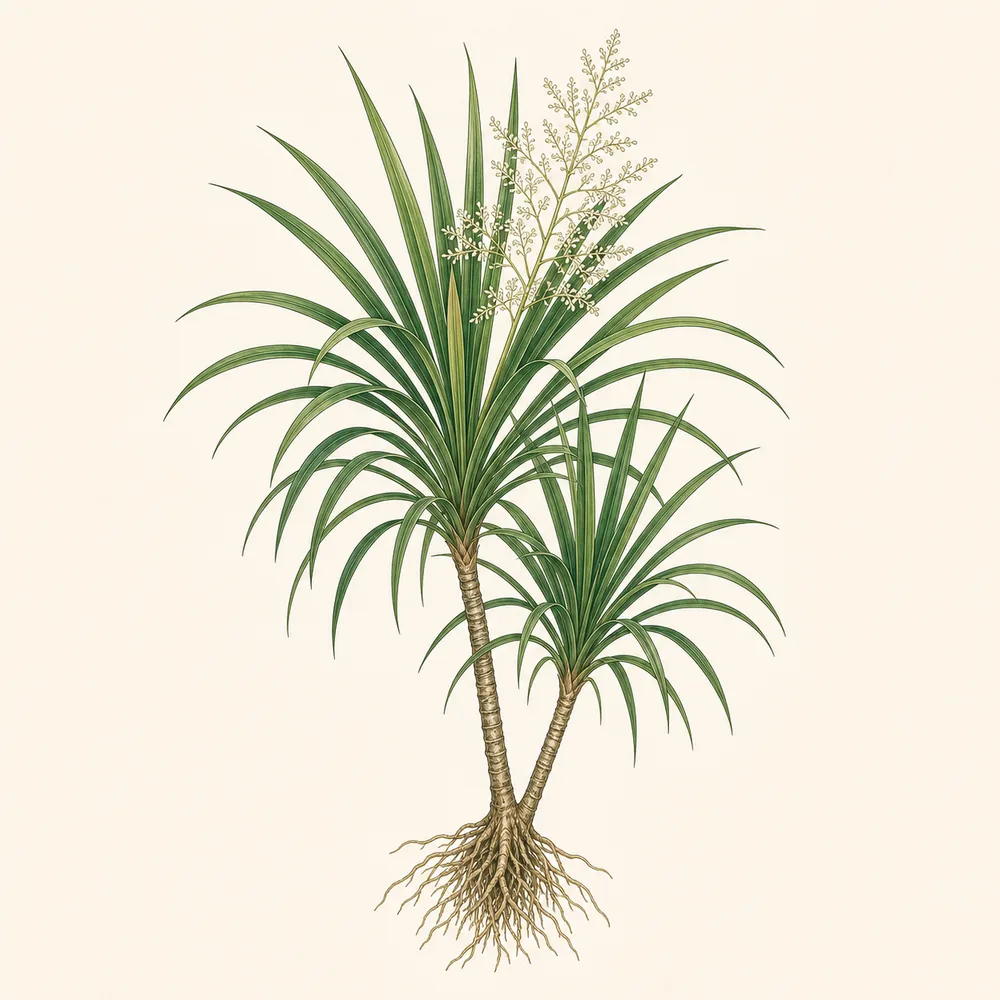
A bold, palm-like specimen for exotic and coastal schemes; mature plants trunk up and can throw scented cream flower panicles.
Feeding
A general feed as growth starts in spring is plenty. Ease off feeding by late summer so growth hardens before winter.
Soil
Sharp drainage is key — it copes with cold far better in dry soil than in cold, wet ground, which rots the crown and roots.
What to do, and when
The main planting and feeding time. Once hard frosts have passed, remove winter fleece, untie any leaves you tied up, and cut away cold-damaged foliage as fresh growth appears.
Little needed — established plants look after themselves. Water young plants and pots in dry spells, and enjoy the scented cream flower spikes that mature specimens sometimes produce.
Ease off watering and feeding so the plant hardens off before the cold. Clear fallen leaves from the crown, and get winter protection materials ready for tender young plants.
The danger season inland. Mulch the base thickly, gather the leaves up and tie them over the crown before hard frost, and fleece young plants and any in pots to shield the growing point from freezing.
An architectural evergreen for a mild spot
The cabbage palm is the plant that gives so many British seaside gardens their exotic look. It isn't a true palm, but that fountain of narrow, sword-shaped leaves reads as one, and it brings instant structure and height to a border, a gravel garden or a large pot.
In mild and coastal gardens it's genuinely easy — plant it in free-draining soil and full sun and largely leave it be. The catch is winter cold, which is where the difficulty rating comes from.
Getting it through a hard winter
Away from the mild coast, a severe frost can damage or kill an unprotected cordyline, and young plants are the most vulnerable. The classic technique is to gather the leaves up and tie them together over the crown before hard frost — this shields the vital growing point at the centre and lets water run off.
Back that up with a thick mulch of bark or straw over the base to protect the roots, and wrap the tied head in horticultural fleece in the coldest spells. Plants in pots feel cold hardest through their roots, so move them to a sheltered spot or wrap the container.
When cold damage strikes
After a bad winter, cordylines often look dreadful — leaves browning, collapsing, sometimes the whole head turning to mush. It's alarming, but don't be too quick to dig it out. Cordylines have a real knack for reshooting from the base or lower trunk even when the top is killed.
Wait until late spring, cut back the dead growth, and watch for fresh shoots emerging low down. A plant that looks finished in March can be pushing out new leaves by June. Only give up once you're sure no new growth is coming.
Common problems
Leaves blacken and collapse after frost
Cold damage to the foliage and crown after a hard winter. Don't dig it out straight away — cut back the dead growth in late spring and watch for fresh shoots from the base or trunk.
Crown rots in wet, cold soil
Cold combined with waterlogging is far more deadly than cold alone. Plant in sharply drained soil, and tie the leaves up over the crown so winter wet runs off rather than sitting in the centre.
Sudden collapse of a mature plant
A trunked specimen can succumb after a severe winter or to slime flux. Check for new growth low down before removing it, as the base often survives and reshoots.
Scorched or bleached leaf tips in pots
Usually drought stress or cold wind on a container plant. Keep pots watered in dry spells and move them to a more sheltered position over winter.
Everything a cordyline needs
A sunny sheltered spot, sharp drainage, and winter protection in cold gardens.
We take no commission on anything in the "save your money" tier — if we don't think you should buy it, we don't link it. How our recommendations work
If you like this, try
Other plants with a similar temperament.
How we checked this
Care cross-checked against the RHS. The ASPCA does not list the cabbage palm (Cordyline australis) grown in UK gardens, so its pet-safety is unconfirmed and we have not stamped it safe. If our page and these sources ever disagree, believe them — and tell us.
Sources: RHS · ASPCA — toxic & non-toxic plants
Last reviewed · August 2026