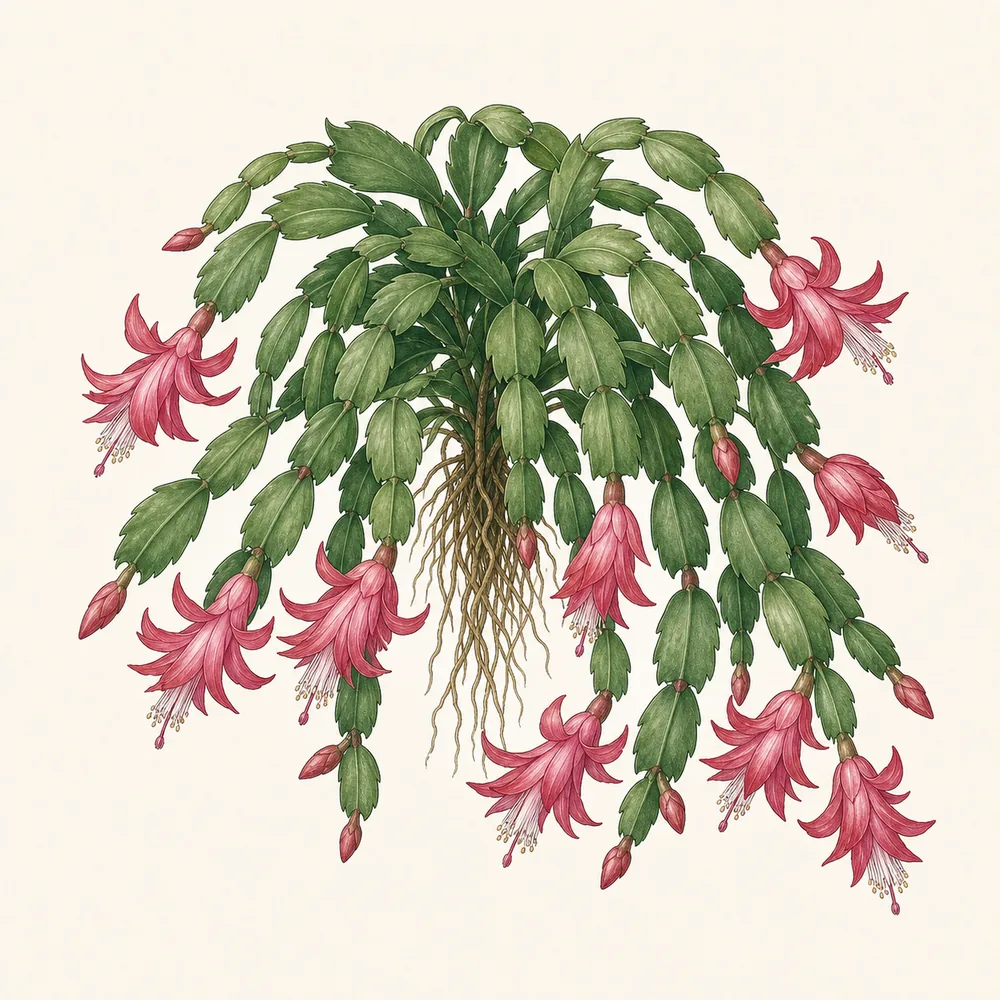
Christmas Cactus
A jungle cactus, not a desert one — spineless, with flat segmented stems that spill over the pot and erupt in bright winter flowers. Treat it more like a leafy houseplant than a cactus and it will bloom for years.
Safe around cats & dogs
The Christmas cactus (Schlumbergera) is listed as non-toxic to cats and dogs on the ASPCA database — a pet-safe winter-flowering succulent, and, unlike the true cacti, spineless.
Care at a glance
Everything that matters, in six lines. The detail is further down.
Light
A bright spot out of harsh direct sun, which can scorch and redden the segments. As a forest plant it takes more shade than a desert cactus would.
Water
Water when the top few centimetres are dry — more evenly moist than a desert cactus, but never soggy. Keep it a touch drier while it rests after flowering.
Temperature
Ordinary room warmth suits it, but a cooler autumn spell (around 12–15 °C) is exactly what triggers the buds.
Humidity
Unlike desert cacti it appreciates some humidity — a bathroom or kitchen suits it. Keep it away from dry radiator heat, which drops buds.
Feeding
A balanced feed monthly from spring to late summer; a high-potash feed as buds form helps the display.
Soil
An epiphyte at heart — happiest in an open, free-draining mix, such as houseplant compost loosened with bark or perlite.
What to do, and when
Growth resumes after flowering. Repot only if truly crowded, resume feeding, and pinch back a segment or two to encourage bushier growth.
Active growth — feed and water regularly. It enjoys a spell outdoors in bright shade once nights are reliably mild.
The critical season: cool nights and shortening days set the buds. Ease off water and feed a little and let it feel the shorter days.
Flowering time. Keep it bright and steady while in bloom, water when the top dries, and resist moving it once buds have set.
How to actually get it to flower
Schlumbergera sets buds in response to cool temperatures and long, uninterrupted nights. From about mid-autumn, give it bright days but genuinely dark nights, and let it sit somewhere cool — around 12–15 °C. Six weeks or so of that and buds appear.
The commonest reason it won't flower is a warm room lit late into the evening — a hallway lamp or TV glow is enough to interrupt the long night it needs. A cooler, darker-at-night spot usually fixes a stubborn non-bloomer.
Not a desert cactus
Despite the name, Schlumbergera comes from humid Brazilian forests, growing in the crooks of trees rather than in sand. That changes everything: it wants more shade, more humidity and steadier moisture than a spiny desert cactus.
So don't let it go bone dry for weeks, and keep it out of blazing direct sun. Think of it as a leafy houseplant that happens to be a cactus, and you'll rarely go wrong.
Easy to propagate and long-lived
It roots almost embarrassingly easily. Twist off a piece two or three segments long, let the end dry for a day, then push it into damp gritty compost — it will root within a few weeks.
Well cared for, a Christmas cactus is a genuine heirloom, often passed down for decades and flowering more generously with age.
Common problems
Won't flower
Too warm, or light at night interrupting the long dark it needs. Give it cool, dark autumn nights for about six weeks to set buds.
Dropping its buds
Usually being moved, a draught, dry heat, or erratic watering once buds have set. Keep it still, steady and evenly watered while budding.
Limp, wrinkled or reddish segments
Often watering trouble at the roots — too wet or too dry — or scorching sun. Check the roots and moderate light and water.
Soft, mushy stem base
Rot from overwatering or poor drainage. Let it dry out, and if the base has gone, take healthy segments as cuttings to start again.
Everything a Christmas cactus needs
Bright indirect light, an airy mix, and cool dark autumn nights to trigger the flowers.
We take no commission on anything in the "save your money" tier — if we don't think you should buy it, we don't link it. How our recommendations work
If you like this, try
Other plants with a similar temperament.
How we checked this
Care cross-checked against the RHS. Toxicity confirmed against the ASPCA database, which lists the Christmas cactus (Schlumbergera) as non-toxic to cats and dogs. If our page and these sources ever disagree, believe them — and tell us.
Sources: RHS · ASPCA — toxic & non-toxic plants
Last reviewed · July 2026