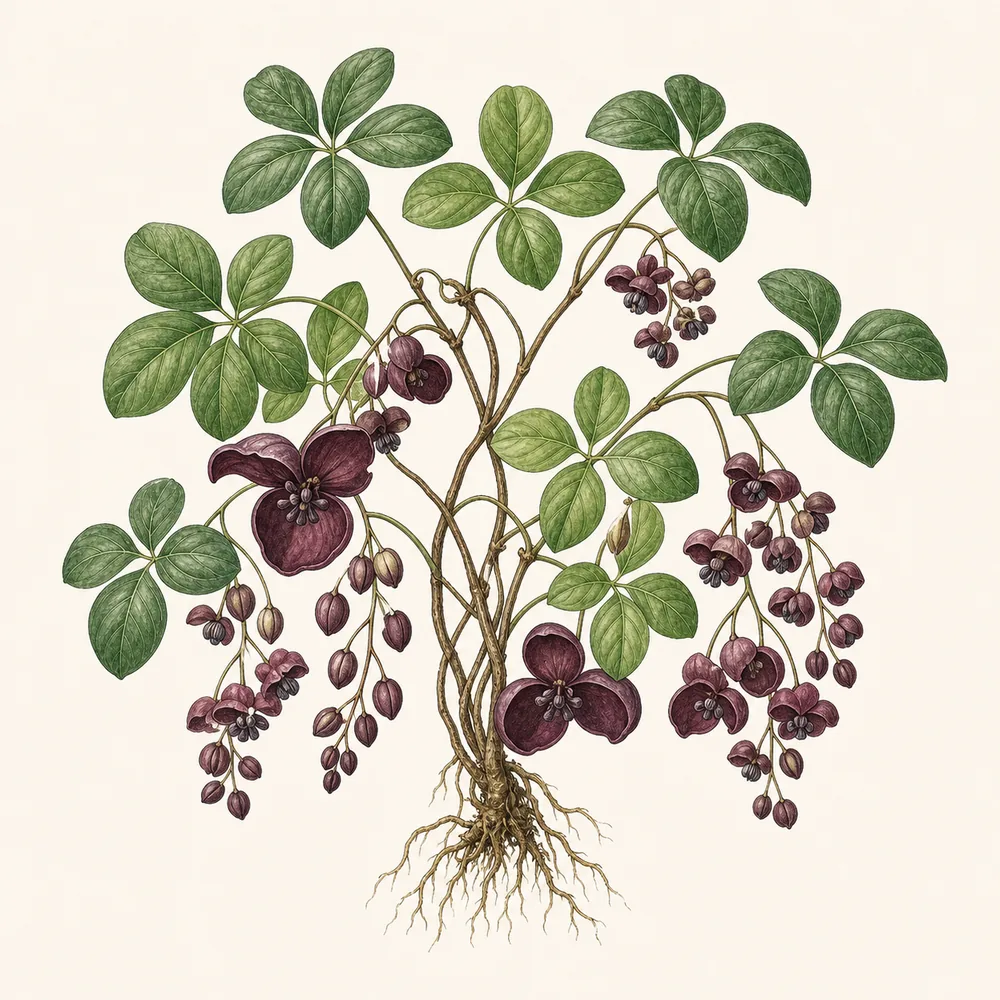
Chocolate Vine
An unusual climber worth planting for the spring scent alone — clusters of small maroon flowers that smell of chocolate and spice on a mild April day, over neat five-fingered leaves that hang on through much of the winter. It's easy and handsome, with one real caution: it's vigorous, and in a warm spot it will happily eat a fence, a shrub and its neighbour if you let it.
Not listed by ASPCA
The ASPCA doesn't list the chocolate vine (Akebia), so we don't stamp it safe. It has no serious toxicity on record. With no database entry we flag the gap honestly rather than guess.
Care at a glance
Everything that matters, in six lines. The detail is further down.
Position
It grows well in either, but flowers and the occasional fruit come best with sun on the top growth. A sheltered spot also helps the early spring blooms escape frost damage.
Water
Water through the first summer or two while it roots in. Once established it's tough and fairly drought-tolerant, needing attention only in a prolonged dry spell.
Soil
Undemanding — it takes most soils as long as they don't waterlog. There's no need to enrich the ground heavily; it has quite enough vigour on ordinary soil.
Support
It climbs by twining its stems around a support, so it needs solid trellis, wires, a pergola or an old tree. Give it something strong — a mature plant carries real bulk.
Pruning
Prune once the spring flowers fade, cutting back the excess growth to keep it in bounds. It tolerates hard pruning well, so an overgrown plant can be cut back sharply to reclaim space.
Hardiness
Hardy across the UK and semi-evergreen — it holds much of its foliage through a mild winter, dropping more in a hard one. The only cold risk is a late frost catching the early flowers.
What to do, and when
The highlight — clusters of chocolate-scented maroon flowers in March and April, best appreciated up close on a warm day. Growth then accelerates fast; prune once the flowers fade, and tie in the new shoots before they run.
Vigorous, leafy growth that can cover a lot of ground quickly. Keep reining it in and steering it off neighbouring plants, and water young specimens in dry weather.
After a warm summer, and only if you have two plants to cross-pollinate, curious sausage-shaped purple fruits may appear. Growth slows, and the semi-evergreen foliage largely stays put.
Much of the leaf hangs on through mild spells, giving useful year-round cover. Check and firm the ties before winter gales, and leave the main pruning until after next spring's flowers.
The scent is the point
Akebia isn't grown for a big showy display — the flowers are small and quietly coloured, dusky maroon and pale. It's grown for their scent: on a mild spring day the clusters give off a distinctive sweet-spicy fragrance, often described as chocolate or vanilla, that carries surprisingly well. Plant it where you'll pass close by in April — beside a door, over an arch, along a path.
The five-fingered leaves are a bonus, neat and attractive, and because it's semi-evergreen it holds much of that foliage through winter in milder gardens. So you get an easy, good-looking screen for most of the year, with a fortnight of real fragrance as the season's opening act.
Vigorous — plan for that, don't fight it later
This is a fast, strong grower. In a warm, sheltered garden it can put on a lot of growth in a season and will scramble into and over anything within reach — shrubs, fences, small trees, and its neighbours' plants if it's near a boundary. It's not a plant for a tight, fussy corner.
The way to enjoy it is to give it room and a job — a long fence, a big pergola, a bank to cover, or an old tree to climb — and then keep it to that space with regular cutting back. Because it flowers in spring and tolerates hard pruning, the annual after-flowering cut is where you set the boundaries; do it every year and it stays a feature rather than a takeover.
Give it something strong to twine up
Akebia climbs by twining its stems, the same way a honeysuckle or a runner bean does — it doesn't cling to walls or use tendrils. That means it needs a support to spiral around: solid trellis, horizontal wires, a pergola or a tree. A flimsy structure won't survive a mature plant's weight and enthusiasm.
Guide and tie in the first shoots to get it started in the right direction, and after that it more or less climbs itself. Check the ties and the support each winter before the gales, when a heavy, leafy plant catches a lot of wind.
Those curious fruits — and wildlife
In a good year you might get Akebia's oddest feature: fat, sausage-shaped purple pods that split to reveal a pale, seedy pulp. They're a talking point, but they're not reliable in Britain — you generally need two genetically different plants to cross-pollinate and a warm enough summer, so treat fruit as a bonus, not an expectation.
The early flowers are a useful nectar source for the first bees of spring, and the dense semi-evergreen growth gives cover for nesting birds. As a caution on vigour: in some warmer parts of the world Akebia is considered invasive, so keep an eye on any self-sown seedlings and don't let it escape a garden boundary.
Common problems
Taking over everything nearby
Its vigour is the main issue — it will swamp shrubs and neighbours in a warm spot. Give it space and a dedicated support, and cut it back hard after flowering every year to hold the line.
No fruit
Usually because you have only one plant, or the summer wasn't warm enough. It generally needs two different plants to cross-pollinate; even then, fruiting is unreliable in the UK, so enjoy it for flower and foliage.
Few or no flowers
Most often too much shade on the top growth, or a late frost catching the early buds. Give it more sun where you can, and a sheltered spot to protect the spring blooms.
A tangled, congested mass
The result of skipping the annual prune. Cut it back after flowering, thinning out old and crowded stems, and it responds well — it tolerates being cut hard to reclaim a neglected plant.
Everything a chocolate vine needs
A strong support, room to grow, and secateurs to keep its vigour in check.
We take no commission on anything in the "save your money" tier — if we don't think you should buy it, we don't link it. How our recommendations work
If you like this, try
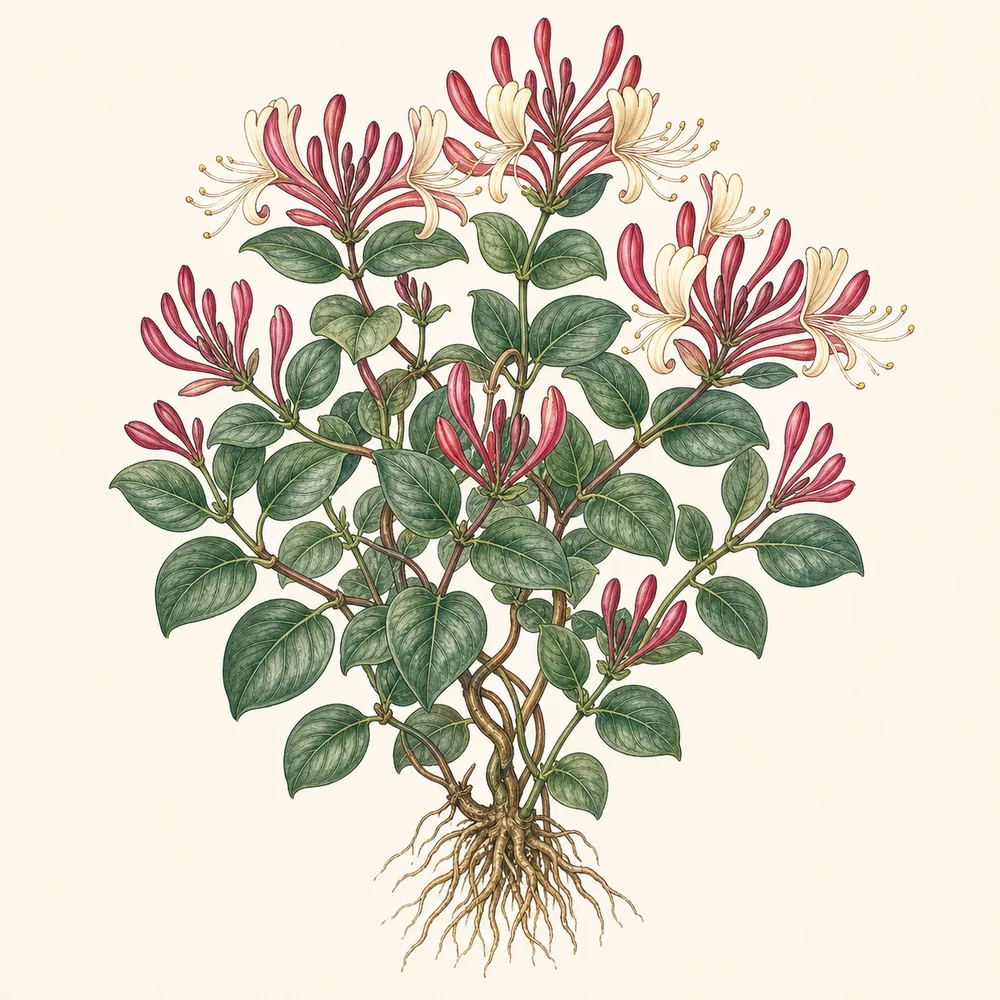
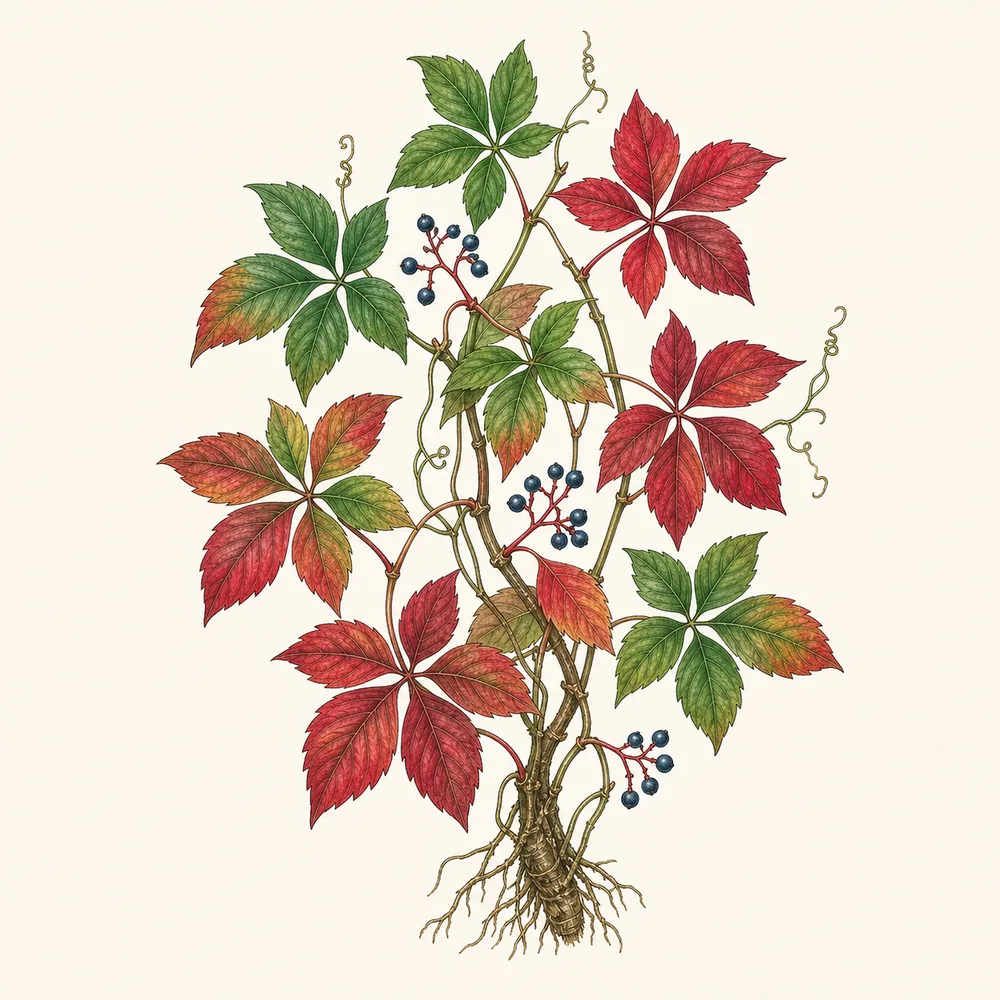
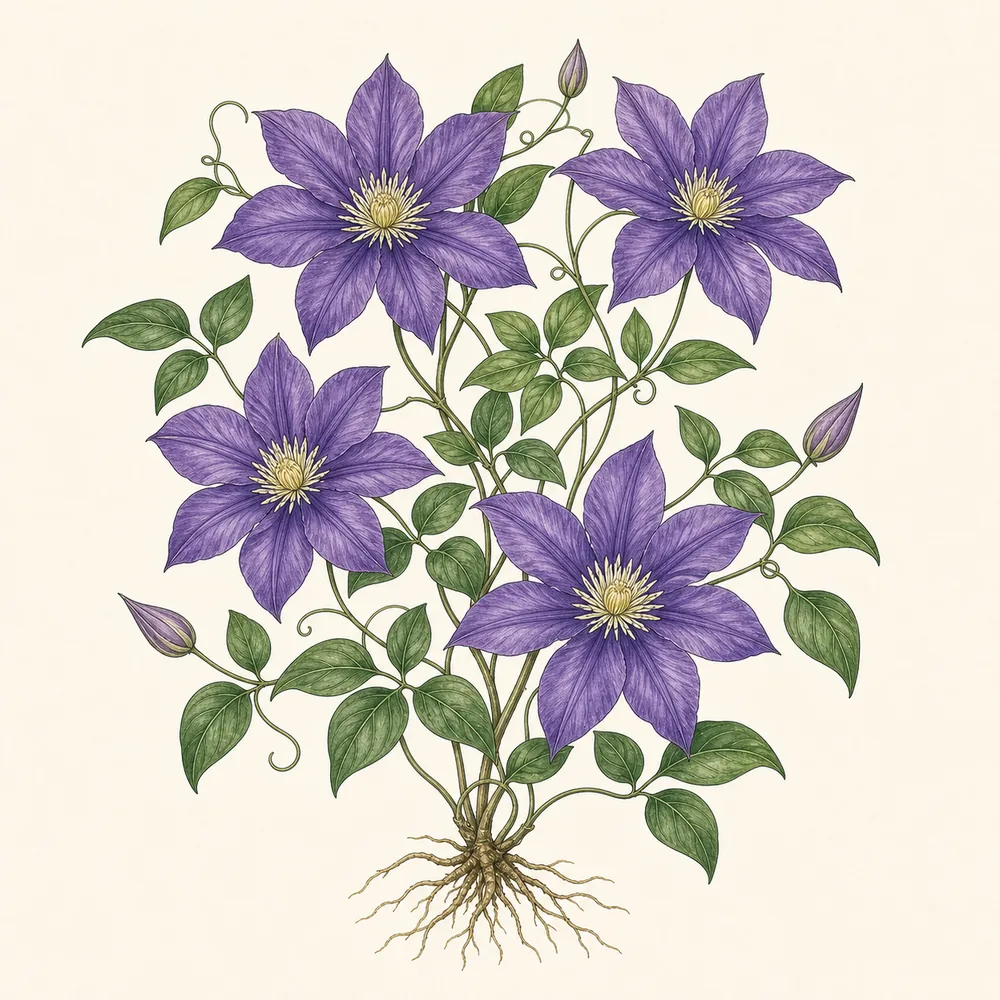
Other plants with a similar temperament.
How we checked this
Care cross-checked against the RHS. The ASPCA does not list the chocolate vine (Akebia), so its pet-safety is unconfirmed and we have not stamped it safe. If our page and these sources ever disagree, believe them — and tell us.
Sources: RHS · ASPCA — toxic & non-toxic plants
Last reviewed · August 2026