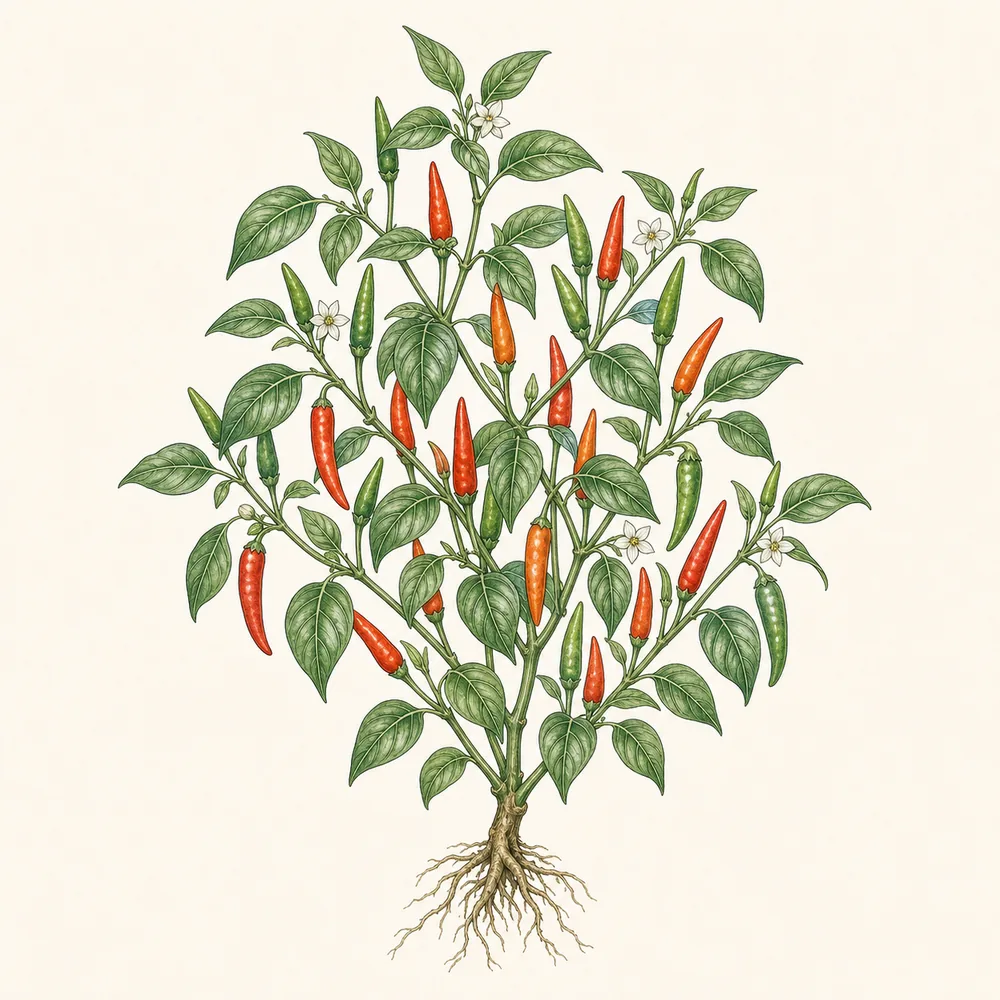
Chilli
One of the most rewarding things to grow from a single seed — a bushy plant dripping with glossy, colourful pods. The catch is our short summer: chillies are tender and need warmth to start, a long season to ripen, and the sunniest spot you can give them.
Not listed by ASPCA
The ASPCA doesn't list the chilli, so we don't stamp it safe. The capsaicin in the fruit is a strong irritant that most pets avoid — it can cause mouth and gut discomfort if eaten, so treat with caution.
Care at a glance
Everything that matters, in six lines. The detail is further down.
Light
As much sun as you can offer — a greenhouse, sunny windowsill or the warmest wall outside. Sun ripens the pods and builds the heat.
Water
Keep the compost evenly moist but never sodden. Let it dry a shade between waterings once the plant is flowering to concentrate the heat.
Temperature
Sow at 18–25°C indoors and never put plants out until all frost has passed. Cold check stops them dead, so wait for warm nights.
Spacing
Grow each plant in its own 3–5 litre pot with room to bush out. Give plants space and airflow to keep aphids and mould down.
Feeding
Once the first flowers set, switch to a high-potash tomato feed every week or two to drive plenty of pods.
Soil
A good multipurpose or peat-free potting compost, free-draining so the roots never sit wet. Pot on as the plant grows.
What to do, and when
Sow early — February to March — on a warm windowsill or heated propagator. Prick out seedlings and pot on, keeping them warm and in the brightest light.
Feed weekly with high-potash feed once flowers set. Harden off and move plants to a greenhouse or the sunniest sheltered spot outside.
Pick the last pods as they colour, before the nights turn cold. Ripen the final green chillies on a windowsill or string them up to dry.
Season over for most; a plant can be overwintered frost-free on a bright sill, kept nearly dry, to crop earlier next year. Sow nothing outdoors.
Start early, start warm
Chillies need a long season, so sow early — from February to March — while it still feels like winter. They also need warmth to germinate: aim for 18–25°C on a heated propagator or a warm windowsill above a radiator. Sown cold, the seed simply sits and sulks.
The hotter, slower-ripening varieties like habaneros need the earliest start of all. Milder, quicker types such as 'Hungarian Hot Wax' or 'Jalapeño' are far more forgiving of our short summer and a better bet for a first go.
Grow them on in the warmth
In much of the UK, chillies ripen best under cover — a greenhouse, polytunnel, conservatory or bright windowsill gives them the extra heat they crave. Grown outside, choose the warmest, most sheltered sun-trap you have, against a south-facing wall.
Pot on as the plant fills its container, ending in a 3–5 litre pot. Once flowers appear, feed weekly with a high-potash tomato feed — this pushes flowering and fruiting rather than soft leafy growth.
Ripening and picking
Most chillies start green and sweeten and heat up as they ripen to red, orange, yellow or purple. You can pick them green, but the flavour and heat deepen if you let them colour fully on the plant.
As the season ends and nights cool, bring green pods indoors to finish on a sunny windowsill. Surplus chillies dry easily on a string in a warm airy spot, or freeze whole — a glut is easy to keep.
Common problems
Seed won't germinate
Almost always too cold. Chillies need steady 18–25°C to sprout — use a heated propagator or a warm windowsill, and be patient; some varieties take three weeks.
Flowers drop without setting fruit
Usually cold nights, dry roots or poor pollination under glass. Keep plants warm and evenly watered, and tap the flowers or open the greenhouse to let pollinators in.
Aphids on the shoot tips
Greenfly love soft new growth under cover. Squash early colonies, rinse them off, and improve airflow; ladybirds soon find them in a greenhouse.
Pods stay green and never ripen
Not enough heat or season left. Give the sunniest spot possible, don't overfeed with nitrogen, and finish ripening late pods indoors on a windowsill.
Everything a chilli plant needs
An early warm start, high-potash feed, and the sunniest spot you've got.
We take no commission on anything in the "save your money" tier — if we don't think you should buy it, we don't link it. How our recommendations work
If you like this, try
Other plants with a similar temperament.
How we checked this
Care cross-checked against the RHS. The ASPCA does not list the chilli, so its pet-safety is unconfirmed and we have not stamped it safe. If our page and these sources ever disagree, believe them — and tell us.
Sources: RHS · ASPCA — toxic & non-toxic plants
Last reviewed · July 2026