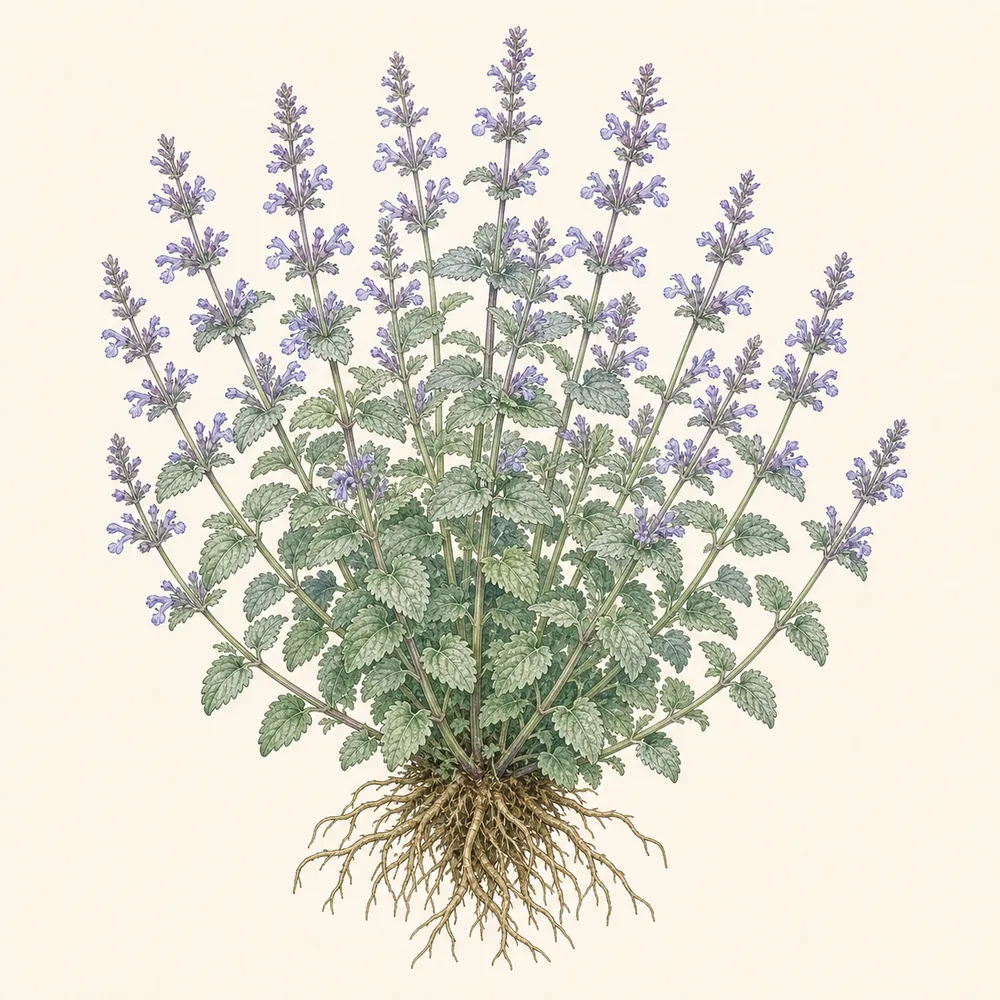
Catmint
A soft, hazy cloud of grey-green leaves and lavender-blue spikes that flowers for months and shrugs off drought without a fuss. It's a brilliant front-of-border filler and bee magnet — just cut it back after the first flush and it does the whole thing over again.
Toxic to cats in excess (catnip)
Catmint is the catnip cats famously love — and the ASPCA lists Nepeta as toxic to cats, because the nepetalactone behind the happy rolling can also cause vomiting and diarrhoea if a cat eats a lot of it. In normal amounts it's the classic feline treat; in excess it upsets the stomach. Dogs and horses generally aren't drawn to it.
Care at a glance
Everything that matters, in six lines. The detail is further down.
Light
Give it a sunny, open spot for the densest growth and the most flowers. In shade it grows loose, leggy and shy to bloom.
Water
One of the best plants for a dry, hot border. Water it in for the first summer, then it needs almost nothing — it hates being wet more than dry.
Temperature
Hardy across the UK. It dies back over winter and reshoots from the base each spring, coming back bigger year on year.
Spacing
Each plant spreads into a low mound. Set them a good spade's width apart at the front of a border so they knit into a soft edge.
Feeding
Thrives on poor soil and needs no feeding. Rich ground or feed makes soft, floppy growth that splits open in the middle.
Soil
Sharp drainage is the one real must — it's ideal for gravel and dry, stony ground. Cold, heavy, wet soil in winter is what kills it.
What to do, and when
Cut away last year's dead stems as fresh shoots appear at the base. Plant new catmint now, and lift and divide congested clumps to make more.
The main flush of flower fills early summer and hums with bees. After it fades, shear the whole plant back hard by a third to a half for a fresh second flush.
A lighter late flush often carries on into autumn. Leave the faded stems standing over winter — they shelter the crown and look pretty in frost.
Fully dormant and undemanding. Leave the old growth in place as winter protection and resist cutting back until spring shoots show; wet, not cold, is the real risk.
The classic front-of-border perennial
Catmint earns its place as a front-of-border filler: a low, soft mound of aromatic grey-green that spills gently over a path edge and flowers for a remarkably long season. It softens hard lines, links stronger plants together, and never demands much in return.
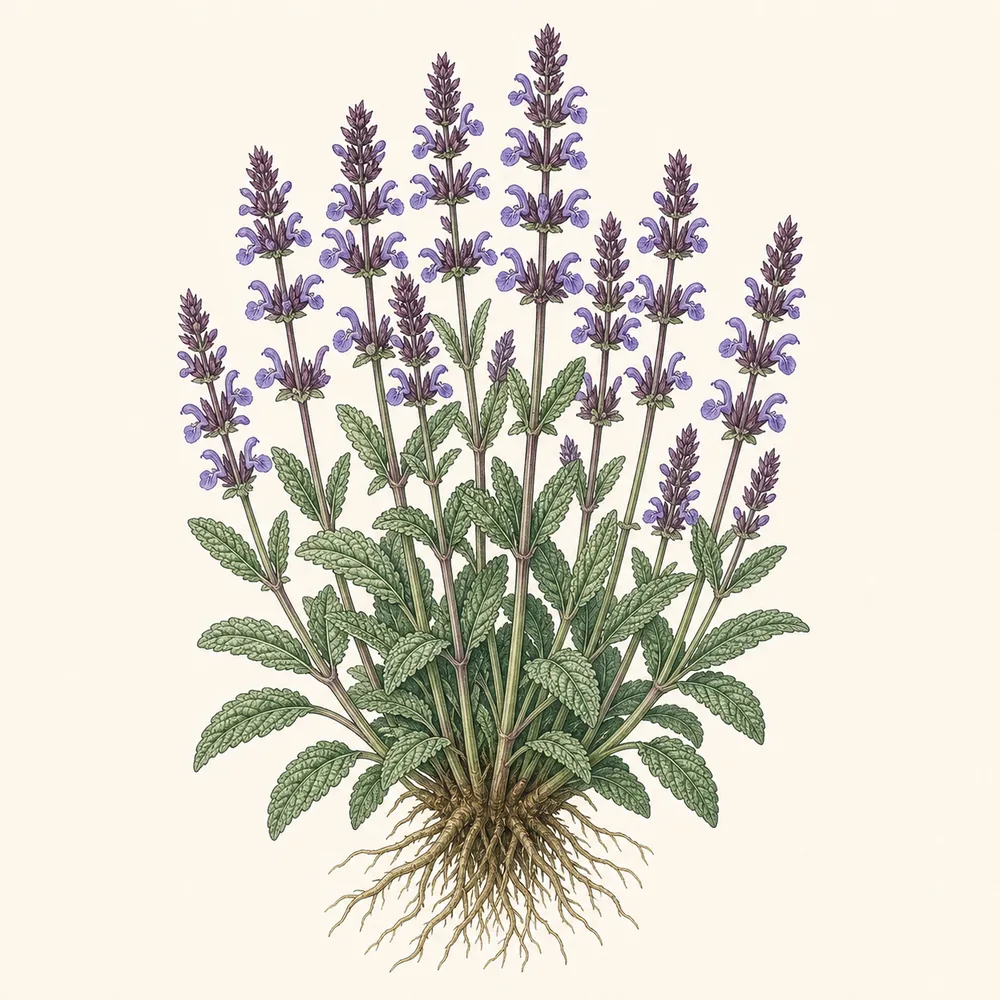
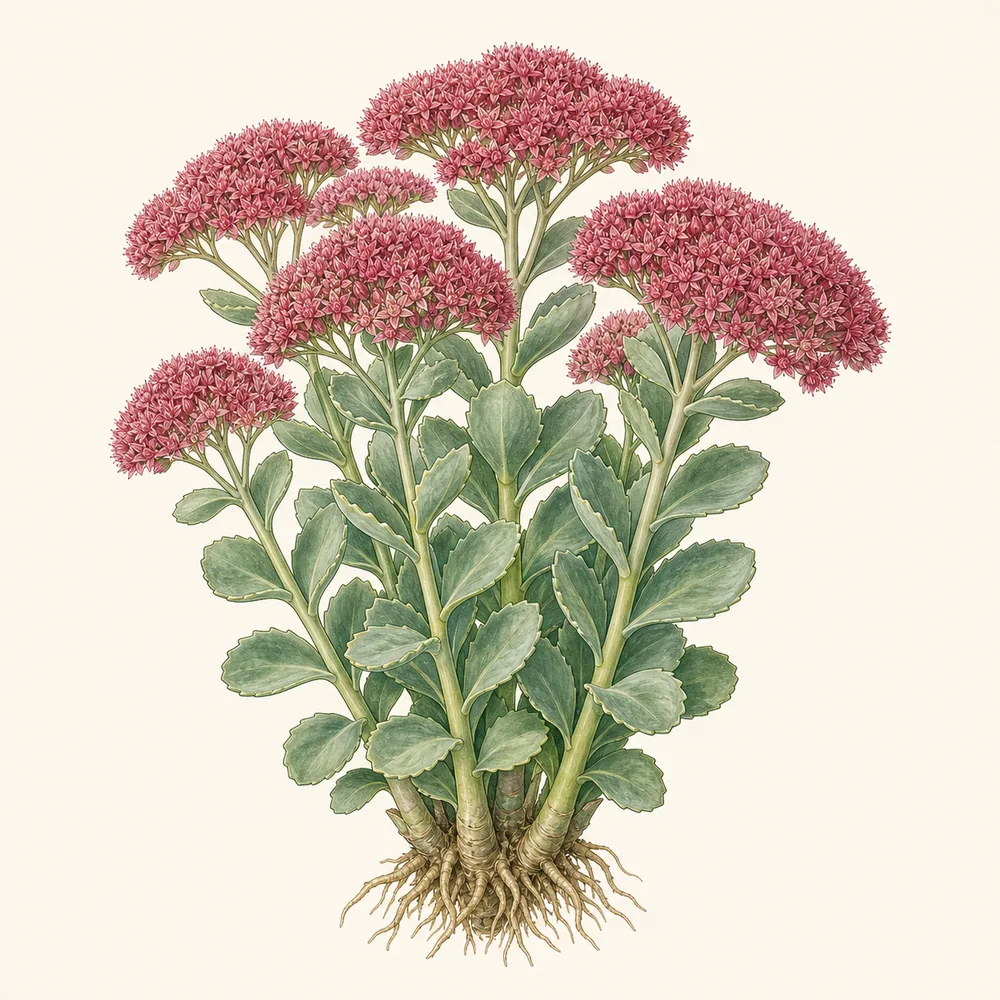
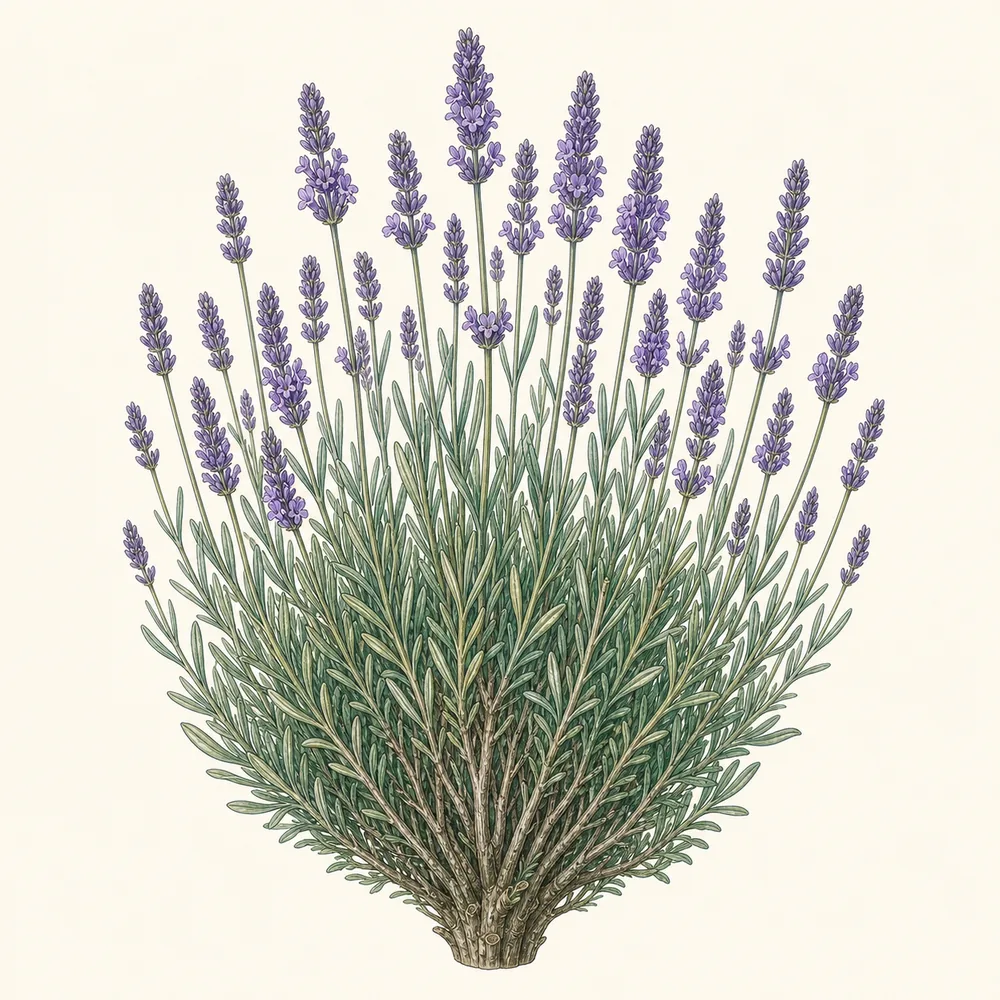
It's the traditional partner for roses — the hazy blue haze at their feet hides bare rose stems and picks up the flower colour above. It sits just as well with salvias, sedums and lavender in a hot, dry, sun-baked scheme.
The Chelsea chop for a second flush
The one job that transforms catmint is cutting it back. After the first flush of flower fades in early summer, shear the whole plant back hard — by a third to a half — and within a few weeks it throws up fresh growth and a whole second round of flower.
Left uncut, it flowers once, then flops open with a bare, tired centre. That mid-season haircut keeps it dense, neat and blooming right through to autumn. Give it a light tidy and a feed of nothing at all, and it'll reward you twice over.
The cat question
Yes — this is the plant cats roll in. Catmint contains nepetalactone, the compound that sends many cats into blissful rolling and rubbing, and a new plant can occasionally get flattened by an enthusiastic visitor before it establishes.
In normal amounts it's a harmless feline treat, but eaten in quantity it can give a cat an upset stomach, so it's not a plant to encourage grazing on. If neighbourhood cats are a problem, a few twiggy sticks pushed in around a young plant protect it until it's big and tough enough to shrug them off.
Common problems
Plant flops open in the middle
It has flowered and gone over, or the soil is too rich. Shear it back hard by a third to a half after the first flush and grow it on lean, free-draining ground.
Rots off over winter
Wet, heavy soil is the usual killer, not cold. Improve drainage with grit before planting, don't cut it back in autumn, and choose a spot that never sits soggy.
Cats flattening young plants
The nepetalactone draws them in to roll. Protect new plants with a few twiggy sticks or a low cage until they're established and tough enough to bounce back.
Few flowers, leggy growth
Too much shade or too rich a soil gives leaf at the expense of flower. Move it to full sun, stop feeding, and cut it back to encourage denser, flowerier growth.
Everything a catmint needs
Sun, sharp drainage, and a hard cut-back after the first flush.
We take no commission on anything in the "save your money" tier — if we don't think you should buy it, we don't link it. How our recommendations work
If you like this, try
Other plants with a similar temperament.
How we checked this
Care cross-checked against the RHS. Toxicity taken from the ASPCA database, which lists Catnip/Catmint (Nepeta) as toxic to cats — nepetalactone; GI upset in quantity. If our page and these sources ever disagree, believe them — and tell us.
Sources: RHS · ASPCA — toxic & non-toxic plants
Last reviewed · August 2026