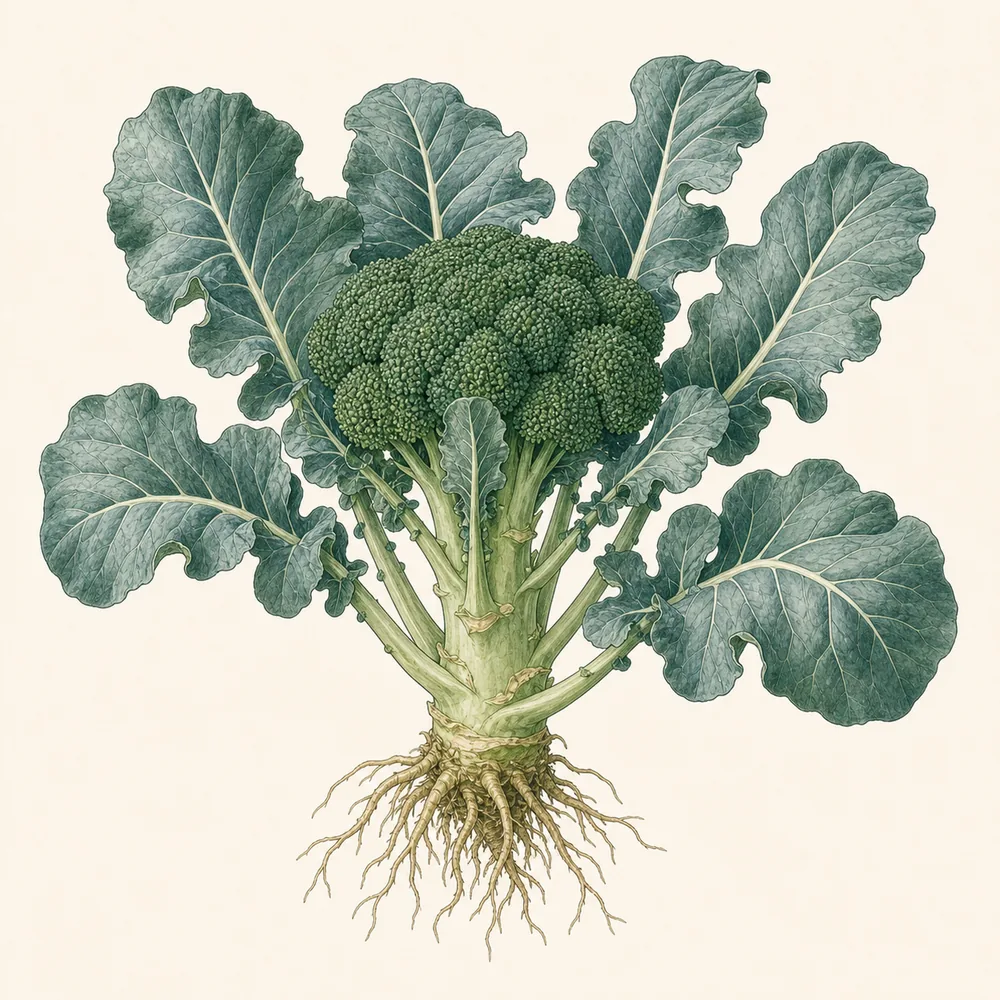
Broccoli
Two crops in one name: quick summer calabrese with a single fat green head, and hardy purple sprouting broccoli that stands all winter to crop in the hungry gap of early spring. Both want firm, fertile ground and steady protection from the cabbage tribe's many pests.
Not listed by ASPCA
The ASPCA doesn't list broccoli, so we don't stamp it safe. It's a common food crop with no known serious toxicity, but without a database entry we flag the gap honestly rather than assume.
Care at a glance
Everything that matters, in six lines. The detail is further down.
Light
An open, sunny site gives the sturdiest plants and the best heads; too much shade gives lax, leggy growth.
Water
Never let the plants go dry — a check in growth from drought means small, premature heads. Water well in dry spells.
Temperature
Sow calabrese spring to early summer; sow purple sprouting in spring to stand over winter and crop the following March.
Spacing
Space calabrese about 30 cm apart; give sprouting broccoli up to 60 cm, as the plants grow large and top-heavy.
Feeding
A leafy brassica that wants a fertile soil; a nitrogen-rich feed keeps big plants growing steadily to a good head.
Soil
Plant into firm, fertile ground and lime acid soils to raise the pH — firmness and lime both help ward off clubroot.
What to do, and when
Sow calabrese and purple sprouting broccoli in modules or a seedbed. This is also when last year's overwintered sprouting broccoli comes into its own — pick the spears regularly through March and April.
Plant out young brassicas into firm, fertile ground, water them in and net against pigeons and cabbage white butterflies at once. Cut calabrese heads as they mature.
Harvest the last of the calabrese. Stake tall purple sprouting plants against autumn winds and firm any that have rocked loose in the soil.
Purple sprouting broccoli stands through the cold, sweetened by frost, ready to crop in early spring. Keep it netted against hungry pigeons.
Know which broccoli you're growing
"Broccoli" covers two quite different crops. Calabrese is the familiar green supermarket type — sown in spring, it makes one large central head in summer or autumn, with smaller side shoots after. Purple sprouting broccoli is the long game: sown in spring, it grows into a big plant that stands all winter and crops a mass of tender spears the following February to April.
That winter-standing habit makes purple sprouting one of the most valuable crops on the plot, filling the "hungry gap" when little else is ready. It just asks for patience and space for the best part of a year.
Firm ground and steady growth
Brassicas hate loose soil. Plant them firmly — the RHS test is that a leaf tugged should tear before the plant lifts — and firm again after windy weather, especially for tall sprouting types that catch the wind. Loose, rocking plants make poor, small heads.
The other half of the equation is never letting them dry out. Any check from drought triggers small, premature heads ("buttoning"), so keep the water steady and the soil fertile. These are hungry, thirsty plants over a long season.
Cut calabrese to keep it coming
Cut the main calabrese head while it's still tight and the buds are firm and closed — leave it and it loosens, then bursts into yellow flower. Once you take the central head, the plant throws out smaller side shoots for weeks, so a single planting keeps giving.
Harvest purple sprouting the same way: pick the spears young and often, before the flower buds open, and the plant keeps producing more. Regular picking is what extends the season on both.
Common problems
Cabbage white caterpillars
The biggest brassica pest — caterpillars strip the leaves in summer. Net the crop with fine mesh from planting to stop the butterflies laying, and rub off any egg clusters you find.
Pigeons
Wood pigeons shred brassica leaves, especially in winter. Netting or a cage is the only reliable answer, and it matters most for overwintering sprouting broccoli.
Clubroot
Swollen, distorted roots and stunted plants in acid, wet soils. Lime to raise the pH, improve drainage, rotate brassicas around the plot, and never bring in infected plants.
Small heads or buttoning
Premature little heads come from a growth check — drought, loose soil or starved plants. Keep the soil firm, fertile and evenly moist through the season.
Everything a brassica bed needs
Firm fertile soil, netting against pests, and steady water.
We take no commission on anything in the "save your money" tier — if we don't think you should buy it, we don't link it. How our recommendations work
If you like this, try
Other plants with a similar temperament.
How we checked this
Care cross-checked against the RHS. The ASPCA does not list broccoli, so its pet-safety is unconfirmed and we have not stamped it safe. If our page and these sources ever disagree, believe them — and tell us.
Sources: RHS · ASPCA — toxic & non-toxic plants
Last reviewed · July 2026