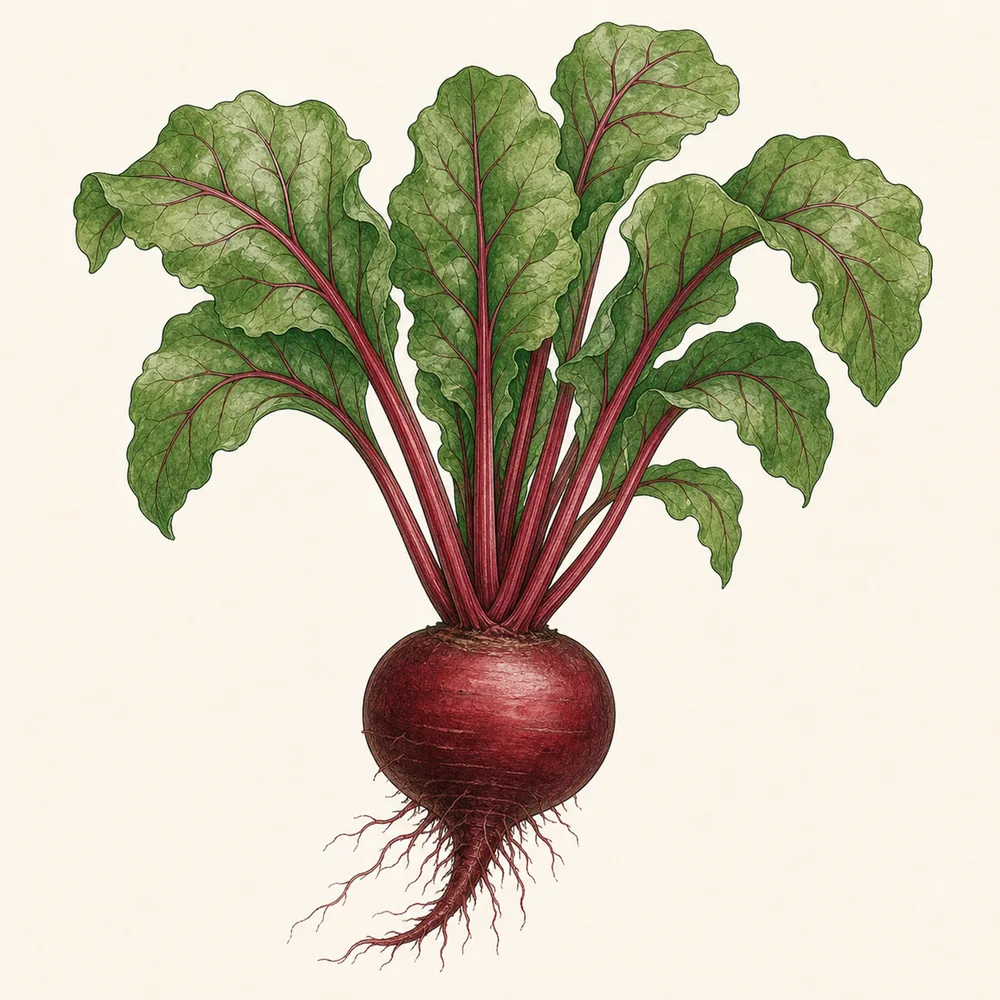
Beetroot
One of the most forgiving crops you can sow — quick, colourful roots plus a bonus of edible leaves, all from seed sown straight into the ground. Sow in succession, thin the clusters, and you'll pull sweet, tender beets from early summer well into autumn.
Not listed by ASPCA
The ASPCA doesn't list beetroot, so we don't stamp it safe. Beets are widely eaten with no known serious toxicity, but with no ASPCA entry we note the gap rather than guess.
Care at a glance
Everything that matters, in six lines. The detail is further down.
Light
An open, sunny spot is ideal, though beetroot copes with a little light shade better than most root crops.
Water
Keep the soil evenly moist — a heavy soak after a dry spell makes roots split or go woody. Little and often is best.
Temperature
Sow outdoors from April once the soil has warmed; bolt-resistant varieties can go in a little earlier under cover.
Spacing
Each 'seed' is a cluster of seeds, so seedlings come up in tufts — thin them to about 10 cm for good round roots.
Feeding
Beetroot crops well in reasonably fertile soil without extra feed; too much nitrogen just gives leaf over root.
Soil
A light, fertile soil that was manured for a previous crop is ideal; fresh manure can fork the roots.
What to do, and when
Start sowing outdoors from April once the soil has warmed, choosing a bolt-resistant variety for the earliest rows. Sow thinly straight into shallow drills where the plants are to grow.
Sow a short row every few weeks for a steady supply, thin the seedling clusters early, and water evenly to keep roots tender. Pull the first golf-ball-sized beets from June.
Lift maincrop beetroot before hard frost and twist off the tops. Roots store for months in boxes of dry sand in a cool shed.
Nothing to sow now. Use up stored roots and plan next year's succession sowings; order bolt-resistant seed for an early start.
Sow the clusters, then thin
Most beetroot 'seeds' are actually little corky clusters holding several seeds, which is why a neat sowing comes up in tufts of two or three seedlings. Thin each cluster early to leave the single strongest seedling, spacing them about 10 cm apart for good round roots — closer for baby beets.
If you'd rather not thin, look for monogerm varieties, which carry a single seed per cluster. Either way, thin while seedlings are small so the roots left behind aren't disturbed.
Steady water beats splitting
Beetroot's main fault is splitting or turning woody, and both usually trace back to erratic watering — a plant left to go dry, then drenched, swells too fast and cracks. Keep the moisture even and steady rather than feast-or-famine, and the roots stay sweet and tender.
A light, fertile soil helps the roots swell cleanly. Avoid freshly manured ground, which can make them fork, and don't overfeed — rich nitrogen gives lush leaf at the expense of the root you're after.
Pull young, sow in succession
Beetroot is at its best pulled young and tender, around golf-ball to tennis-ball size — left too long, roots turn coarse and woody. Sowing a short row every three or four weeks from April to July gives a steady supply of young beets rather than a glut of giants.
Beyond the familiar deep red, there are golden, white and candy-striped 'Chioggia' beets — colours you'll rarely find in a shop and a genuine reason to grow your own. They're all sown and grown exactly the same way.
Common problems
Bolting (running to seed)
Plants send up a flower spike instead of swelling, often after a cold snap or drought. Sow bolt-resistant varieties, don't sow too early, and keep the water steady.
Split or woody roots
Uneven watering, or roots left in too long. Keep moisture even and steady, and pull beets young while they're tender.
Forked roots
Usually stones or fresh manure in the soil. Grow in stone-free ground that was manured for a previous crop, not freshly enriched.
Leaf spots (small brown patches)
A common fungal leaf spot in damp summers, mostly cosmetic. Remove badly marked leaves and don't crowd plants; the roots are unaffected.
Everything a beetroot row needs
Light fertile soil, even water, and succession sowings.
We take no commission on anything in the "save your money" tier — if we don't think you should buy it, we don't link it. How our recommendations work
If you like this, try
Other plants with a similar temperament.
How we checked this
Care cross-checked against the RHS. The ASPCA does not list beetroot, so its pet-safety is unconfirmed and we have not stamped it safe. If our page and these sources ever disagree, believe them — and tell us.
Sources: RHS · ASPCA — toxic & non-toxic plants
Last reviewed · July 2026