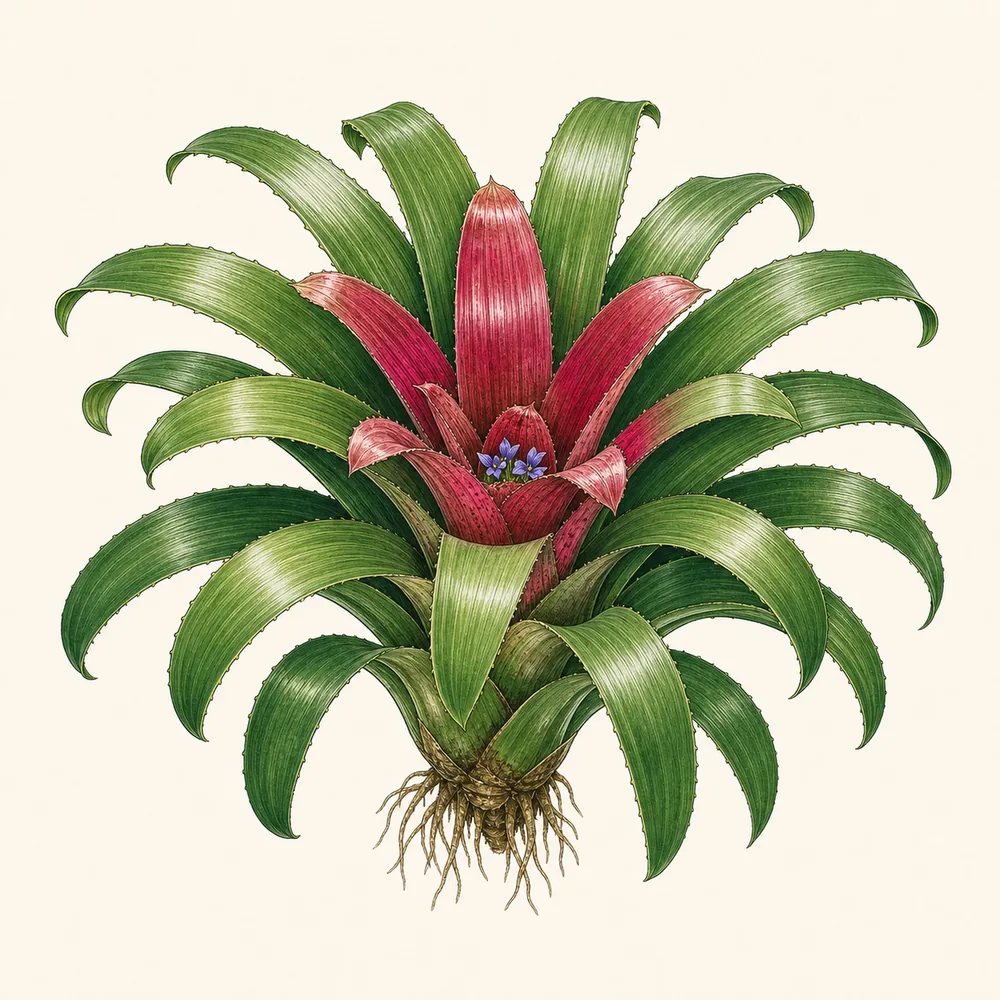
Blushing Bromeliad
A rosette bromeliad whose centre blushes vivid red as it comes into flower. Architectural, tolerant and pet-safe — you water it in an unusual way, straight into the central cup.
Safe around cats & dogs
The blushing bromeliad (Neoregelia) is listed as non-toxic to cats and dogs on the ASPCA database. The bromeliads are a reliably pet-safe group of houseplants.
Care at a glance
Everything that matters, in six lines. The detail is further down.
Light
Bright, filtered light brings out the red central colour. Too little light and the blush fades.
Water
Keep a little fresh water in the central rosette 'tank', and keep the compost just barely moist. Flush the cup out regularly.
Temperature
Warm room conditions; keep it off cold draughts.
Humidity
Enjoys some humidity; the central cup does much of the work.
Feeding
A very dilute feed added to the cup or soil occasionally in summer — bromeliads are light feeders.
Soil
An open orchid-or-bromeliad mix; the roots mostly anchor rather than feed.
What to do, and when
Growth resumes. Refresh the central cup, feed weakly, and remove any old outer leaves.
Brightest colour and any flowering happen now. Keep the cup topped up with fresh water.
Ease back on feeding as growth slows; keep the cup from going stagnant.
Slower growth. Keep it warm and bright, water less, and keep a little fresh water in the cup.
Water the cup, not the soil
Bromeliads take up most of their water through the central 'tank' formed by their rosette of leaves, not through their roots. Keep a little fresh water sitting in that cup and keep the compost only barely moist.
Flush the cup out every week or two so the water doesn't go stagnant, and use rainwater if your tap water is very hard.
One flower, then pups
A bromeliad rosette flowers once, then slowly dies back over many months — but before it does, it produces offsets ('pups') around the base.
Leave the pups attached until they're about a third of the parent's size, then pot them up individually to carry on.
Common problems
Fading central colour
Too little light. Move it somewhere brighter (filtered).
Smelly central cup
Stagnant water. Flush it out and refill with fresh.
Rotting base
Compost kept too wet. Keep the soil barely moist; water via the cup.
Parent slowly dying
Natural after flowering. Grow on the pups it leaves behind.
Everything a bromeliad needs
Bright light and fresh water in the central cup.
We take no commission on anything in the "save your money" tier — if we don't think you should buy it, we don't link it. How our recommendations work
If you like this, try
Other plants with a similar temperament.
How we checked this
Care cross-checked against the RHS. Toxicity confirmed against the ASPCA database, which lists the blushing bromeliad (Neoregelia) as non-toxic to cats and dogs. If our page and these sources ever disagree, believe them — and tell us.
Sources: RHS · ASPCA — toxic & non-toxic plants
Last reviewed · July 2026