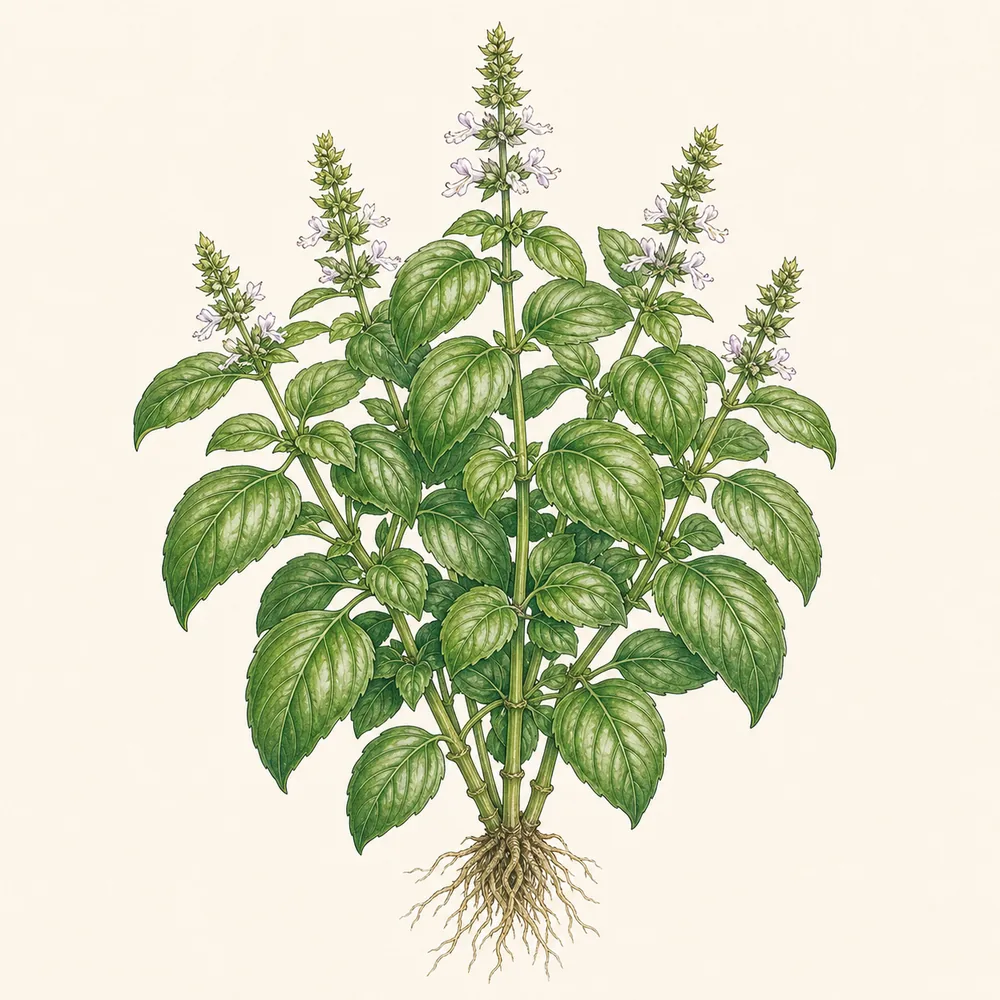
Basil
The smell of summer and the heart of a good tomato salad — and one of the few herbs most people manage to kill, usually with kindness. Basil isn't hard; it just wants what a British summer only sometimes provides: warmth, light, and drier roots than you'd think.
Safe around cats & dogs
Basil is listed as non-toxic to cats and dogs on the ASPCA database — a genuinely pet-safe herb to have on the windowsill or in the veg bed. The only sensible caution is the usual one for any plant: a pet gorging on a whole plant may get a mild tummy upset, but a nibble is no cause for worry.
Care at a glance
Everything that matters, in six lines. The detail is further down.
Position
A sunny windowsill, greenhouse or the warmest sheltered corner outdoors. Cold and wind are what it hates most.
Water
Water the compost, not the leaves, and ideally in the morning. Soggy roots and wet foliage overnight cause the classic collapse.
Soil
Good peat-free compost that drains freely. A pot on a sunny sill is often better than cold garden soil.
Feeding
A dilute general or tomato feed every couple of weeks keeps a cropping plant producing new leaves.
Harvest
Always pick from the growing tips, never the bottom — pinching out the top makes it bush out instead of bolting.
Hardiness
Frost-tender and unhappy below about 10°C. It's a summer annual here — sow fresh each year.
What to do, and when
Sow indoors on a warm windowsill from March; don't rush it outside. Prick out seedlings and grow them on somewhere bright and frost-free.
Its season. Only move plants outdoors once nights are reliably warm. Pinch tips regularly, water in the morning, feed weakly.
Growth slows with the cooling nights. Harvest hard before the first cold snap — make pesto, or freeze leaves in oil.
Not a winter plant outdoors. A pot on a bright, warm kitchen sill may limp on; most gardeners simply start again in spring.
Why the supermarket pot always dies (and how to save it)
That lush supermarket basil is not one plant — it's dozens of seedlings crammed into one small pot, forced fast under glass, and sold to be used within days. Stood on a windowsill it exhausts the compost, dries out, and collapses within a fortnight. It was never meant to last.
The rescue is to split it: tip it out, tease the rootball into three or four clumps, and pot each into its own container of fresh compost. Give them a warm, bright spot, water in the morning, and pinch the tops out — you'll turn one doomed pot into several plants that actually keep going.
Pinch, don't strip
The single habit that keeps basil productive is pinching out the growing tips regularly, including the first flower buds the moment they appear. Each pinch forces two new shoots below it, so a well-pinched plant becomes bushy and generous; a plant left to flower ('bolt') turns bitter and stops making leaves.
Harvest from the top down, never by pulling leaves off the bottom, and you'll keep a single plant cropping all summer. Once it does start trying to flower in late summer, that's your cue for a final big harvest and a batch of pesto.
Common problems
Blackening, collapsing stems
Cold and overwatering together. Warmer spot, water only in the morning at the base, improve drainage.
Leggy, few leaves
Too little light, or never pinched. Give it maximum sun and pinch the tips to force bushy growth.
Suddenly flowering (bolting)
Heat stress or age. Pinch out flower buds early; if it's determined, harvest the lot and make pesto.
Pale, hungry-looking leaves
Exhausted compost, classic in a cropped pot. Repot into fresh compost and feed weakly.
Everything basil needs
A packet of seed and a warm sill beat an endless conveyor of dying supermarket pots.
We take no commission on anything in the "save your money" tier — if we don't think you should buy it, we don't link it. How our recommendations work
If you like this, try
Other plants with a similar temperament.
From the Notebook
Seasonal notes and guides that mention the basil.
How we checked this
Care guidance cross-checked against the Royal Horticultural Society and NC State Extension. Pet-safety confirmed against the ASPCA database, which lists basil (Ocimum basilicum) as non-toxic to cats and dogs. If our page and these sources ever disagree, believe them — and tell us.
Sources: RHS · NC State Extension · ASPCA
Last reviewed · July 2026