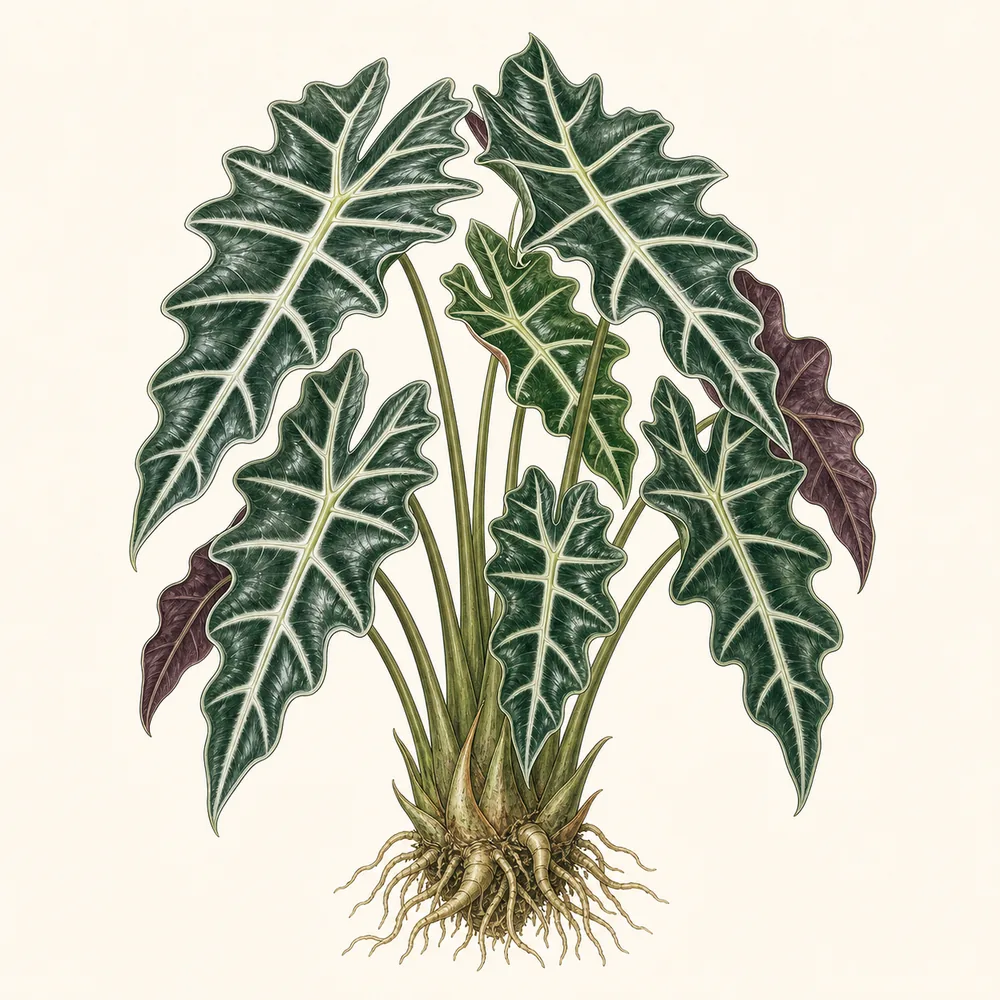
Alocasia
Dramatic arrow-shaped leaves with bold pale veins — a striking but genuinely fussy aroid that wants warmth, humidity and careful watering, and may go dormant if unhappy.
Toxic to cats, dogs & people if chewed
Alocasia (elephant ear) is listed as toxic on the ASPCA database. Like other aroids it contains insoluble calcium oxalate crystals; chewing causes intense mouth and throat irritation, drooling and swelling. Keep it away from pets and children that nibble.
Care at a glance
Everything that matters, in six lines. The detail is further down.
Light
Bright filtered light keeps the leaves bold. Too little and it declines; direct sun scorches.
Water
Water when the top centimetre dries — it wants consistent moisture but hates being waterlogged. Erratic watering triggers dormancy.
Temperature
Warmth is non-negotiable. Below about 15 °C it sulks or drops into dormancy.
Humidity
Needs humidity. Dry air is the usual cause of crispy edges and general decline.
Feeding
A weak balanced feed every couple of weeks in spring and summer.
Soil
A light, free-draining aroid mix with plenty of bark and perlite.
What to do, and when
Growth restarts — resume feeding, repot if crowded, and pot up offsets from the tuber.
Active growth. Keep it warm, humid, brightly lit and evenly moist; feed fortnightly.
Growth slows. Ease back on water and feed as light and warmth drop.
Often semi-dormant. Water much less; if it dies back, keep the tuber barely moist and warm — it usually returns in spring.
Warmth, humidity and steady water
Alocasia is the fussiest plant in this set, and nearly every problem traces back to cold, dry air or erratic watering. It wants consistent warmth above 16 °C, high humidity, and soil kept evenly moist but never soggy.
Get any of those wrong and it protests fast — yellowing leaves, crispy edges, or a sudden collapse. It's a plant that rewards steady conditions rather than heroic intervention.
Dormancy, not death
If it loses its leaves over winter or after a shock, don't throw it out. The underground tuber usually survives — keep it barely moist and warm, and new leaves typically push up in spring.
Overwatering a dormant or struggling plant is the one thing that will finish it off, so hold back when it isn't actively growing.
Common problems
Sudden leaf collapse / die-back
Cold or stress-induced dormancy. Keep the tuber warm and barely moist; it often returns in spring.
Crispy brown edges
Dry air. Raise humidity — this plant genuinely needs it.
Yellowing leaves
Usually overwatering or cold. Check the temperature and let the top dry slightly between drinks.
Spider mites
Common in dry warm air. Rinse the leaves, raise humidity, and treat if they persist.
Everything an alocasia needs
Warmth, humidity and steady moisture — the fussy trio.
We take no commission on anything in the "save your money" tier — if we don't think you should buy it, we don't link it. How our recommendations work
If you like this, try
Other plants with a similar temperament.
How we checked this
Care cross-checked against the RHS. Toxicity taken from the ASPCA database, which lists Alocasia (elephant ear) as toxic — insoluble calcium oxalates causing pronounced oral irritation. If our page and these sources ever disagree, believe them — and tell us.
Sources: RHS · ASPCA — toxic & non-toxic plants
Last reviewed · July 2026