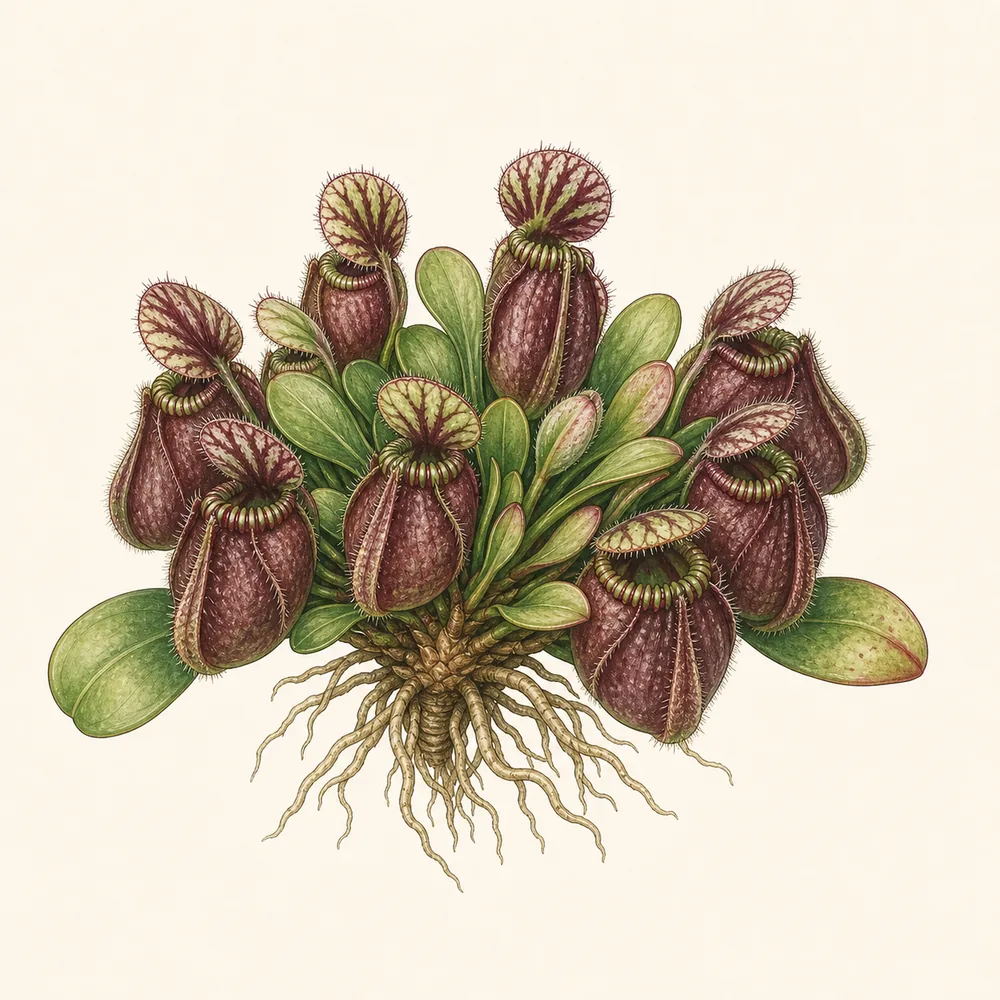
Albany Pitcher Plant
A small, jewel-like pitcher plant from a single corner of south-west Australia — each little jug hairy-lidded and often flushed deep red in strong light. It's slow, particular about cool roots and bright light, and quietly one of the most rewarding carnivores to grow well.
Not listed by ASPCA
The ASPCA doesn't list the Albany pitcher plant (Cephalotus) specifically, so we don't stamp it safe. No toxic principle is recorded for it and close relatives are listed non-toxic, but with no database entry for this species we flag the gap honestly rather than assume.
Care at a glance
Everything that matters, in six lines. The detail is further down.
Light
Bright light with some direct sun deepens the red colour and keeps the pitchers compact. Weak light gives pale, floppy growth.
Water
Only rainwater, distilled or RO water. Keep the mix moist but not permanently flooded — a shallow tray in growth, drier in winter.
Temperature
Likes warm days but cool roots and a distinct cooler winter rest. Avoid baking the pot; it resents hot, dry roots.
Humidity
Prefers moderate humidity with airflow over stagnant damp; it doesn't need a sealed terrarium once established.
Feeding
No soil fertiliser. The pitchers trap and digest small insects themselves; don't force-feed them.
Soil
A low-nutrient carnivorous mix of peat-free or sphagnum with plenty of perlite and sand for air at the roots. Never ordinary compost.
What to do, and when
Growth resumes as light and warmth return. New pitchers form now; repot carefully if needed while it's waking up.
Main growing season. Give it bright light with some sun, keep the roots cool and the mix moist, and colour deepens.
Growth slows with the light. Ease back the water and let it settle toward its winter rest.
A cooler, drier rest suits it — keep it bright but hold back on water and warmth. Non-carnivorous leaves often replace pitchers for a while.
A pitcher in miniature
Cephalotus makes tiny pitfall traps — squat little jugs, usually under 5 cm, with a ribbed rim and a striped, hairy lid. Insects follow nectar to the slippery rim, fall in and are digested in the fluid below.
In strong light the pitchers flush a deep glossy red, which is much of the appeal. Well grown, a mature plant becomes a cluster of these jewel-like traps around a low rosette.
Cool roots are the secret
Cephalotus wants bright, even warm days but dislikes hot, dry roots. A pot baking on a sunny sill can cook the root system even while the top looks happy.
Keep the roots cool and the airy mix just moist — shade the pot itself, use a pale or double pot, and don't leave it standing deep in warm water. A distinct cooler winter rest keeps it healthy over the long term.
Slow and steady wins
This is not a plant to rush. Cephalotus grows slowly and resents being messed with, so pick a good spot and leave it there rather than repotting or moving it about.
As always with carnivores, the water rule is absolute: rainwater, distilled or RO only, and a lean, mineral-poor mix. Get the water, light and cool roots right and it's more forgiving than its reputation suggests.
Common problems
Pitchers stay green and floppy
Too little light. Give it much brighter conditions with some direct sun to bring back colour and firm, compact pitchers.
Sudden collapse in hot weather
Usually cooked or waterlogged roots. Keep the roots cool and the mix moist-not-flooded, and shade the pot from baking sun.
Only flat leaves, no pitchers
Often the winter rest, which is normal. In the growing season, check the light is strong enough and the plant is settled.
Slow decline over months
Nearly always tap water or a too-rich mix. Confirm rainwater and a lean, airy carnivorous mix, and stop disturbing the roots.
Everything an Albany pitcher needs
Bright light, cool roots, rainwater, and patience.
We take no commission on anything in the "save your money" tier — if we don't think you should buy it, we don't link it. How our recommendations work
If you like this, try
Other plants with a similar temperament.
How we checked this
Care cross-checked against the RHS. The ASPCA does not list the Albany pitcher plant (Cephalotus), so its pet-safety is unconfirmed and we have not stamped it safe. If our page and these sources ever disagree, believe them — and tell us.
Sources: RHS · ASPCA — toxic & non-toxic plants
Last reviewed · July 2026