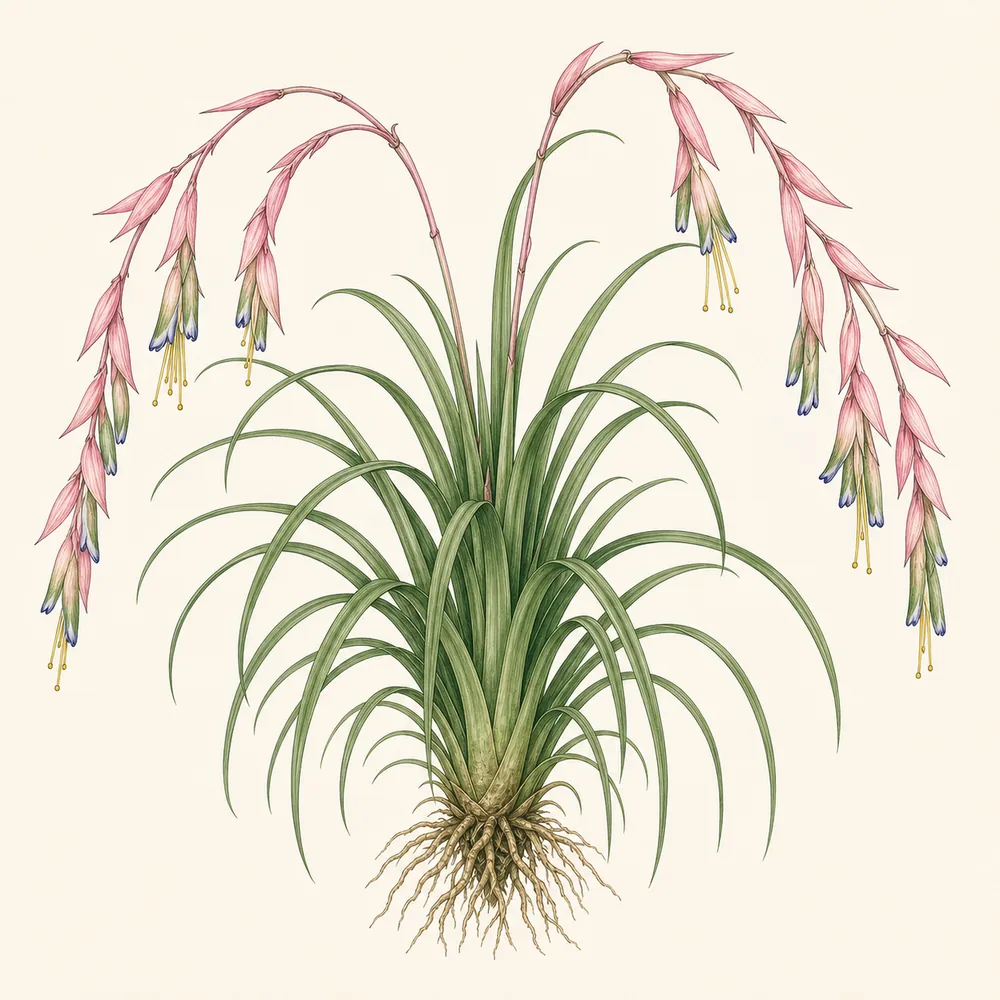
Queen's Tears
Just about the toughest bromeliad you can grow — a grassy clump of arching leaves that, once settled, dangles extraordinary pink-and-green flowers tipped in blue. It shrugs off neglect, cool rooms and irregular watering, which is why it's passed hand to hand as the friendship plant.
Not listed by ASPCA
The ASPCA doesn't list Queen's Tears (Billbergia), so we don't stamp it safe. It has no recorded toxic principle and several of its relatives are listed non-toxic, but with no database entry for this species we flag the gap honestly rather than assume.
Care at a glance
Everything that matters, in six lines. The detail is further down.
Light
A bright spot out of harsh midday sun. Good light brings on the flowers; deep shade gives leaves but few blooms.
Water
Keep a little water in the central cup and water the mix when the top has dried. It's forgiving if you forget the odd time.
Temperature
Ordinary room warmth, and tougher than most bromeliads about cool spots — it stands short dips other tank types wouldn't.
Humidity
Fine in normal rooms. A touch more humidity keeps the leaf tips from browning in dry, heated air.
Feeding
A dilute balanced feed in the mix about once a month in spring and summer. Go easy — it needs little.
Soil
An epiphyte at heart — happiest in a chunky, open bromeliad or orchid-and-bark mix that never stays soggy.
What to do, and when
Growth resumes. Step watering back up, start the monthly feed, and pot up crowded clumps into a free-draining mix.
Peak growth. Keep a little water in the cup, feed monthly, and enjoy the arching flower stems as they appear.
Growth slows. Ease back on water and feeding as the light drops, keeping the mix on the dry side.
Near-rest. Water sparingly, stop feeding, and keep it bright — it tolerates a cool room better than most bromeliads.
The forgiving bromeliad
Where many bromeliads sulk at the first cold draught or missed watering, Queen's Tears just carries on. It's a tank bromeliad — the leaves form a loose central cup that catches water — but it's far less fussy about that cup than its glossy relatives.
It's happiest in a chunky, free-draining mix rather than ordinary compost, because in the wild it perches on trees with its roots in the open air. Give it that and bright light and it needs almost nothing else.
Watering the cup and the mix
Keep a little fresh water in the central cup and water the mix when the top has dried out. In hard-water areas, use rainwater in the cup to avoid chalky marks and refresh it now and then so it doesn't stagnate.
This is a tough plant, so err on the dry side rather than the wet. Soggy mix is the one thing it won't forgive — free drainage matters more than frequent watering.
Flowers once, then pups
The reward is the flower: arching stems of rose-pink bracts hung with green-and-blue-edged blooms, said to 'weep' nectar — the queen's tears. Like all bromeliads, each rosette flowers only once.
After flowering, the parent slowly fades but throws up pups around the base. Leave them until they're about a third of the parent's size, then pot them on. A single plant quickly becomes a generous clump.
Common problems
No flowers
Usually too little light, or a young rosette that hasn't matured yet. Move it brighter and be patient — each rosette blooms once.
Browning leaf tips
Dry air or hard-water build-up. Raise the humidity a little and use rainwater in the cup and on the mix.
Rotting base or crown
Soggy mix or stagnant cup water. Switch to a free-draining mix, let the top dry between waters, and refresh the cup.
Parent rosette dying back
Normal after flowering. Leave the pups to grow, then remove the spent parent once they're established.
Everything Queen's Tears needs
A free-draining mix, bright light, and very little fuss.
We take no commission on anything in the "save your money" tier — if we don't think you should buy it, we don't link it. How our recommendations work
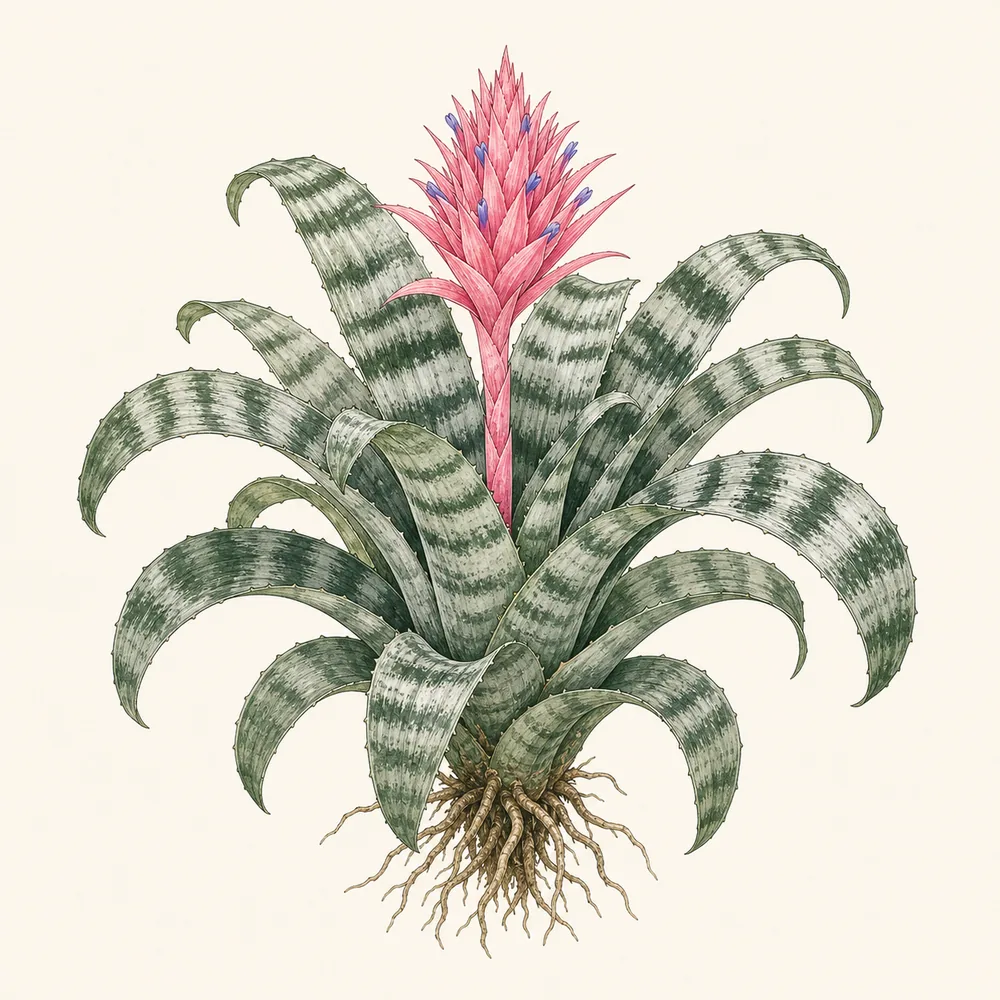
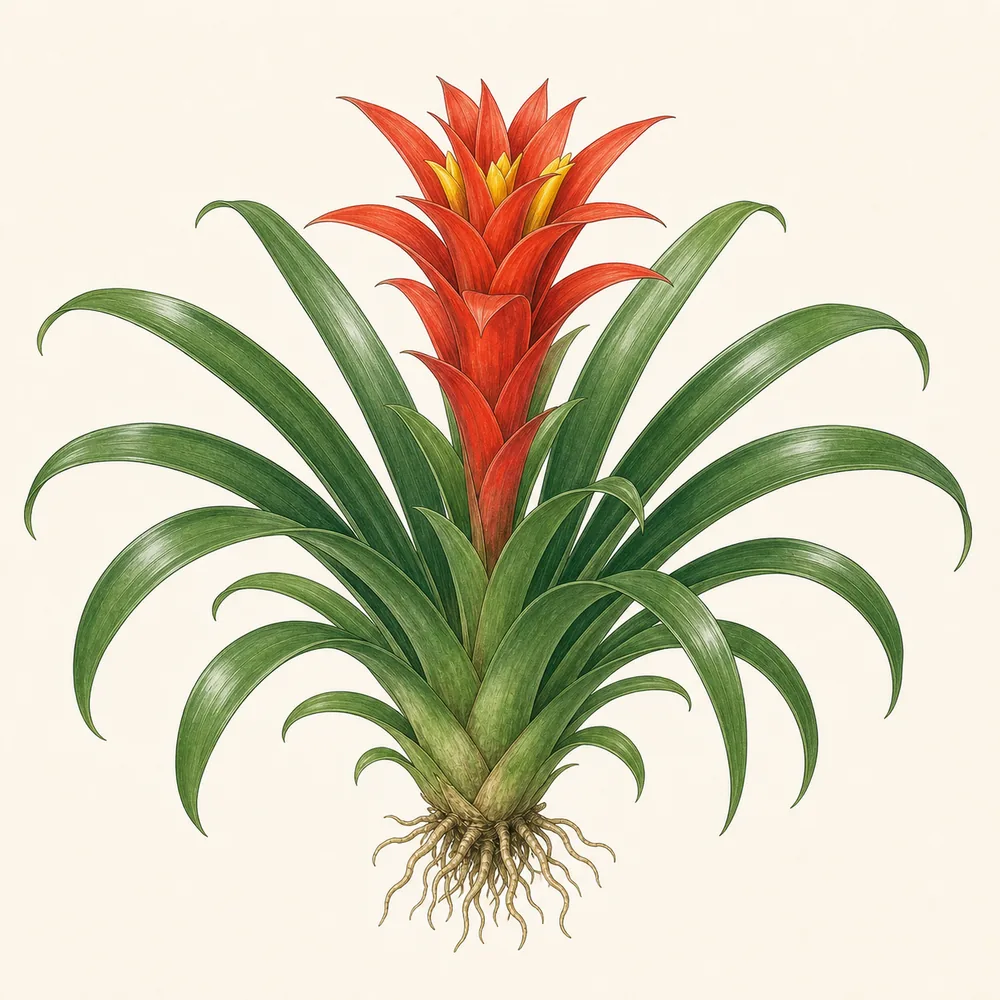
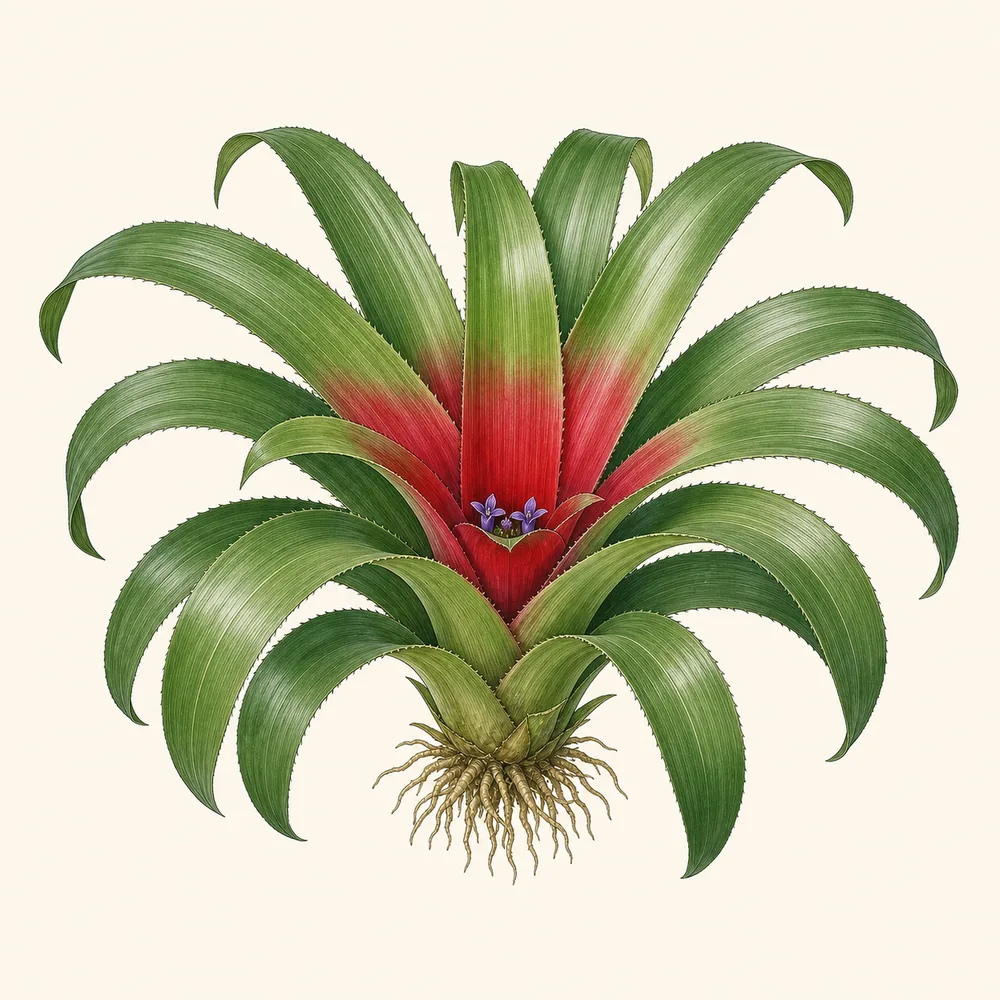
If you like this, try
Other plants with a similar temperament.
How we checked this
Care cross-checked against the RHS. The ASPCA does not list Queen's Tears (Billbergia), so its pet-safety is unconfirmed and we have not stamped it safe. If our page and these sources ever disagree, believe them — and tell us.
Sources: RHS · ASPCA — toxic & non-toxic plants
Last reviewed · August 2026