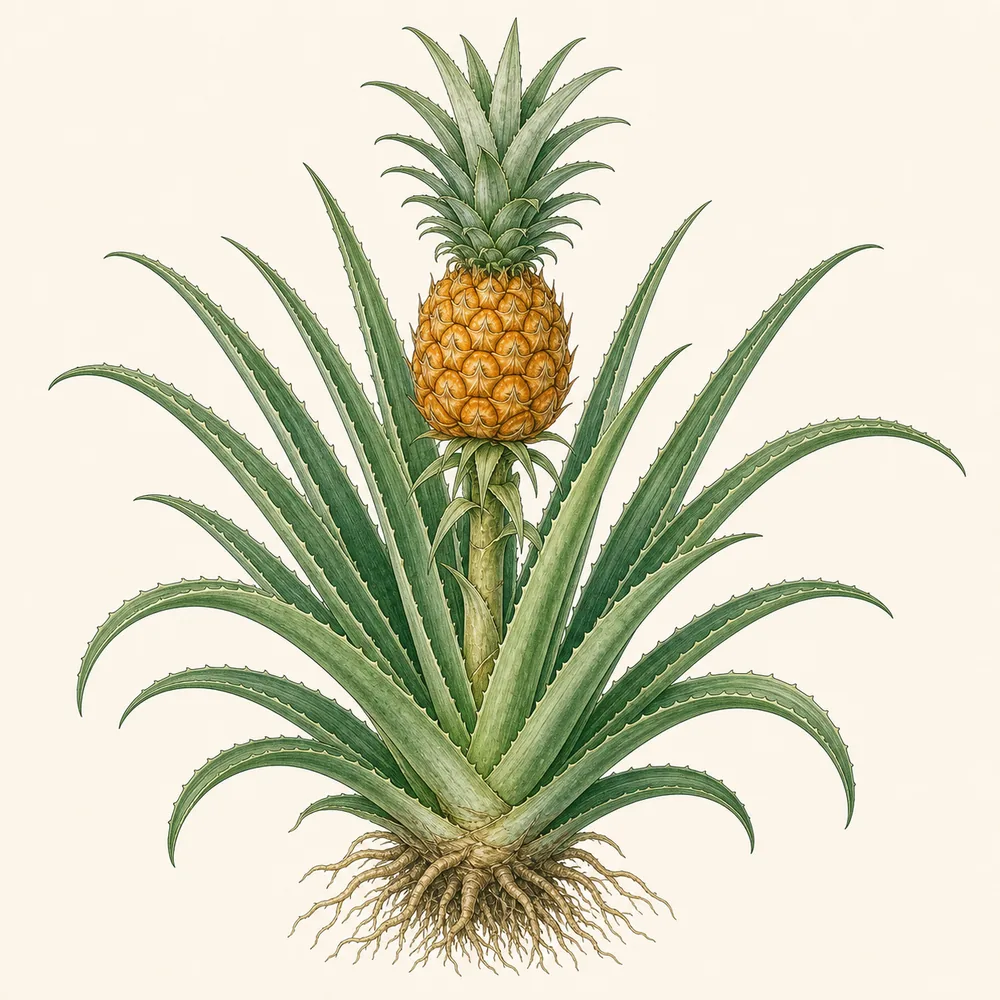
Ornamental Pineapple
A proper novelty houseplant — a spiky rosette of arching leaves that, given real heat and bright light, throws up a miniature pineapple on a stalk. It's a terrestrial bromeliad, so it grows in a free-draining mix, and its one firm demand is warmth: treat it cool and it simply sulks.
Not listed by ASPCA
The ASPCA doesn't list the ornamental pineapple (Ananas), so we don't stamp it safe. It has no recorded toxic principle and several of its relatives are listed non-toxic, but with no database entry for this species we flag the gap honestly rather than assume.
Care at a glance
Everything that matters, in six lines. The detail is further down.
Light
The brightest spot you have, with a few hours of direct sun. Good light is essential for strong colour and any chance of fruit.
Water
Water thoroughly, then let the top of the mix dry before the next drink. A little in the central cup is fine; don't keep it soggy.
Temperature
Loves warmth and won't tolerate cold — keep it well above 13 °C, off cold glass, and away from draughts all year.
Humidity
Enjoys higher humidity alongside the heat. Mist in dry rooms, or stand it on a damp pebble tray.
Feeding
A balanced feed roughly monthly through spring and summer supports strong growth and, in time, fruiting.
Soil
A terrestrial bromeliad — happiest in a free-draining mix of compost with added bark or perlite that never stays wet.
What to do, and when
Growth resumes with the warmth and light. Start the monthly feed and pot up crowded plants into a free-draining mix.
Peak growth in heat and bright light. Feed monthly, keep humidity up, and a mature plant may push up its little pineapple.
Growth slows as light fades. Ease back on water and feeding, and make sure it stays warm as the nights cool.
Rest. Water sparingly, stop feeding, and above all keep it warm — cold is what kills this plant in a British winter.
Heat is non-negotiable
The ornamental pineapple comes from hot tropical ground, and warmth is its one absolute demand. Below about 13 °C it stops growing and starts to suffer, so the coolest windowsills and unheated rooms are out.
Pair that heat with the brightest light you can offer, including a few hours of direct sun. Together, warmth and light are what keep the leaves richly coloured and give the plant any chance of fruiting indoors.
Watering a terrestrial bromeliad
Unlike the air plants and tree-dwelling tank types, this one is a terrestrial bromeliad that roots into the ground — so it's watered through the mix, not just the cup. Water well, then let the top dry before the next drink.
A little water in the central rosette is fine, but the real risk is a soggy pot. A free-draining mix and a drainage hole keep the roots healthy; standing water rots them.
The pineapple, then pups
The showpiece is a small, decorative pineapple that forms on a stalk from the centre of a mature plant — edible in principle but grown for looks, not eating. Like all bromeliads, each rosette fruits and flowers just once.
After that the parent slowly declines but produces pups around the base and offsets from the fruit's own leafy top. Grow those on and you keep the plant going for years.
Common problems
Growth stalls, leaves dull
Almost always too cold. Move it somewhere reliably warm, above 13 °C, in bright light.
Rotting base or roots
Soggy mix. Switch to a free-draining bromeliad mix, use a pot with drainage, and let the top dry between waters.
Pale, weak, stretched growth
Too little light. It needs the brightest spot you have, with some direct sun, to grow strongly and colour up.
Browning leaf tips
Dry air or cold draughts. Raise the humidity, keep it warm, and mist in heated rooms.
Everything an ornamental pineapple needs
Real heat, bright light, and a free-draining mix.
We take no commission on anything in the "save your money" tier — if we don't think you should buy it, we don't link it. How our recommendations work
If you like this, try
Other plants with a similar temperament.
How we checked this
Care cross-checked against the RHS. The ASPCA does not list the ornamental pineapple (Ananas), so its pet-safety is unconfirmed and we have not stamped it safe. If our page and these sources ever disagree, believe them — and tell us.
Sources: RHS · ASPCA — toxic & non-toxic plants
Last reviewed · August 2026