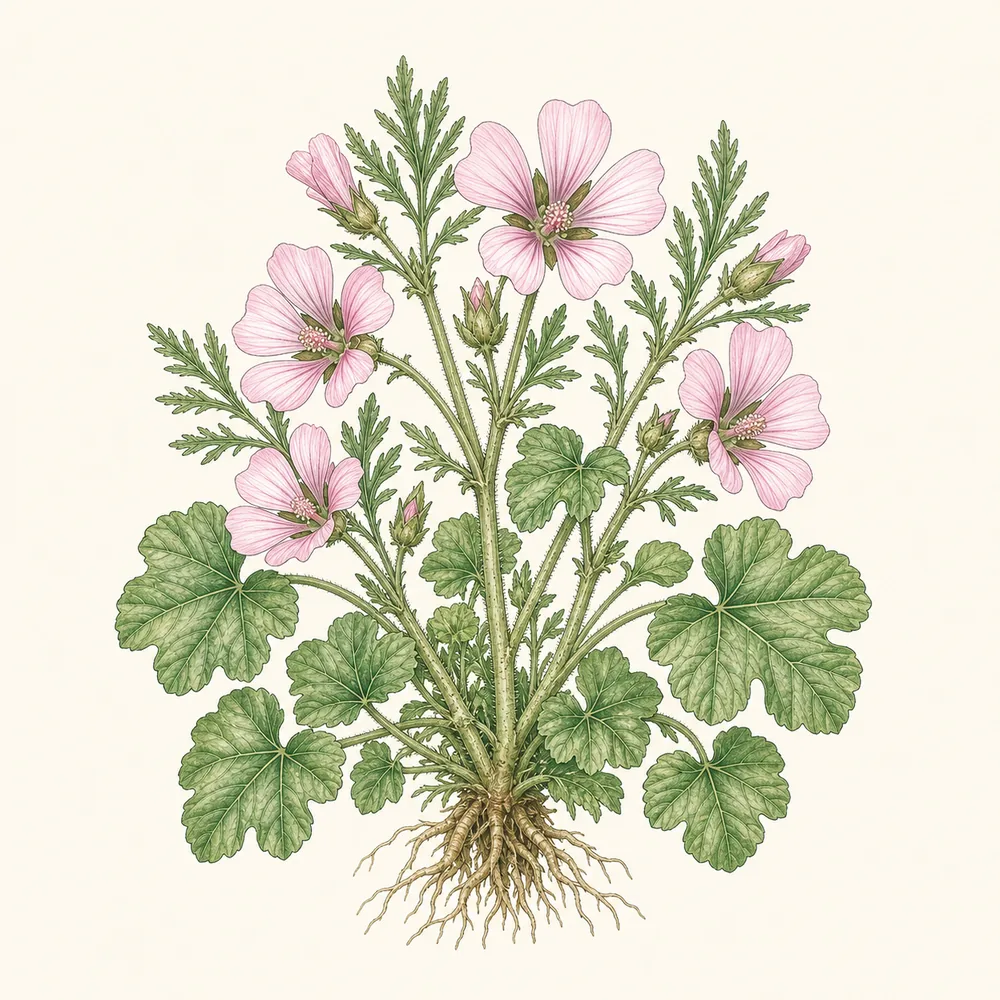
Musk Mallow
One of the prettiest and most forgiving native wildflowers — soft pink saucer-shaped blooms above finely cut, faintly musk-scented leaves, flowering for months on end. It thrives in sun on almost any well-drained soil and asks next to nothing of you.
Not listed by ASPCA
The ASPCA doesn't list the musk mallow, so we don't stamp it safe. It's a UK native wildflower with no recorded serious toxicity to pets, but with no database entry we flag the gap honestly rather than guess.
Care at a glance
Everything that matters, in six lines. The detail is further down.
Light
Flowers best in an open, sunny spot. It copes with a little light shade but gives fewer blooms and floppier growth.
Water
Water new plants through their first summer, then leave them. Established plants are deep-rooted and shrug off dry spells.
Hardiness
A hardy native perennial that dies back over winter and returns each spring. No protection needed anywhere in the UK.
Habit
Forms a rounded, well-branched clump. Ideal in the middle of a meadow or border; it rarely needs staking in an open site.
Feeding
Flowers happily on poor to average soil. Rich, fed ground gives soft, leafy growth that flops and needs support.
Soil
Not fussy — sand, chalk, loam or clay, as long as it drains. It dislikes only cold, waterlogged winter ground.
What to do, and when
Deeply cut fresh foliage appears from the crown. Sow seed now, or plant out pot-grown plants; thin self-sown seedlings while small.
The long show begins — soft pink saucers from June right through August, alive with bees and hoverflies. Snip spent stems to keep flowers coming.
Flowering tails off and seed ripens. Leave some seed heads for self-sowing and the birds, then cut the meadow and rake off the cuttings.
Fully dormant, dying back to a low crown. Nothing to do — it needs no protection and resents being fed or mulched heavily.
A wildflower that behaves like a border star
Musk mallow is the wildflower to reach for when you want the meadow look without the meadow struggle. The soft pink, saucer-shaped flowers are as good as anything in a cottage border, and the finely divided leaves give off a faint musky scent when brushed or crushed.
It's a genuine UK native, so it earns its place with pollinators, but it's tidy and well-behaved enough to grow at the front of a sunny border too. There's a lovely white form, 'Alba', if pink doesn't suit your scheme.
Sun and drainage are all it asks
Give musk mallow an open, sunny spot on free-draining soil and it will look after itself. It's genuinely unfussy about soil type — sand, chalk, loam and even clay all suit it, provided the ground doesn't sit wet through winter.
The one thing to avoid is rich, heavily fed soil. It pushes soft, sappy growth that flops and needs staking. Keep the ground lean and the plant stays compact, upright and covered in flower.
Sowing and self-seeding
Sow seed direct onto bare, weeded soil in autumn or spring, or raise a few plants in pots to plant out. It's quick from seed and often flowers in its first or second year.
Once settled it will self-seed gently around the garden — never a thug, but enough to keep the patch going. If you want it to spread, leave some seed heads standing; if you'd rather keep it in check, cut most stems back before the seed ripens.
Managing the patch
For a long flowering season, snip off spent stems through summer — it responds by producing more buds. In a mixed meadow, treat it like the rest: let it flower and seed, then give the whole patch a single cut in autumn and rake off the cuttings so the soil stays poor.
Old clumps can get woody and less floral after a few years. The plant is short-lived but self-sows to replace itself, so let a little seed drop and you'll always have young, vigorous plants coming through.
Common problems
Floppy, leafy growth
Too rich a soil or too much shade. Grow it lean and in full sun; on fed ground it makes soft stems that sprawl and need staking.
Rust on the leaves
Mallows are prone to orange rust pustules on the undersides of leaves. Remove badly affected leaves, keep plants airy and un-crowded, and clear infected debris in autumn.
Short-lived plants
Musk mallow is naturally short-lived and clumps tire after a few years. Let some seed drop each autumn so young replacements come through.
Winter losses on wet soil
It hates cold, waterlogged ground over winter. Improve drainage before planting, or grow it on a raised bank or free-draining bed.
Everything a musk mallow needs
A sunny, free-draining spot and almost no intervention.
We take no commission on anything in the "save your money" tier — if we don't think you should buy it, we don't link it. How our recommendations work
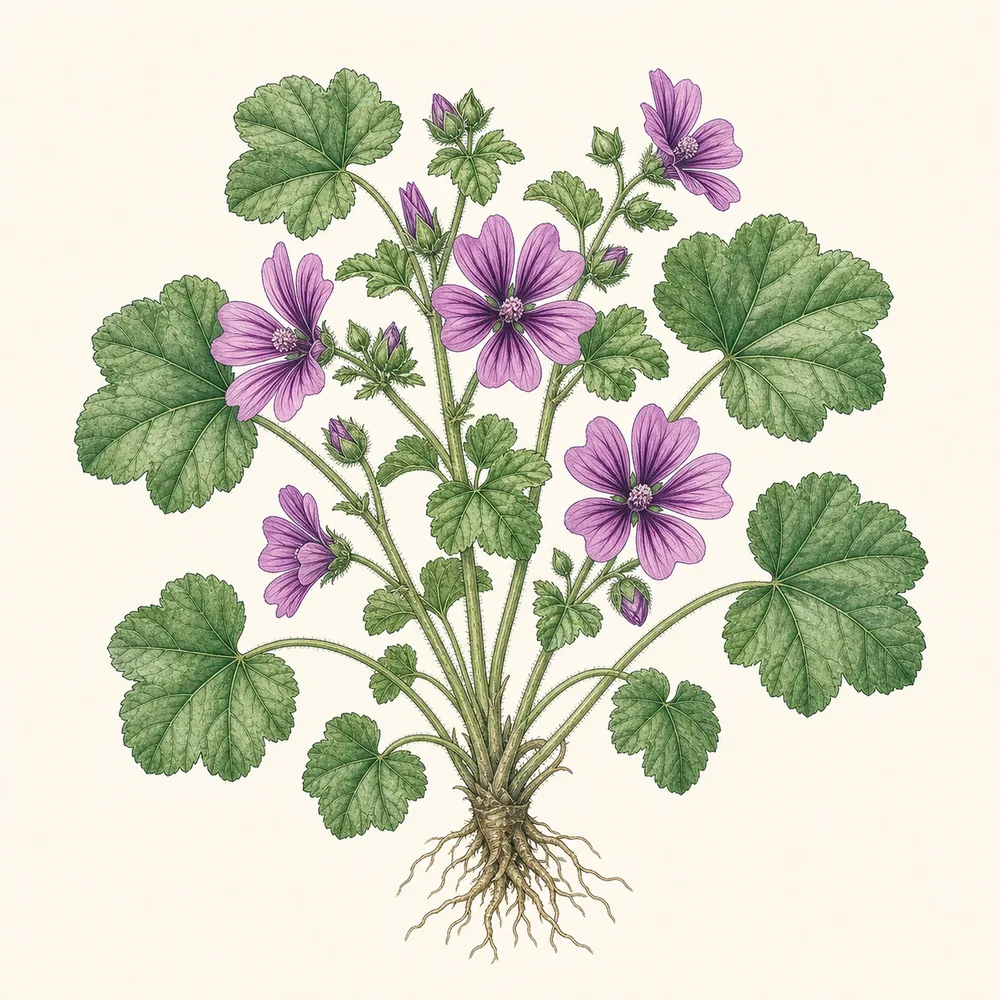
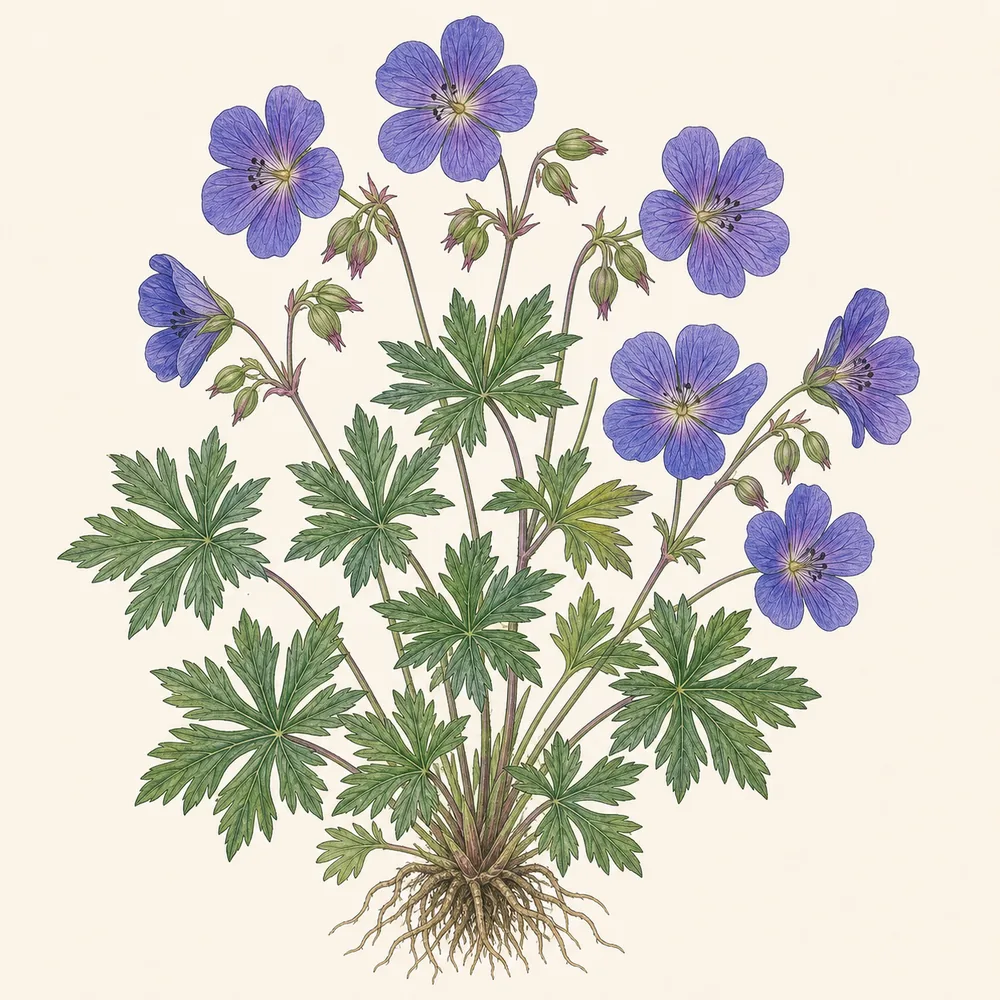
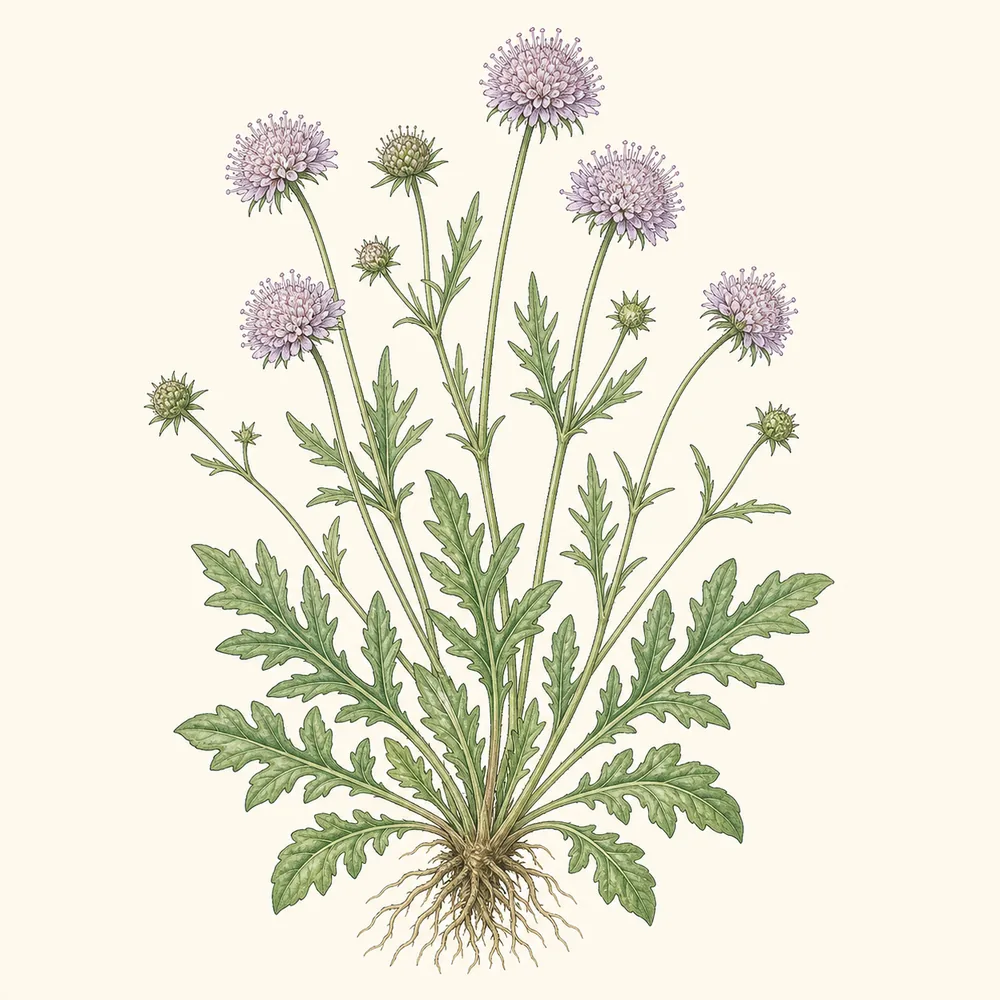
If you like this, try
Other plants with a similar temperament.
How we checked this
Care cross-checked against the RHS. The ASPCA does not list the musk mallow, so its pet-safety is unconfirmed and we have not stamped it safe. If our page and these sources ever disagree, believe them — and tell us.
Sources: RHS · ASPCA — toxic & non-toxic plants
Last reviewed · July 2026