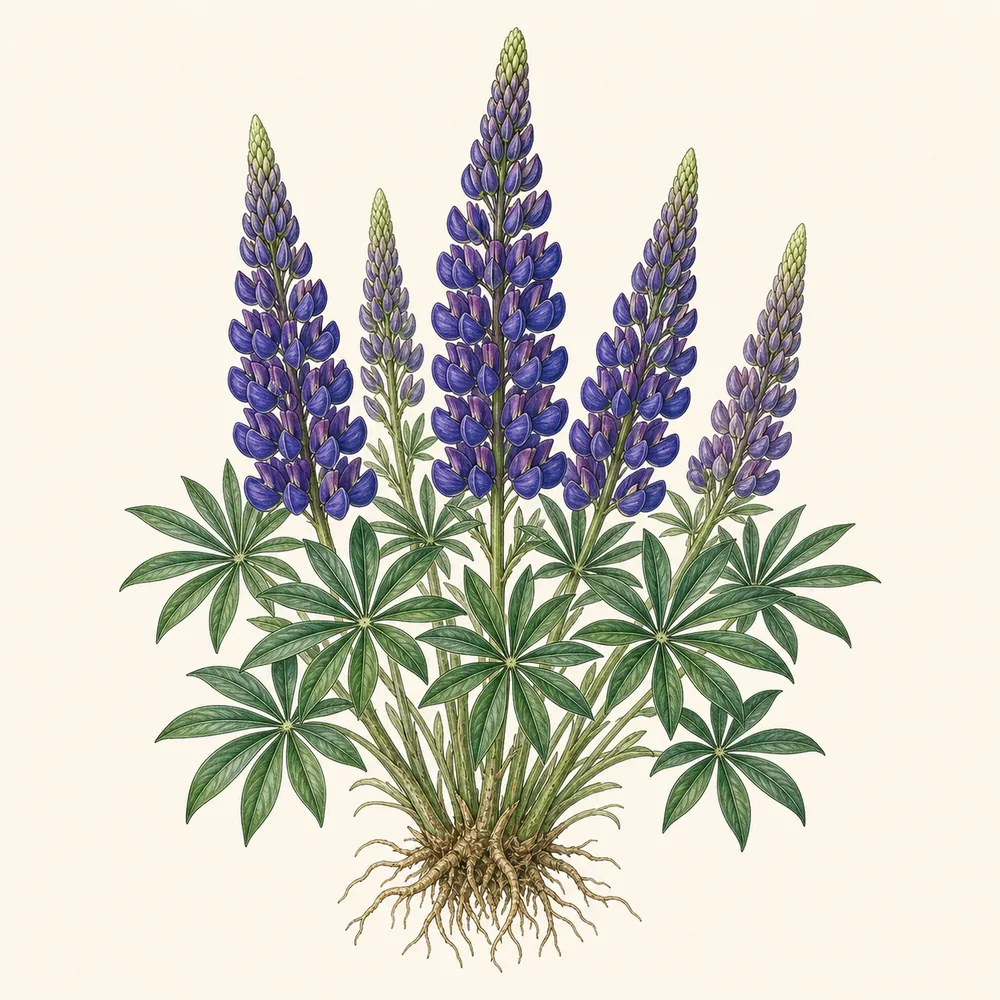
Lupin
Tall, dense spires of pea-like flowers in early summer, in colours from soft cream to deep plum. Easy and cheerful — but short-lived, and an absolute magnet for slugs when the shoots are young.
Toxic to cats, dogs & people if eaten
Lupins (Lupinus) contain quinolizidine alkaloids and are harmful if eaten (RHS), with the seeds in their pea-like pods holding the most. Eating them can cause stomach upset and, in quantity, more serious effects on the nervous system. Keep children and pets away from the seed pods.
Care at a glance
Everything that matters, in six lines. The detail is further down.
Position
Best in full sun; tolerates a little afternoon shade. The more light, the sturdier and taller the flower spikes.
Water
Keep new plants watered through their first summer. Established lupins cope with ordinary conditions but dislike sitting wet.
Hardiness
A hardy perennial that shrugs off UK winters — but short-lived, often worth replacing every three or four years.
Soil
Prefers neutral to slightly acid ground and dislikes heavy, wet clay. Fork in grit to improve drainage.
Feeding
Lupins fix their own nitrogen, so go easy — rich feeds give lush leaf at the expense of flowers.
Pruning
Snip faded spikes for a second, smaller flush, then cut the whole plant back after flowering.
What to do, and when
Watch for slugs and snails on the tender new shoots — they can strip a young lupin overnight.
Main flowering; deadhead spent spikes promptly to encourage a second, later flush.
Cut back the old growth and collect seed from the pods if you want more plants.
Fully hardy and low-maintenance; leave the crown undisturbed until spring.
Slugs are the real enemy
Lupins are easy in almost every respect but one: slugs and snails adore the young foliage. A healthy crown pushing up in spring can be reduced to bare stalks in a single damp night, and it's the single most common reason a lupin fails.
Protect the emerging shoots early — wildlife-friendly ferric-phosphate pellets, a barrier of grit or wool, or evening patrols all help. Once the plant is up and growing strongly it largely shrugs the damage off.
Short-lived — keep some coming
Border lupins are short-lived perennials, usually giving their best for three or four years before fading. That's normal, not a failure on your part.
Keep a supply coming by taking basal cuttings in spring or sowing fresh seed — though named varieties won't come true from seed, so cuttings are the way to keep a colour you love.
Common problems
Shoots stripped overnight
Slugs and snails on the young growth. Protect the crown early with pellets, grit or wool.
Powdery white coating on leaves
Powdery mildew, common in dry summers. Water at the base, not overhead, and improve air flow.
Lots of leaf, few flowers
Soil too rich or too much nitrogen. Ease off feeding — lupins make their own.
Grey aphids clustered on the spikes
Lupin aphid, a large greyish sap-sucker. Wash them off with a jet of water or squash by hand.
Everything a lupin needs
Sun, sharp drainage, and slug protection from the moment it shows.
We take no commission on anything in the "save your money" tier — if we don't think you should buy it, we don't link it. How our recommendations work
If you like this, try
Other plants with a similar temperament.

How we checked this
Care cross-checked against the RHS. Toxicity per the RHS, which flags Lupinus as harmful if eaten — quinolizidine alkaloids concentrated in the seed pods, causing stomach upset and, in quantity, nervous-system effects. If our page and these sources ever disagree, believe them — and tell us.
Sources: RHS · ASPCA — toxic & non-toxic plants
Last reviewed · July 2026