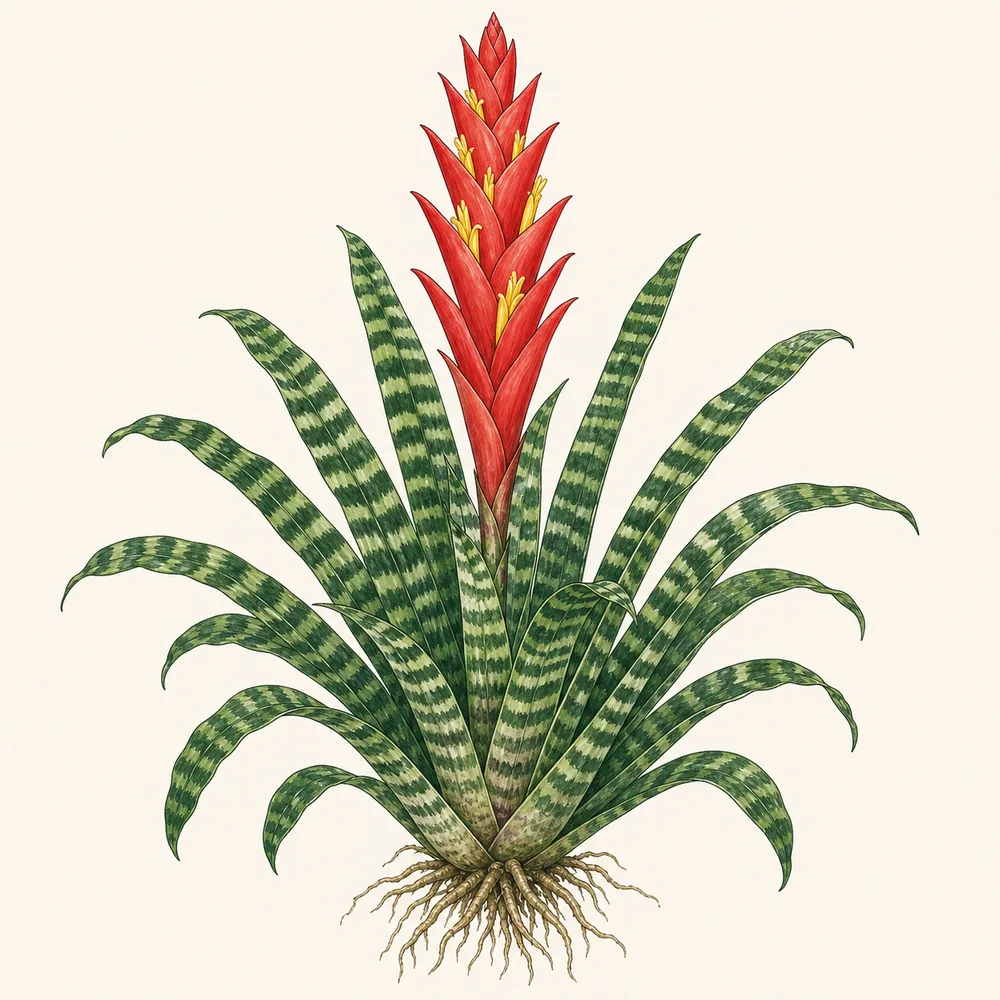
Flaming Sword
Named for the flat, sword-shaped spike of brilliant red that rises from a rosette of dark, cross-banded leaves. It's one of the more demanding bromeliads — it wants steady warmth and real humidity to thrive — but water the central cup with rainwater and keep it cosy, and the reward is a flower that holds for months.
Not listed by ASPCA
The ASPCA doesn't list the flaming sword (Vriesea), so we don't stamp it safe. It has no recorded toxic principle and several of its relatives are listed non-toxic, but with no database entry for this species we flag the gap honestly rather than assume.
Care at a glance
Everything that matters, in six lines. The detail is further down.
Light
Bright, filtered light keeps the leaf banding and flower colour strong. Keep it out of direct sun, which scorches the soft, dark leaves.
Water
Keep the cup at the centre of the rosette topped up with rainwater or distilled water, and water the mix only lightly. Refresh the cup every week or two so it stays clean.
Temperature
Warmth-loving and cold-sensitive — keep it above about 15 °C, out of draughts and well off chilly winter glass. Cold is what most often defeats it.
Humidity
The fussiest part of its care. It wants genuinely moist air — mist daily, use a pebble tray, or group it with other plants. Dry rooms brown the leaf tips fast.
Feeding
A very dilute balanced feed occasionally through spring and summer, into the cup or the mist. Bromeliads feed lightly — keep it well diluted.
Soil
An epiphyte — pot it in a chunky orchid-bark mix, not heavy compost. The roots anchor the plant and must never sit waterlogged.
What to do, and when
Growth resumes with the warmth and light. Keep the cup fresh, begin light feeding, and pot up pups from any plant that has finished flowering.
Active growth and its happiest season. Keep humidity high, the cup topped up, and the plant in bright, indirect light out of scorching sun.
Ease off feeding as light drops. Watch the temperature as nights cool — it dislikes any chill. A flowered plant may start to fade and make pups.
The trickiest time. Keep it warm and humid, away from cold windowsills and radiators' dry heat, water the cup sparingly, and don't feed.
The sword is a bract, and it flowers once
The flat, flaming-red 'sword' is a spike of overlapping bracts (coloured, modified leaves), not a true flower — small yellow flowers poke out from between them over time. Because it's built from tough leaf tissue, the spike holds its colour for months, which is what makes the plant such a striking centrepiece.
As with every bromeliad, that display comes just once per rosette. Once the sword finally fades, this rosette is done flowering — but it won't leave you empty-handed.
Warmth and humidity are the whole game
This is where the flaming sword earns its middle-of-the-road difficulty rating. More than most bromeliads, it needs steady warmth and genuinely humid air. Dry, centrally heated rooms brown the leaf tips and dull the plant; cold draughts and chilly windowsills can finish it off.
Give it a warm, bright bathroom or kitchen, mist it daily, or stand it on a tray of damp gravel and group it with other plants to build a pocket of moist air. Get the warmth and humidity right and the rest of its care is easy.
Water the cup with rainwater
Like its relatives, Vriesea gathers water in the cup at the centre of its rosette. Keep that cup topped up with rainwater or distilled water, and water the potting mix only lightly so the roots stay just moist without ever sitting wet.
Soft water matters — the lime and salts in hard tap water mark the dark leaves and leave a film in the cup. After the parent finishes flowering it slowly declines and produces pups around its base; grow those on and pot them up once they're a good size with a few roots of their own.
Common problems
Brown, crispy leaf tips
Dry air — its commonest complaint. Raise the humidity with daily misting or a pebble tray, and use rainwater or distilled water for the cup.
Leaves damaged or plant stalling in winter
Too cold, or dry radiator heat. Move it somewhere steadily warm above 15 °C, off cold glass and away from direct heat.
Soft, rotting centre
Stale water in the cup or a soggy mix, often made worse by cold. Refresh the cup, keep the compost on the dry side, and keep it warm.
Sword fading and parent dying back
Normal — a bromeliad flowers once then slowly dies. Let it feed the pups, then detach and pot them on to keep going.
Everything a flaming sword needs
Warmth, humidity, an airy mix, and the central cup topped up with rainwater.
We take no commission on anything in the "save your money" tier — if we don't think you should buy it, we don't link it. How our recommendations work
If you like this, try
Other plants with a similar temperament.
How we checked this
Care cross-checked against the RHS. The ASPCA does not list the flaming sword (Vriesea), so its pet-safety is unconfirmed and we have not stamped it safe. If our page and these sources ever disagree, believe them — and tell us.
Sources: RHS · ASPCA — toxic & non-toxic plants
Last reviewed · August 2026