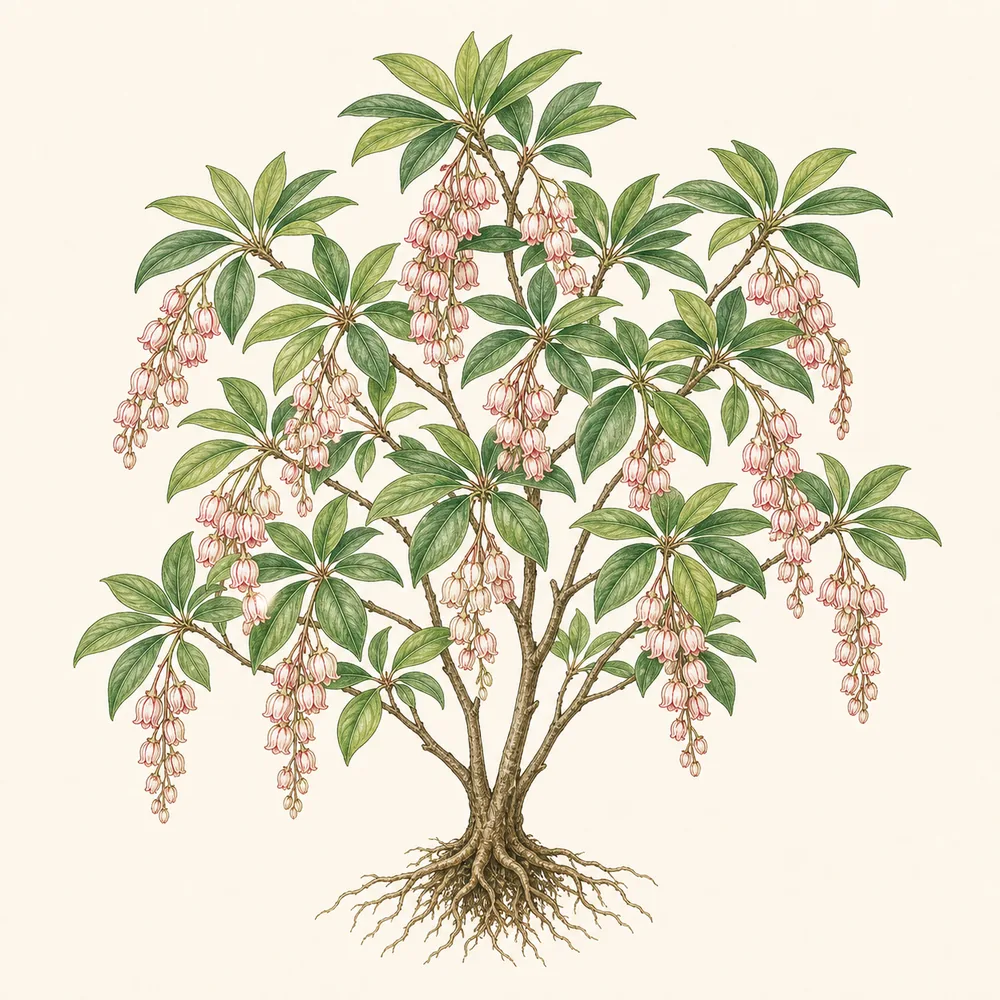
Enkianthus
A refined deciduous shrub for acid soil that gives you two seasons in one plant: dangling clusters of creamy, red-veined bell flowers in late spring, then some of the most brilliant autumn colour of any garden shrub, the leaves turning fiery orange, red and crimson before they fall. Slow, elegant and never coarse, it's a connoisseur's alternative to the usual acid-loving shrubs.
Not listed by ASPCA
The ASPCA doesn't list enkianthus, so we don't stamp it safe. It's an ericaceous shrub; no serious toxicity is on record. With no database entry we flag the gap honestly rather than guess.
Care at a glance
Everything that matters, in six lines. The detail is further down.
Position
Best in full sun or light dappled shade. A sunnier spot gives the most intense autumn colour; deep shade dulls both flowering and the leaf tints.
Water
Likes soil that stays reliably moist, ideally watered with rainwater. Water new plants through their first few years and don't let them dry out in summer.
Hardiness
Fully hardy across the UK. The late-spring flowers can catch a hard frost, so a spot sheltered from the worst frost pockets helps protect the display.
Soil
An ericaceous shrub that must have acid soil — it won't grow on chalk or lime. On alkaline ground, grow it in a large pot of ericaceous compost and water with rainwater.
Feeding
A spring feed of ericaceous fertiliser and a mulch of leaf mould is plenty. It's naturally slow-growing, so don't push it with heavy general feeds.
Pruning
Best left largely unpruned to keep its elegant, layered shape. Just remove any dead or crossing stems after flowering; it resents hard cutting.
What to do, and when
The flowering season — dangling clusters of creamy, red-veined bells open in late spring among the fresh leaves. Plant now into acid soil, mulch, and shelter the blooms from late frost.
Neat green foliage carries the plant quietly through summer. Keep the soil reliably moist, especially on young plants, and water with rainwater in dry spells.
The star turn — the leaves blaze through orange, red and crimson, among the finest autumn colour of any shrub, before they fall. A good time to plant while the soil is warm.
Bare and dormant, showing off a tidy, layered branch structure. Do no cutting now; mulch with leaf mould to protect the shallow roots from hard frost.
Two seasons from one shrub
Enkianthus gives you a double show. In late spring it hangs its branches with clusters of small, creamy or pink bell flowers, each finely veined in red — subtle close up, charming en masse. Then in autumn the whole shrub ignites, the leaves turning through orange, scarlet and deep crimson to rival any acer.
That autumn colour is the headline. Few shrubs of its size and refinement colour up so reliably or so brilliantly, which is why it's prized by gardeners who already have the space filled with the obvious acid-lovers and want something less commonly seen.
It must have acid soil
Like its relatives, enkianthus is an ericaceous shrub with one firm requirement: acid, moist, humus-rich soil. On chalk or lime the leaves yellow and it slowly starves, so a cheap soil test before planting is well worth it.
If your ground is alkaline, grow it in a large pot of ericaceous compost and water with rainwater rather than hard tap water, which is often limy enough to undo your efforts over time. Keep the roots cool and moist with a mulch of leaf mould, as it dislikes drying out.
Slow, elegant, and best left alone
Part of the appeal is the shape. Enkianthus grows slowly into a layered, tiered structure that looks good even bare in winter, so the less you prune it the better. Hard cutting spoils the form and it resents it.
Give it a sheltered spot where late frosts won't catch the spring flowers, keep it moist, and otherwise leave it to develop. It's a shrub that rewards patience — a young plant looks slight, but a mature one is a genuine highlight of the autumn garden.
Common problems
Yellowing leaves, poor growth
Almost always lime in the soil or water. Enkianthus needs acid conditions — grow in ericaceous compost and water with rainwater.
Disappointing autumn colour
Usually too much shade, or soil too dry through summer. Give it more sun and keep it reliably moist for the brightest tints.
Flowers browned in spring
A late frost has caught the late-spring blooms. Plant away from frost pockets and in a spot with some overhead shelter.
Scorched leaves or wilting
Drought on the shallow roots, especially on young plants. Mulch with leaf mould and water through dry spells with rainwater.
Everything an enkianthus needs
Acid, moist soil in sun or light shade, and rainwater.
We take no commission on anything in the "save your money" tier — if we don't think you should buy it, we don't link it. How our recommendations work
If you like this, try
Other plants with a similar temperament.
How we checked this
Care cross-checked against the RHS. The ASPCA does not list enkianthus, so its pet-safety is unconfirmed and we have not stamped it safe. If our page and these sources ever disagree, believe them — and tell us.
Sources: RHS · ASPCA — toxic & non-toxic plants
Last reviewed · August 2026